 Pocket Botanist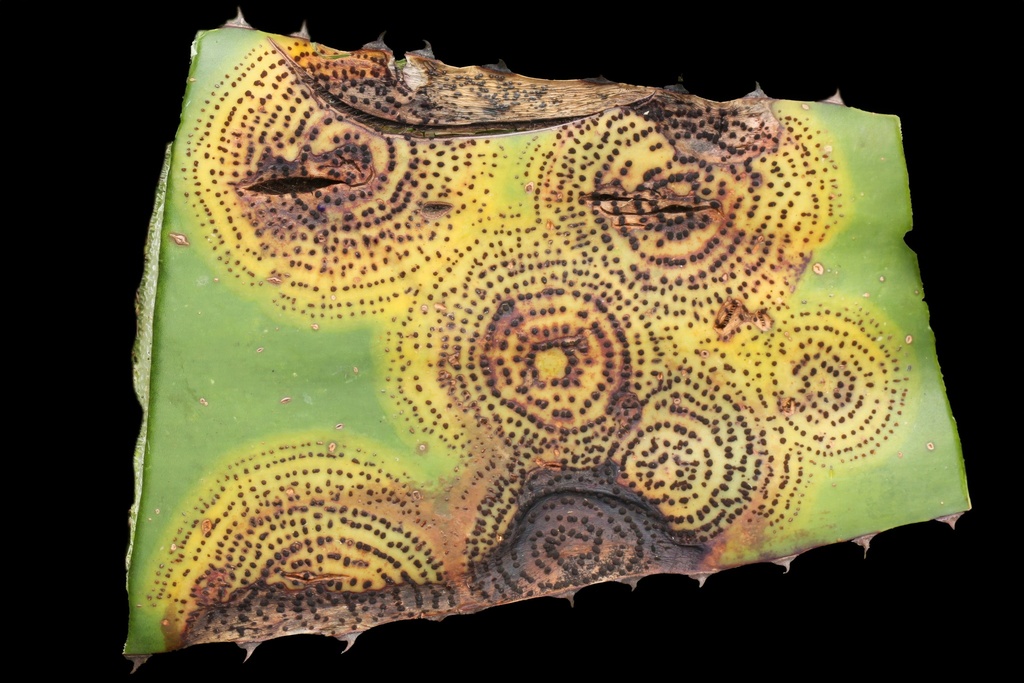
Symptoms by part
Leaves
Small, irregular dark spots that often expand into larger necrotic patches, sometimes with a yellow halo or a papery center that tears away.
Stems
Sunken, discolored cankers that can girdle twigs or branches, leading to dieback of the growth beyond the infection point.
Fruit
Circular, sunken dark spots that may develop pink or orange spore masses in the center during humid weather.
Causes
- Prolonged periods of high humidity or rainfall.
- Poor air circulation around the plant canopy.
- Overhead watering that keeps foliage wet for extended hours.
- Overcrowding plants which prevents leaves from drying out.
Could be confused with
- Leaf Spot · General leaf spots are often more uniform in shape and lack the deep, sunken, cankerous nature of anthracnose lesions.
- Bacterial Blight · Bacterial infections often produce a water soaked appearance or sticky ooze, whereas anthracnose typically displays distinct fungal spore structures.
Treatment
- Prune away all infected twigs and branches back to healthy wood, ensuring you sterilize your shears with alcohol between every cut.
- Remove and destroy all fallen leaves and debris from beneath the plant to eliminate the primary source of overwintering spores.
- Apply a thin layer of fresh mulch around the base of the plant to prevent soil borne spores from splashing onto lower foliage during rain.
Without chemicals
- Increase spacing between plants to improve airflow.
- Use drip irrigation or a soaker hose to keep water off the leaves.
- Install a temporary rain cover or shelter over susceptible plants during exceptionally wet weather.
- Prune the canopy to open up the center of the plant for better light penetration and air movement.
Chemical options
- Potassium bicarbonate, mix with water and spray onto foliage to alter the pH and inhibit fungal growth, follow the label.
Preventing it
- Select plant varieties that are known to be resistant to anthracnose.
- Water only at the base of the plant early in the morning so any accidental splashes dry quickly.
- Clean up all plant debris in the autumn to prevent the fungus from surviving the winter.
- Avoid overhead irrigation systems that wet the entire plant canopy.
Season
The warm growing season, especially during periods of frequent rain or heavy dew.
Spread risk
Moderate
Severity
Moderate
When to act
Act as soon as you notice the first spots on leaves or stems to stop the spread. If the plant shows extensive branch dieback or the main trunk is girdled by cankers, it is best to remove the plant entirely.
Think it's Anthracnose?
This guide covers the general picture. Pocket Botanist looks at your actual plant from a photo and tells you what's really going on, how serious it is, and what to try first. Identification and a health check are free.


Questions people ask
- Will my plant recover if it loses all its leaves?
- Often, yes, if the infection is caught early and the plant is otherwise healthy, it will push out new growth once the weather dries out.
- Can I compost the infected leaves?
- No, home compost piles rarely get hot enough to kill the fungal spores, so it is best to burn or bag and dispose of infected material.
- Why does the disease come back every year?
- The fungus survives in fallen leaves and on infected twigs, so if you do not clear away all the debris, the spores will re-infect the plant when the weather turns warm and wet again.
Plants it affects
This guide was generated with AI and is general information, not horticultural advice. Read about how we build these guides.