 Pocket Botanist
Plant guide
Cashew.
Anacardium occidentale
Pronounced an-uh-KAR-dee-um ok-si-den-TAY-lee
Also known as Cachou Nut, Cachou Nut Tree, Cashew, Cashew Apple, Cashew Tree, Cashew-Nut Tree, Korocho Nut



Scan with your phone's camera to get the app
Or go to pocketbotanist.app/get on your phone

The cashew is a tropical evergreen tree that produces both a delicious nut and a fleshy fruit called a cashew apple. It is native to Brazil and thrives in warm, frost free climates. You will find it is quite a unique specimen for a home garden if you have the space.
At a glance
- Care level
- Moderate
- Plant type
- Tropical evergreen tree
- Light
- Full sun
- Indoor light
- Direct sun
- Water
- Every 7 to 14 days
- Mature size
- 10 to 12 meters
- Growth rate
- Medium
- Hardiness
- USDA 10 to 12
- Bloom time
- Late winter to spring
Care
This tree needs plenty of sun and well draining soil to stay happy. Watch for yellowing leaves which might signal poor drainage or nutrient deficiencies. Keep an eye out for pests like aphids or scale during the growing season.
- Watering
- Water deeply once the top few inches of soil feel dry to the touch.
- Feeding
- Apply a balanced fertilizer during the active growing season to support fruit production.
- Pruning
- Prune during the dormant season to remove dead wood and maintain a manageable shape.
- Repotting
- Repot only when the tree has clearly outgrown its container, as it prefers to be somewhat root bound.
- Soil
- Sandy or loamy well draining soil
- Soil pH
- 5.0 to 6.5
- Temperature
- 15 to 35°C
- Humidity
- 60 to 90%
- Drought tolerance
- High
- Lifespan
- Perennial, typically 20 to 30 years in cultivation.
- Fragrance
- Light
- Deer and rabbits
- Moderate
Signs it needs repotting
- Roots circling the bottom of the pot
- Stunted growth despite fertilization
- Soil drying out too quickly
Safety
- People
- The shell of the cashew nut contains anacardic acid and cardol, which cause severe skin irritation and blistering.
- Pets
- The shell of the cashew nut contains urushiol, which can cause skin irritation and is toxic if ingested by pets.
- Children
- Keep children away from the raw nuts, as the shells contain caustic oils that can burn the skin and mouth.
- Contact allergens
- The sap and the oil within the nut shell contain urushiol, which causes contact dermatitis.
- Airborne allergens
- The smoke from burning the shells contains toxic, irritating compounds that can damage the lungs.
- Edibility
- The raw shell of the nut contains caustic urushiol oil that must be removed through roasting or steaming before consumption.
How to identify it
- Large, leathery, oval shaped leaves
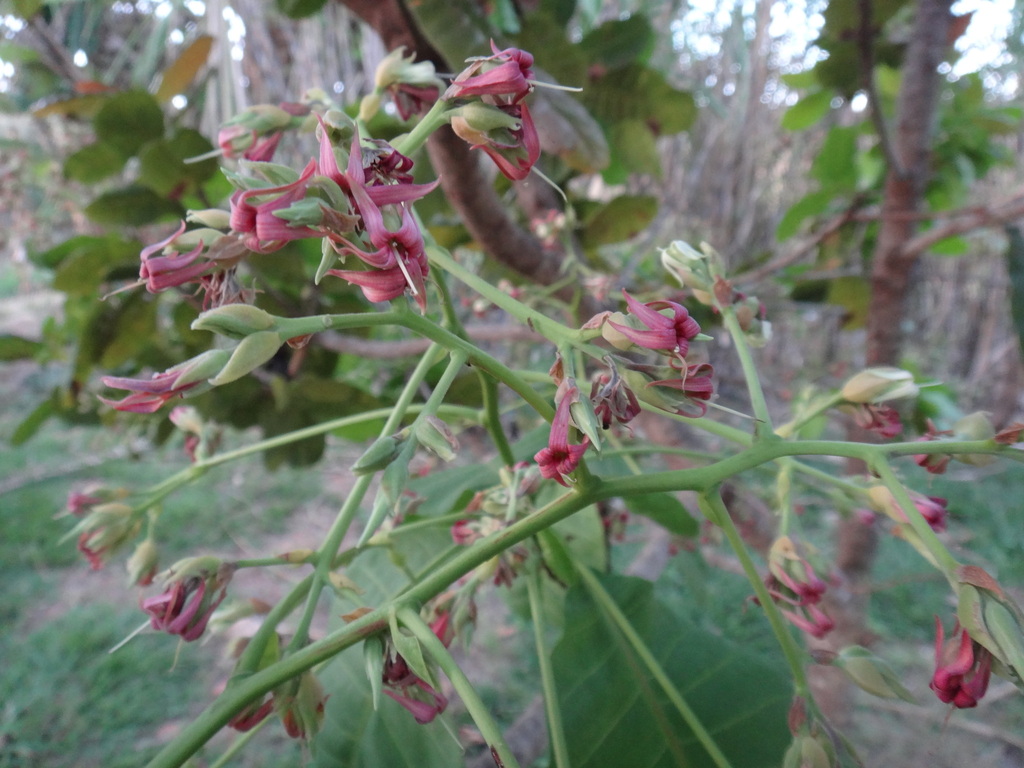
- Small, fragrant, pinkish flowers
- Bright red or yellow cashew apple
- Kidney shaped nut attached to fruit
- Height
- 6 to 12m
- Spread
- 4 to 10m
- Leaves
- green, evergreen
- Flowers
- pink, yellow, 0.5 to 1cm
- Fruit
- red, yellow, Summer
Problems to watch for
- AnthracnoseCommon
- Tea Mosquito BugCommon
- Leaf SpotUncommon
- Root RotUncommon
- Scale InsectsUncommon
- Stem BorersUncommon
- ThripsUncommon
Check your cashew from a photo
Pocket Botanist looks at a photo of your plant and tells you what's wrong and what to try first.
Scan with your phone's camera to get the app
Or go to pocketbotanist.app/get on your phone
Growing it
- Propagation
- seed, grafting, air layering
- When to plant
- spring, summer
- Overwintering
- Protect from any frost, as the tree is strictly tropical and will suffer damage below 10 degrees Celsius.
- In containers
- It is generally too large for long term container growth unless kept as a bonsai.
Seed propagation
- 1. Select fresh, mature seeds.
- 2. Soak seeds in water for 24 hours.
- 3. Plant in well draining soil.
- 4. Keep warm and moist until germination.
Intercropping with smaller tropical fruits helps maximize space in young orchards.
Grows well with
Similar species
- Mango · Both are members of the Anacardiaceae family.
Science
- Family
- Anacardiaceae
- Genus
- Anacardium
- Order
- Sapindales
- Class
- Magnoliopsida
- Native range
- Northeastern Brazil
- Conservation
- This species is widely cultivated and not considered threatened in its native range.
It thrives in sandy, well drained soils and is highly adapted to tropical coastal environments.
- Value to wildlife
- nectar source
- Pollinators
- bees, butterflies
- Uses
- culinary nut, fruit juice, wood production, tanning agent
Through the year
Ecological indicators
- Salinity
- 5/9
- Soil reaction
- 6/9
- Light
- 8/9
- Temperature
- 9/9
- Moisture
- 4/9
- Nutrients
- 3/9
Taxonomy resolved against GBIF.
Questions people ask
- Can I eat raw cashews?
- No, raw cashews must be processed to remove the toxic shell oil.
- How long until it fruits?
- Grafted trees can produce fruit in 2 to 3 years.
Where the name comes from
The genus name Anacardium refers to the heart shape of the fruit, while the common name cashew comes from the Portuguese caju.
Good to know
- Cashews are not true nuts but seeds that grow outside the fruit.
- The cashew apple is high in vitamin C.
- Brazil is a primary center of diversity for this species.
- The shell oil is used in industrial applications like brake linings.
Also in
Keep your cashew growing
This page is a general guide. Save your plant in Pocket Botanist and you get care reminders timed for this plant, plus a care history that shows what worked.
Scan with your phone's camera to get the app
Or go to pocketbotanist.app/get on your phone
This guide was generated with AI on and checked against GBIF taxonomy. It is general information, not horticultural or veterinary advice. Read about how we build these guides.