 Pocket Botanist
Plant guide
Pineapple.
Ananas comosus
Pronounced uh-NAY-nus ko-MO-sus
Also known as Pineapple



Scan with your phone's camera to get the app
Or go to pocketbotanist.app/get on your phone
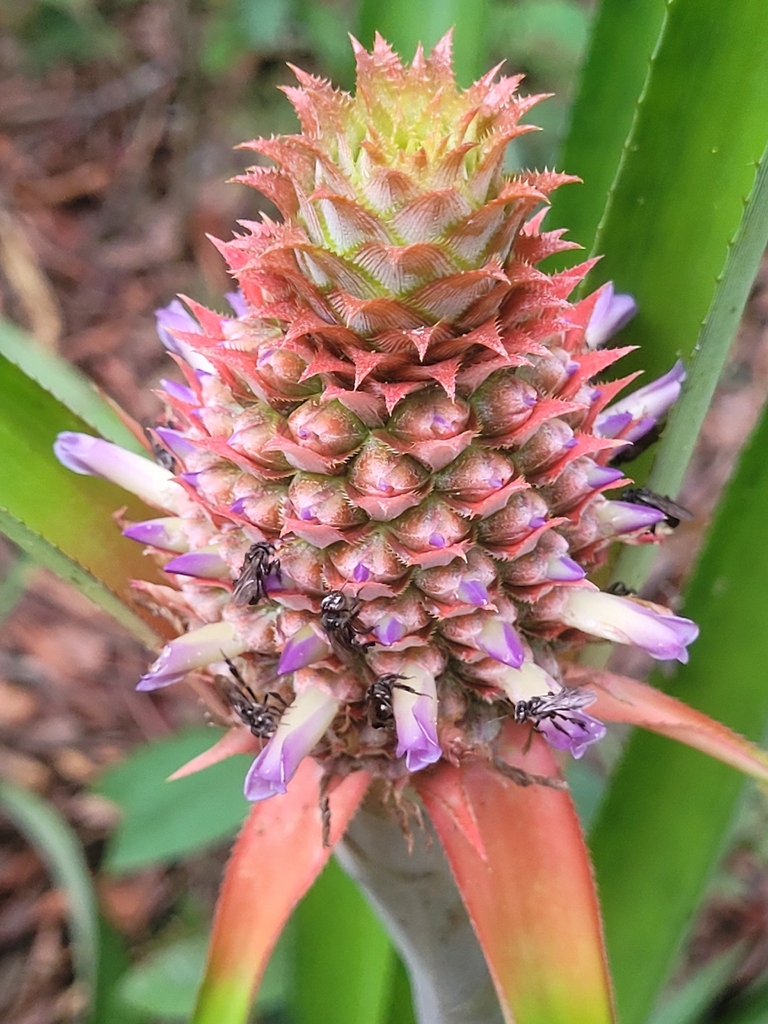
The pineapple is a tropical bromeliad that grows a delicious fruit from its center. It brings a fun, exotic vibe to any sunny indoor space. You can even grow a new plant from the leafy top of a store bought fruit.

At a glance
- Care level
- Moderate
- Plant type
- Bromeliad
- Light
- Full sun
- Indoor light
- Direct sun
- Water
- Every 7 to 14 days
- Mature size
- 3 to 5 feet tall
- Growth rate
- Slow
- Hardiness
- USDA 11 to 12
- Bloom time
- Late spring to early summer
Care
Keep your plant in the sunniest spot you have to encourage fruit production. Let the soil dry out slightly between waterings to prevent root rot. Watch for yellowing leaves, which often signal that the plant is getting too much water or not enough light.
- Watering
- Water when the top few inches of soil feel dry to the touch.
- Feeding
- Use a balanced liquid fertilizer during the active growing season.
- Pruning
- Trim away dead or damaged lower leaves as needed to keep the plant tidy.
- Repotting
- Repot only when the plant becomes root bound or top heavy.
- Soil
- Well draining, sandy potting mix
- Soil pH
- 4.5 to 6.5
- Temperature
- 15 to 30°C
- Humidity
- 50 to 70%
- Drought tolerance
- Moderate
- Lifespan
- Perennial, typically 5 to 10 years
- Fragrance
- Light
- Deer and rabbits
- Moderate
Signs it needs repotting
- Roots growing out of the drainage holes
- Plant becoming top-heavy and unstable
- Soil drying out much faster than usual
Safety
- People
- The sap can be a skin irritant, and ingestion of unripe fruit may cause significant gastrointestinal upset.
- Pets
- This plant is generally considered non toxic to cats and dogs, though the sharp leaves can cause physical irritation.
- Children
- The sharp, spiny leaf edges pose a significant risk of cuts to small children.
- Contact allergens
- The stiff, serrated leaf margins can cause mechanical skin abrasions, and the sap may irritate sensitive skin.
- Airborne allergens
- There are no significant airborne allergens associated with this plant.
- Edibility
- The raw, unripe fruit contains bromelain and acids that can cause severe mouth irritation and digestive distress.
How to identify it
- Long, spiky, sword shaped leaves
- Leaves have serrated, sharp edges
- Central rosette growth pattern
- Produces a single edible fruit
- Height
- 0.9 to 1.5m
- Spread
- 0.9 to 1.2m
- Leaves
- green, gray-green, evergreen
- Flowers
- purple, pink, 2 to 3cm
- Fruit
- yellow, brown, gold, Year round in tropical climates
Problems to watch for
- MealybugsCommon
- Root RotCommon
- Brown Leaf EdgesUncommon
- ChlorosisUncommon
- Scale InsectsUncommon
- Tip BurnUncommon
- Soft RotRare
- ThripsRare
Check your pineapple from a photo
Pocket Botanist looks at a photo of your plant and tells you what's wrong and what to try first.
Scan with your phone's camera to get the app
Or go to pocketbotanist.app/get on your phone
Growing it
- Propagation
- cuttings, division
- When to plant
- Spring, Summer
- Overwintering
- Bring containers indoors before temperatures drop below 15 degrees Celsius. Place in a bright, sunny window and reduce watering significantly during the winter months.
- In containers
- Pineapples grow very well in containers, provided you use a pot at least 30 cm in diameter with excellent drainage.
Crown Cuttings
- 1. Twist the leafy crown off the top of a ripe pineapple.
- 2. Peel away the bottom few layers of leaves to expose the stem base.
- 3. Allow the crown to dry in a shaded area for 2 to 3 days.
- 4. Plant the base in a pot with well-draining potting mix.
- 5. Keep the soil lightly moist until roots establish, usually within a month.
Group tropical plants together to create a microclimate that maintains higher humidity levels.
Grows well with
Similar species
- Urn Plant · It is a related bromeliad with similar growth habits and care needs.
- Scarlet Star · It shares the same family characteristics and ornamental appeal.
Science
- Family
- Bromeliaceae
- Genus
- Ananas
- Order
- Poales
- Class
- Liliopsida
- Native range
- South America
- Conservation
- This plant is widely cultivated and not of conservation concern.
It thrives in tropical environments by storing water in its central rosette and utilizing CAM photosynthesis to conserve moisture.
- Value to wildlife
- nectar source
- Pollinators
- hummingbirds
- Uses
- culinary fruit, ornamental houseplant, fiber production
Through the year
Ecological indicators
- Salinity
- 2/9
- Soil reaction
- 5/9
- Light
- 8/9
- Temperature
- 9/9
- Moisture
- 4/9
- Nutrients
- 5/9
Taxonomy resolved against GBIF.
Questions people ask
- Can I grow a pineapple from the top of a store-bought fruit?
- Yes, simply twist off the crown, remove lower leaves, let it dry for a few days, and plant it in well-draining soil.
- Why is my pineapple plant not flowering?
- It often needs more light or has not reached maturity, though exposure to ethylene gas can sometimes trigger blooming.
Where the name comes from
The name pineapple comes from its resemblance to a pine cone, while the scientific name comosus refers to the tufted leaves on top.
Good to know
- Pineapples were once so expensive in 18th century Europe that they were rented as dinner party centerpieces.
- The plant is a member of the Bromeliad family.
- It takes about 18 to 24 months for a pineapple plant to produce its first fruit.
- Pineapples do not ripen further once they are harvested.
Keep your pineapple growing
This page is a general guide. Save your plant in Pocket Botanist and you get care reminders timed for this plant, plus a care history that shows what worked.
Scan with your phone's camera to get the app
Or go to pocketbotanist.app/get on your phone
This guide was generated with AI on and checked against GBIF taxonomy. It is general information, not horticultural or veterinary advice. Read about how we build these guides.