 Pocket Botanist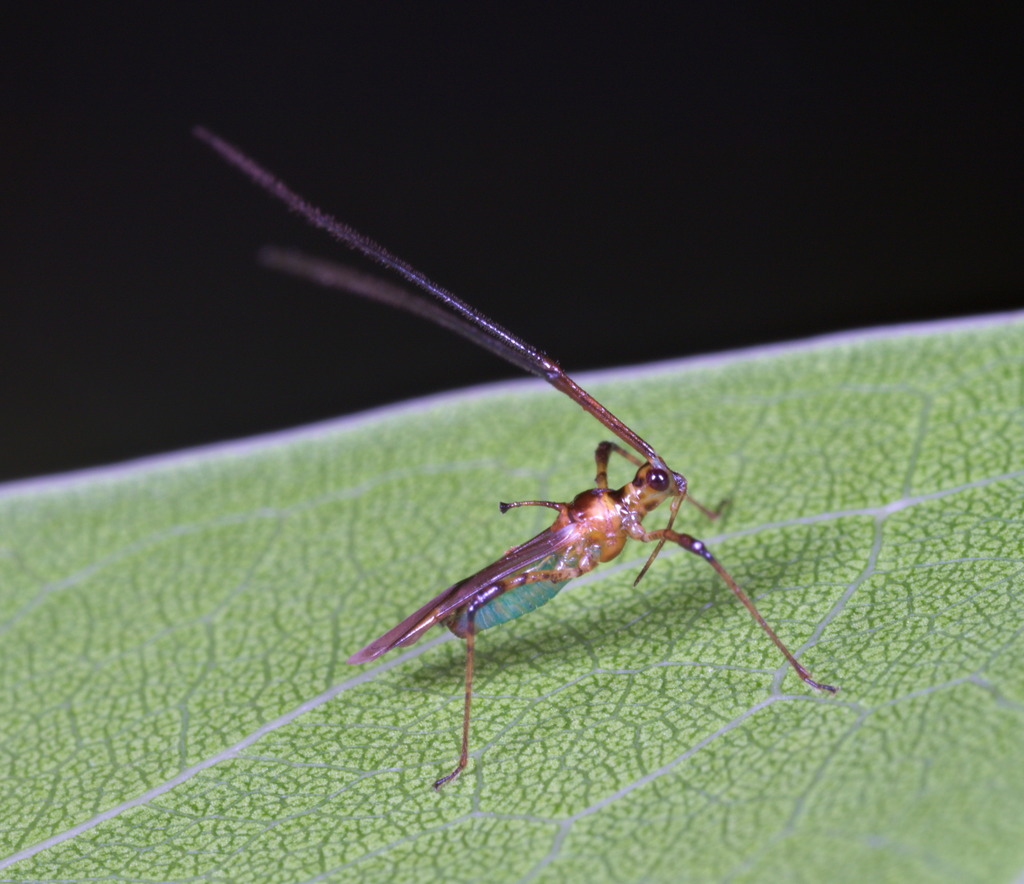
Symptoms by part
Leaves
Small, dark, necrotic spots appear where the bug has pierced the tissue, often causing the leaf to curl, wither, and eventually drop prematurely.
Stems
Young shoots develop dark, sunken lesions that can cause the stem to die back from the tip, resulting in a scorched appearance.
Causes
- High humidity levels during the growing season.
- Presence of dense, succulent new growth that attracts the bugs.
- Overcrowded planting conditions that limit airflow.
Could be confused with
- Anthracnose disease · Anthracnose typically shows fungal spores or fuzzy growth within the lesions, whereas tea mosquito bug damage is caused by physical piercing and lacks fungal structures.
- Thrips damage · Thrips usually cause silvering or bronzing of the leaf surface rather than the distinct, sunken, dark necrotic spots associated with the tea mosquito bug.
Treatment
- Prune away and destroy all infested shoots and leaves to remove the bugs and their eggs.
- Apply fatty acids to the affected foliage during the early morning or late evening to coat the insects, follow the label.
- Use spinosad as a targeted spray on new growth if the infestation persists, follow the label.
Without chemicals
- Prune back heavily infested branches to encourage clean, new growth.
- Improve spacing between plants to increase air circulation and reduce humidity around the canopy.
- Remove weeds and alternative host plants from the surrounding area to reduce the bug population.
Chemical options
- Fatty acids, apply directly to the insects on the foliage, follow the label.
- Spinosad, spray on young leaves and shoots, follow the label.
Preventing it
- Maintain proper plant spacing to ensure good airflow.
- Keep the area around the base of the plant free of debris and weeds.
- Encourage natural predators like spiders and dragonflies in the garden.
Season
The warm growing season, particularly during periods of high humidity and rainfall.
Spread risk
High
Severity
High
When to act
Act as soon as you notice the first signs of dark spots on new shoots to prevent widespread damage. If the infestation is severe and affects the entire structure of a tree, consider removing the plant to protect nearby healthy specimens.
Think it's Tea Mosquito Bug?
This guide covers the general picture. Pocket Botanist looks at your actual plant from a photo and tells you what's really going on, how serious it is, and what to try first. Identification and a health check are free.


Questions people ask
- Does the tea mosquito bug only affect tea plants?
- No, despite its name, it is a major pest for many crops including cashew, cocoa, and various fruit trees.
- Can I just wash the bugs off with water?
- A strong stream of water can dislodge some bugs, but it is rarely enough to control a significant infestation on its own.
Plants it affects
This guide was generated with AI and is general information, not horticultural advice. Read about how we build these guides.