 Pocket Botanist
Plant guide
Mango.
Mangifera indica
Pronounced man-JIF-er-uh IN-dih-kuh
Also known as Am, Common Indian Mango, Indian mango, Mango, Mango Tree, common mango



Scan with your phone's camera to get the app
Or go to pocketbotanist.app/get on your phone

The mango is a tropical fruit tree known for its juicy, sweet stone fruit. It thrives in warm climates and makes a beautiful, lush addition to a sunny garden. You will love watching it grow if you have the space for it.
At a glance
- Care level
- Moderate
- Plant type
- Tropical fruit tree
- Light
- Full sun
- Indoor light
- Direct sun
- Water
- Every 3 to 7 days
- Mature size
- 30 to 100 feet
- Growth rate
- Fast
- Hardiness
- USDA 10 to 12
- Bloom time
- Late winter to early spring
Care
Keep the soil consistently moist while the tree is young, but allow it to dry out slightly as it matures. Watch for yellowing leaves, which often signal overwatering or poor drainage. Ensure the tree gets plenty of sun to encourage fruit production.
- Watering
- Water deeply whenever the top few inches of soil feel dry to the touch.
- Feeding
- Apply a balanced fertilizer during the active growing season to support fruit development.
- Pruning
- Prune lightly after the harvest to maintain shape and encourage airflow.
- Repotting
- Repot only when the tree has clearly outgrown its current container.
- Soil
- Well draining, deep, fertile soil
- Soil pH
- 5.5 to 7.5
- Temperature
- 5 to 40°C
- Humidity
- 50 to 80%
- Drought tolerance
- Moderate
- Lifespan
- Perennial, can live for over 100 years.
- Fragrance
- Strong
- Deer and rabbits
- Moderate
Signs it needs repotting
- Roots growing out of the drainage holes.
- Water sitting on the surface for too long.
- The tree stops growing during the active season.
Safety
- People
- The skin and sap contain urushiol, which can cause skin irritation for some people.
- Pets
- Mango leaves and skin contain urushiol, which can cause skin irritation or gastrointestinal upset in pets.
- Children
- The large, hard seed inside the fruit is a choking hazard for small children.
- Contact allergens
- Sap from the stems and leaves can cause skin rashes or blisters.
- Airborne allergens
- Pollen from the flowers may cause mild reactions in sensitive individuals.
- Edibility
- The sap of the mango tree can cause severe contact dermatitis in sensitive individuals, so handle with care.
How to identify it
- Large, evergreen lanceolate leaves
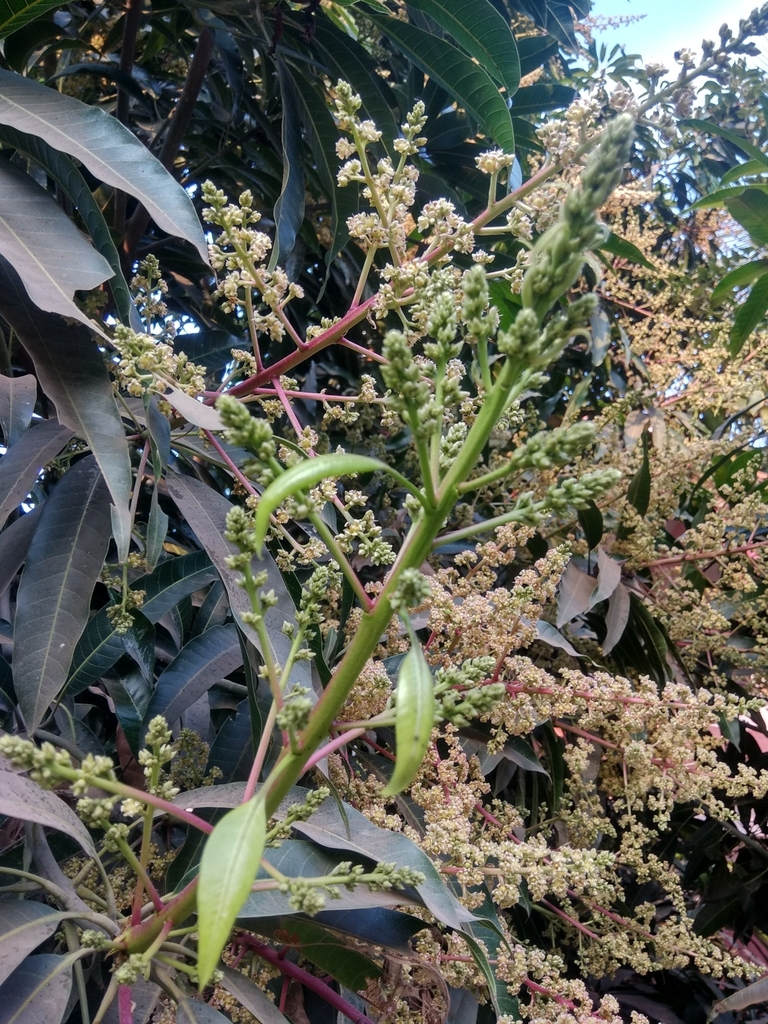
- Small, fragrant yellow or pink flowers
- Oval shaped drupe fruit
- Deep green foliage color
- Dense, spreading canopy structure
- Height
- 3 to 30m
- Spread
- 2 to 15m
- Leaves
- dark green, bronze, evergreen
- Flowers
- yellow, pink, white, 0.5 to 1cm
- Fruit
- yellow, orange, red, green, Summer to early autumn
Problems to watch for
- AnthracnoseCommon
- Mango Seed WeevilCommon
- Powdery MildewCommon
- Scale InsectsUncommon
- Sooty MoldUncommon
- ThripsUncommon
Check your mango from a photo
Pocket Botanist looks at a photo of your plant and tells you what's wrong and what to try first.
Scan with your phone's camera to get the app
Or go to pocketbotanist.app/get on your phone
Growing it
- Propagation
- seed, grafting, air layering
- When to plant
- spring, early summer
- Overwintering
- If you live in a cooler area, move container trees indoors before the first frost. Protect young trees outdoors with frost cloth if temperatures dip near freezing.
- In containers
- Dwarf varieties can be grown in large containers of at least 60 liters, but they will produce less fruit than trees in the ground.
Grafting
- 1. Select a healthy rootstock seedling.
- 2. Use a scion from a known fruit-bearing tree.
- 3. Join them using a cleft or whip graft.
- 4. Secure the graft with tape.
- 5. Keep in a humid, shaded area until healed.
Planting nitrogen-fixing legumes nearby can help improve soil fertility for your mango tree.
Grows well with
Similar species
- Cashew · It is a close relative in the same botanical family.
Science
- Family
- Anacardiaceae
- Genus
- Mangifera
- Order
- Sapindales
- Class
- Magnoliopsida
- Native range
- South Asia, specifically India and Myanmar.
- Conservation
- Not currently of conservation concern.
It thrives in tropical climates with a distinct dry season that triggers flowering.
- Value to wildlife
- nectar source, provides nesting habitat
- Pollinators
- bees, butterflies, beetles
- Uses
- culinary fruit, ornamental shade tree, timber
Through the year
Ecological indicators
- Salinity
- 2/9
- Soil reaction
- 6/9
- Light
- 8/9
- Temperature
- 9/9
- Moisture
- 5/9
- Nutrients
- 6/9
Taxonomy resolved against GBIF.
Questions people ask
- How long until a mango tree bears fruit?
- Grafted trees usually fruit in 3 to 5 years, while seed-grown trees can take 8 to 10 years.
- Do mango trees need full sun?
- Yes, they require at least 8 hours of direct sunlight daily for best fruit production.
Where the name comes from
The name mango comes from the Malayalam word manna, which was adapted by the Portuguese to manga. The scientific name Mangifera indica literally means mango-bearing tree from India.
Good to know
- Mangoes have been cultivated for over 4,000 years.
- They are considered the national fruit of India, Pakistan, and the Philippines.
- A single tree can produce fruit for over 100 years.
- Mangoes are related to pistachios.
Also in
Keep your mango growing
This page is a general guide. Save your plant in Pocket Botanist and you get care reminders timed for this plant, plus a care history that shows what worked.
Scan with your phone's camera to get the app
Or go to pocketbotanist.app/get on your phone
This guide was generated with AI on and checked against GBIF taxonomy. It is general information, not horticultural or veterinary advice. Read about how we build these guides.