 Pocket Botanist
Plant guide
Dwarf banana.
Musa acuminata 'Dwarf Cavendish'
Pronounced MEW-suh uh-KYOO-mih-NAY-tuh
Also known as Musa acuminata 'Dwarf Cavendish', Cavendish banana, Chinese banana, Edible Banana, Wild Banana, apple bananas, banana, dwarf banana


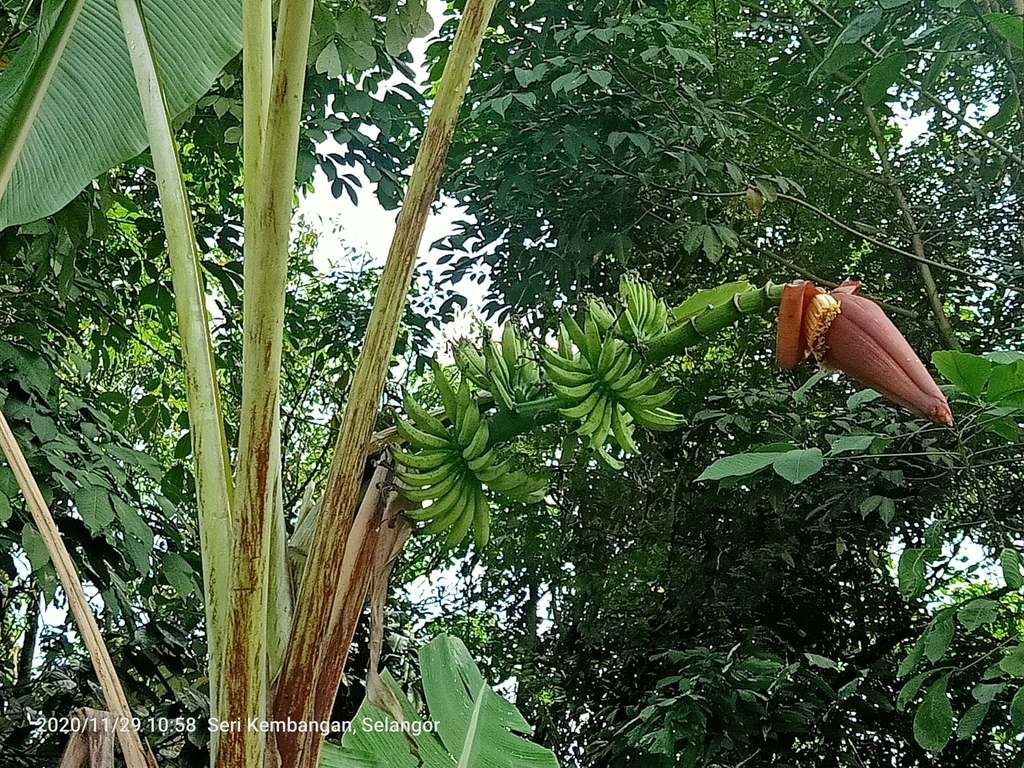
The dwarf banana is a fantastic tropical plant that brings a lush, jungle vibe to your home. It stays much smaller than its wild cousins, making it manageable for indoor spaces. You will love its broad, paddle shaped leaves that unfurl beautifully.

At a glance
- Care level
- Moderate
- Plant type
- Tropical perennial
- Light
- Bright indirect light
- Indoor light
- Bright indirect
- Water
- Every 3 to 7 days
- Mature size
- 2 to 3 meters
- Growth rate
- Fast
- Hardiness
- USDA 10 to 12
- Bloom time
- Year round in tropical climates
Care
Keep this plant in a spot with plenty of bright, filtered light to encourage strong growth. It loves high humidity, so misting the leaves or using a pebble tray helps keep it happy. Watch for brown, crispy leaf edges which often signal that the air is too dry.
- Watering
- Keep the soil consistently moist but never soggy.
- Feeding
- Feed with a balanced liquid fertilizer during the active growing season.
- Pruning
- Remove old or damaged leaves at the base to keep the plant tidy.
- Repotting
- Repot when the roots begin to crowd the container.
- Soil
- Well draining, nutrient rich potting mix
- Soil pH
- 5.5 to 6.5
- Temperature
- 15 to 35°C
- Humidity
- 60 to 90%
- Drought tolerance
- Low
- Lifespan
- Perennial, typically 5 to 10 years
- Fragrance
- Light
- Deer and rabbits
- Moderate
Signs it needs repotting
- Roots growing out of the drainage holes.
- Water sitting on the surface for too long.
- Plant becoming top heavy and unstable.
- Noticeable slowing of growth during the active season.
Safety
- People
- The plant is generally non toxic, but the sap can stain clothing and cause minor irritation.
- Pets
- This plant is non toxic to cats and dogs.
- Children
- The large leaves can be heavy and may pose a tipping hazard if children pull on them.
- Contact allergens
- The sap can cause contact dermatitis in sensitive individuals.
- Airborne allergens
- There is no significant respiratory allergen risk.
- Edibility
- The fruit is edible, but the plant is not a substitute for commercial varieties without proper identification.
How to identify it
- Broad, paddle shaped green leaves
- Sturdy, thick pseudostem
- Compact growth habit
- Leaves often show maroon blotches
- Height
- 2 to 6m
- Spread
- 1.5 to 3m
- Leaves
- green, evergreen
- Flowers
- purple, yellow, 5 to 10cm
- Fruit
- yellow, green, Year round
Problems to watch for
- AphidsCommon
- Brown Leaf EdgesCommon
- Frond BrowningCommon
- Panama DiseaseCommon
- Root RotUncommon
- Spider MitesUncommon
By symptom
Check your dwarf banana from a photo
Pocket Botanist looks at a photo of your plant and tells you what's wrong and what to try first.
Growing it
- Propagation
- division, cuttings
- When to plant
- Spring, Summer
- Overwintering
- Move to a frost free location and reduce watering significantly during the cooler months.
- In containers
- It grows well in large containers, but needs a pot at least 50 cm wide to support its size.
Division
- Wait for the mother plant to produce offsets or pups.
- Carefully dig around the base to expose the corm.
- Sever the pup from the parent with a clean, sharp knife.
- Ensure the pup has its own roots attached.
- Replant the pup in a well draining potting mix.
Planting low growing tropical herbs beneath the canopy helps maintain the high humidity the banana prefers.
Grows well with
Similar species
- Abyssinian Banana — It has a similar architectural look but is not grown for fruit.
Science
- Family
- Musaceae
- Genus
- Musa
- Order
- Zingiberales
- Class
- Liliopsida
- Native range
- Southeast Asia
- Conservation
- Not currently of conservation concern.
It thrives in humid, tropical rainforest clearings where it can quickly colonize disturbed soil.
- Value to wildlife
- nectar source
- Pollinators
- bees, butterflies, hummingbirds
- Uses
- ornamental, culinary, tropical landscaping
Through the year
Ecological indicators
- Salinity
- 2/9
- Soil reaction
- 6/9
- Temperature
- 9/9
- Moisture
- 8/9
- Light
- 8/9
- Nutrients
- 7/9
Taxonomy resolved against GBIF.
Questions people ask
- Will it fruit indoors?
- It is very unlikely to produce edible fruit in a typical indoor environment.
- How much light does it need?
- It requires bright, direct sunlight to thrive.
Where the name comes from
The genus name Musa comes from the Arabic word for banana, while acuminata refers to the pointed tips of the leaves.
Good to know
- Bananas are technically berries.
- The plant grows from an underground corm.
- Each stalk produces fruit only once before dying back.
- The flowers are produced in a large, hanging inflorescence.
Keep your dwarf banana growing
This page is a general guide. Save your plant in Pocket Botanist and you get care reminders timed for this plant, plus a care history that shows what worked.
This guide was generated with AI and checked against GBIF taxonomy. It is general information, not horticultural or veterinary advice. Read about how we build these guides.