 Pocket Botanist
Guide botanique
Banane naine.
Musa acuminata 'Dwarf Cavendish'
Prononciation MEW-suh uh-KYOO-mih-NAY-tuh
Aussi appelée Musa acuminata 'Dwarf Cavendish', Banane Cavendish, Banane chinoise, Banane comestible, Banane sauvage, apple bananas, banane, banane naine


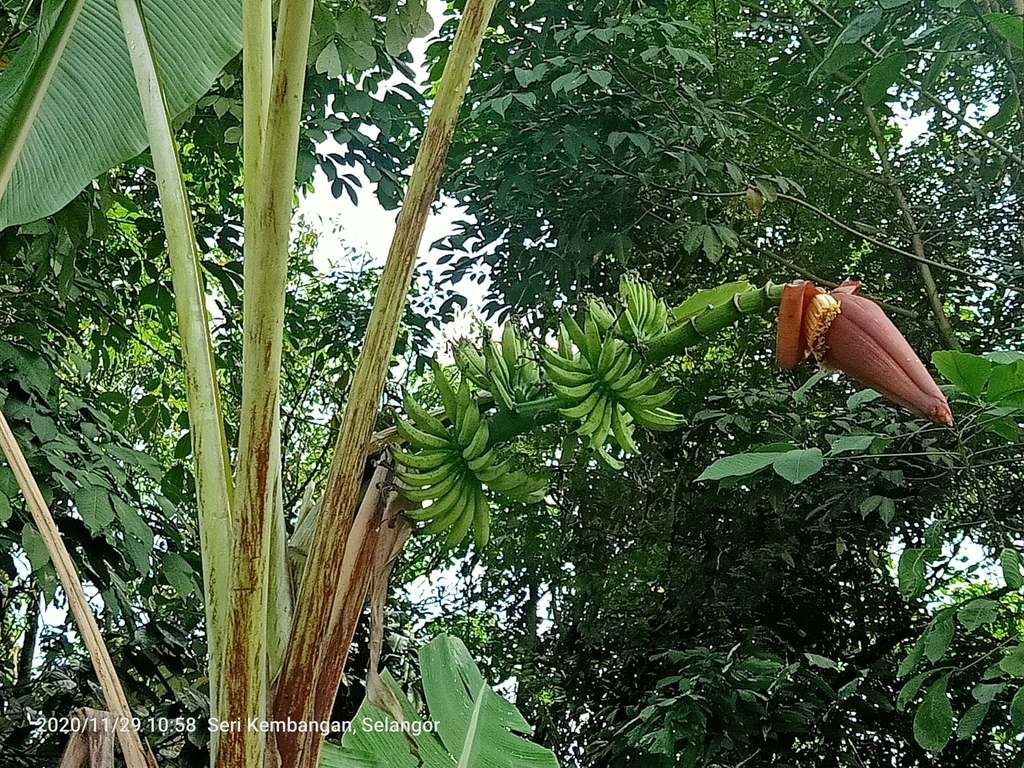
La banane naine est une plante tropicale fantastique qui apporte une ambiance luxuriante et jungle à votre intérieur. Elle reste beaucoup plus petite que ses cousines sauvages, ce qui la rend gérable pour les espaces intérieurs. Vous aimerez ses larges feuilles en forme de pagaie qui se déploient magnifiquement.

En un coup d'œil
- Niveau d'entretien
- Moyenne
- Type de plante
- Plante vivace tropicale
- Lumière
- Lumière vive indirecte
- Lumière en intérieur
- Lumière vive indirecte
- Arrosage
- Tous les 3 à 7 jours
- Taille adulte
- 2 à 3 mètres
- Croissance
- Rapide
- Rusticité
- USDA 10 à 12
- Floraison
- Toute l'année dans les climats tropicaux
Entretien
Gardez cette plante dans un endroit bénéficiant de beaucoup de lumière vive et filtrée pour encourager une croissance vigoureuse. Elle adore une humidité élevée, donc vaporiser les feuilles ou utiliser un plateau de billes d'eau l'aide à rester heureuse. Surveillez les bords de feuilles bruns et croustillants, qui signalent souvent que l'air est trop sec.
- Arrosage
- Gardez le sol constamment humide mais jamais détrempé.
- Engrais
- Nourrissez avec un engrais liquide équilibré pendant la saison de croissance active.
- Taille
- Retirez les feuilles anciennes ou abîmées à la base pour garder la plante nette.
- Rempotage
- Rempotez lorsque les racines commencent à envahir le conteneur.
- Sol
- Mélange de terreau bien drainant et riche en nutriments
- pH du sol
- 5.5 à 6.5
- Température
- 15 à 35°C
- Humidité
- 60 à 90%
- Résistance à la sécheresse
- Faible
- Durée de vie
- Vivace, généralement de 5 à 10 ans
- Parfum
- Léger
- Résistance aux chevreuils et lapins
- Moyenne
Signes qu'il faut rempoter
- Les racines sortent des trous de drainage.
- L'eau stagne trop longtemps à la surface.
- La plante devient lourde en haut et instable.
- Ralentissement notable de la croissance pendant la saison active.
Sécurité
- Humains
- La plante est généralement non toxique, mais la sève peut tacher les vêtements et provoquer une légère irritation.
- Animaux
- Cette plante est non toxique pour les chats et les chiens.
- Enfants
- Les grandes feuilles peuvent être lourdes et présenter un risque de basculement si les enfants tirent dessus.
- Allergènes de contact
- La sève peut provoquer une dermatite de contact chez les personnes sensibles.
- Allergènes aéroportés
- Il n'y a pas de risque significatif d'allergène respiratoire.
- Comestibilité
- Le fruit est comestible, mais la plante n'est pas un substitut des variétés commerciales sans identification appropriée.
Comment l'identifier
- Larges feuilles vertes en forme de pagaie
- Pseudotronc robuste et épais
- Habitude de croissance compacte
- Feuilles présentant souvent des taches marron
- Hauteur
- 2 à 6m
- Envergure
- 1,5 à 3m
- Feuilles
- vert, evergreen
- Fleurs
- violet, jaune, 5 à 10cm
- Fruits
- jaune, vert, Toute l'année
Problèmes à surveiller
- Brunissement des frondesCourant
- Brunissement du bord des feuillesCourant
- Maladie de PanamaCourant
- PuceronsCourant
- Pourriture des racinesPeu courant
- TétranyquesPeu courant
- Puceron du bananier — De petits insectes qui se nourrissent de sève et transmettent des virus.
Par symptôme
Vérifie la santé de ta plante en photo
Pocket Botanist analyse une photo de ta plante et te dit ce qui ne va pas et quoi essayer en premier.
La cultiver
- Multiplication
- division, bouturage
- Quand planter
- Printemps, Été
- Hivernage
- Déplacez vers un endroit à l'abri du gel et réduisez considérablement l'arrosage pendant les mois les plus froids.
- En pot
- Il pousse bien dans de grands conteneurs, mais nécessite un pot d'au moins 50 cm de large pour supporter sa taille.
Division
- Attendez que la plante mère produise des rejets ou des drageons.
- Creusez soigneusement autour de la base pour exposer le corme.
- Séparez le rejet de la plante mère avec un couteau propre et tranchant.
- Assurez-vous que le rejet a ses propres racines attachées.
- Replantez le rejet dans un terreau bien drainant.
Planter des herbes tropicales à croissance lente sous la canopée aide à maintenir l'humidité élevée que préfère le bananier.
Bonnes associations
Espèces similaires
- Ensete ventricosum — Il a un aspect architectural similaire mais n'est pas cultivé pour ses fruits.
Science
- Famille
- Musaceae
- Genre
- Musa
- Ordre
- Zingiberales
- Classe
- Liliopsida
- Région d'origine
- Asie du Sud-Est
- Préservation
- Actuellement pas une préoccupation de conservation.
Il prospère dans les clairières des forêts tropicales humides où il peut rapidement coloniser les sols perturbés.
- Intérêt pour la faune
- source de nectar
- Pollinisateurs
- abeilles, papillons, colibris
- Utilisations
- ornemental, culinaire, aménagement paysager tropical
Au fil des saisons
Repères écologiques
- Salinité
- 2/9
- Réaction du sol
- 6/9
- Température
- 9/9
- Humidité
- 8/9
- Lumière
- 8/9
- Nutriments
- 7/9
Taxonomie vérifiée avec le GBIF.
Ce qu'on demande souvent
- Produira-t-il des fruits à l'intérieur ?
- Il est très peu probable qu'il produise des fruits comestibles dans un environnement intérieur typique.
- Quelle quantité de lumière nécessite-t-il ?
- Il a besoin de soleil vif et direct pour prospérer.
D'où vient le nom
Le nom du genre Musa vient du mot arabe pour banane, tandis qu'acuminata fait référence aux pointes effilées des feuilles.
Bon à savoir
- Les bananes sont techniquement des baies.
- La plante pousse à partir d'un corme souterrain.
- Chaque tige ne produit des fruits qu'une seule fois avant de mourir.
- Les fleurs sont produites dans une grande inflorescence pendante.
Garde ta plante en pleine forme
Cette page est un guide général. Enregistre ta plante dans Pocket Botanist et tu reçois des rappels d'entretien adaptés à cette plante, ainsi qu'un historique d'entretien qui montre ce qui a marché.
Ce guide a été généré par IA et vérifié avec la taxonomie du GBIF. Il s'agit d'informations générales, et non de conseils horticoles ou vétérinaires. Découvre comment nous concevons ces guides.