 Pocket Botanist
Plant guide
Johnsongrass.
Sorghum halepense
Pronounced SOR-gum ha-leh-PEN-see
Also known as Aleppo Grass, Arabian-millet, Columbus Grass, Cuba-grass, Egyptian Millet, Evergreen Millet, Grass Sorghum, Great Millet, Johnson Grass



Scan with your phone's camera to get the app
Or go to pocketbotanist.app/get on your phone
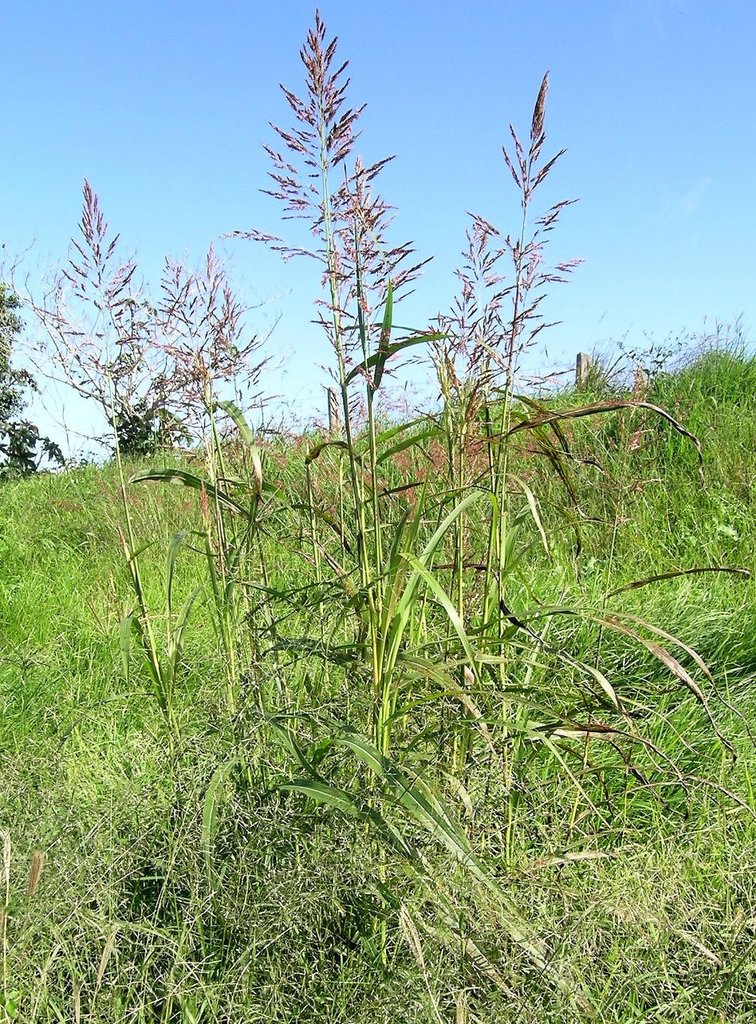
Johnsongrass is a resilient perennial grass that spreads through seeds and underground rhizomes. It is often considered an invasive weed in many parts of the world due to its aggressive growth habit. You will find it thriving in open fields, roadsides, and disturbed soils.
At a glance
- Care level
- Easy
- Plant type
- Perennial grass
- Light
- Full sun
- Indoor light
- Direct sun
- Water
- Every 7 to 14 days
- Mature size
- 7 feet
- Growth rate
- Fast
- Hardiness
- USDA 6 to 10
- Bloom time
- Mid to late summer
Care
This grass is extremely hardy and requires very little attention to survive. Watch for rapid spread, as its rhizomes can quickly take over garden beds. It prefers full sun and well drained soil to reach its full height.
- Watering
- It is quite drought tolerant once established but grows best with consistent moisture.
- Feeding
- It rarely needs extra food, but a light application of balanced fertilizer in spring can boost growth.
- Pruning
- Cut back regularly if you want to prevent it from going to seed and spreading.
- Repotting
- If kept in a container, move it to a larger pot when the roots become crowded.
- Soil
- Well drained, fertile soil
- Soil pH
- 5.0 to 7.5
- Temperature
- -15 to 40°C
- Humidity
- 30 to 80%
Safety
- People
- The plant is considered toxic due to the presence of hydrocyanic acid, especially in young or stressed growth.
- Pets
- This plant can be toxic to livestock and pets if it contains high levels of cyanogenic glycosides, especially after frost or drought.
- Children
- Keep children away from this plant as the sharp leaf edges can cause cuts and the foliage is toxic if ingested.
- Contact allergens
- The leaves have sharp, serrated edges that can cause mechanical skin irritation.
- Airborne allergens
- The pollen is a significant airborne allergen for many people during the late summer flowering period.
- Edibility
- The foliage can contain cyanogenic glycosides that release cyanide when damaged, making it toxic to livestock and potentially dangerous if ingested by humans.
How to identify it
- Tall stems reaching 2 to 7 feet
- Long, flat, lance shaped leaves
- Prominent white midrib on leaves
- Large, open, purplish flower panicles
- Height
- 0.5 to 2.5m
- Spread
- 0.3 to 1m
- Leaves
- green, deciduous
- Flowers
- purple, green, 0.5 to 1cm
- Fruit
- brown, Autumn
Problems to watch for
- Rust · Fungal infection causing orange or brown pustules on the leaves.
Check your johnsongrass from a photo
Pocket Botanist looks at a photo of your plant and tells you what's wrong and what to try first.
Scan with your phone's camera to get the app
Or go to pocketbotanist.app/get on your phone
Growing it
- Propagation
- division, seed
- When to plant
- spring
There are no recommended companions for this species as it is an aggressive weed that should be managed for removal.
Similar species
- Sorghum · It is a related cultivated crop that lacks the aggressive, invasive rhizome system of Johnsongrass.
Science
- Family
- Poaceae
- Genus
- Sorghum
- Order
- Poales
- Class
- Liliopsida
- Native range
- Mediterranean region and parts of Asia.
- Conservation
- It is classified as a noxious weed in many regions and should not be planted intentionally.
It thrives in disturbed soils and open fields, spreading rapidly through an extensive underground network of rhizomes.
- Value to wildlife
- seed source for birds, nesting material
- Pollinators
- bees, butterflies
- Uses
- erosion control, wildlife habitat
Through the year
Ecological indicators
- Salinity
- 3/9
- Soil reaction
- 6/9
- Light
- 8/9
- Temperature
- 6/9
- Moisture
- 5/9
- Nutrients
- 7/9
Taxonomy resolved against GBIF.
Questions people ask
- Is Johnsongrass good for gardens?
- No, it is highly invasive and will quickly outcompete most garden plants.
- How do I get rid of it?
- Consistent digging to remove all rhizomes or repeated mowing is required to weaken the plant.
Where the name comes from
The common name honors William Johnson, who introduced the grass to his Alabama farm in the 1830s. The scientific name refers to the Aleppo region in Syria.
Good to know
- It was introduced to the United States in the 1800s as a potential forage crop.
- A single plant can produce thousands of seeds in one season.
- The rhizomes can grow several feet deep into the soil.
Also in
Keep your johnsongrass growing
This page is a general guide. Save your plant in Pocket Botanist and you get care reminders timed for this plant, plus a care history that shows what worked.
Scan with your phone's camera to get the app
Or go to pocketbotanist.app/get on your phone
This guide was generated with AI on and checked against GBIF taxonomy. It is general information, not horticultural or veterinary advice. Read about how we build these guides.