 Pocket Botanist
Plant guide
Nasturtium.
Tropaeolum majus L.
Pronounced tro-PEE-oh-lum MAY-jus
Also known as Garden Nasturtium, Indian Cress, Lark's Heel, Monk Cress, Nasties, Nasturtium



Scan with your phone's camera to get the app
Or go to pocketbotanist.app/get on your phone
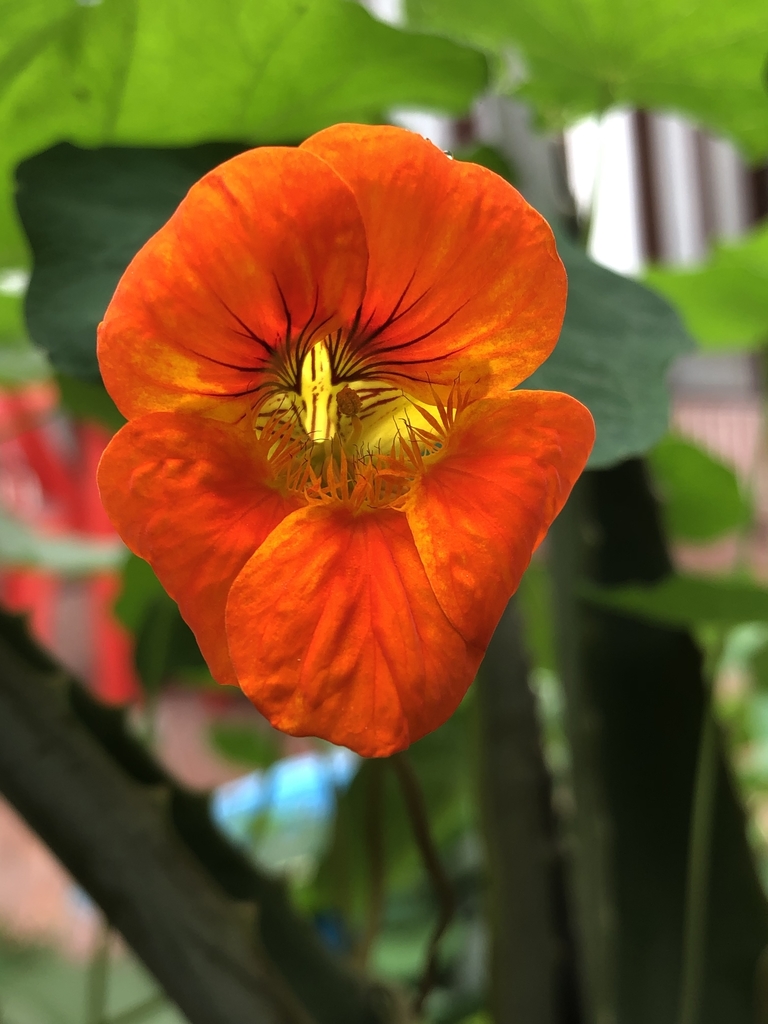
Nasturtiums are cheerful, fast growing annuals that bring a splash of color to any garden. They are incredibly easy to grow from seed and offer edible flowers and leaves with a peppery kick. You will love how they trail over containers or climb up a trellis.

At a glance
- Care level
- Easy
- Plant type
- Annual flowering herb
- Light
- Full sun
- Indoor light
- Direct sun
- Water
- Every 3 to 7 days
- Mature size
- 1 to 10 feet
- Growth rate
- Fast
- Hardiness
- USDA 9 to 11
- Bloom time
- Early summer to first frost
Care
Plant these in a sunny spot with well draining soil to keep them happy. Avoid over fertilizing, as too much food leads to lush foliage but very few flowers. Watch for aphids, which sometimes gather on the undersides of the leaves.
- Watering
- Water when the top inch of soil feels dry to the touch.
- Feeding
- Use a light, balanced fertilizer only if the soil is very poor.
- Pruning
- Deadhead spent blooms to encourage a longer flowering season.
- Repotting
- These are typically grown as annuals and do not require long term repotting.
- Soil
- Well draining, poor to average soil
- Soil pH
- 6.0 to 8.0
- Temperature
- 5 to 30°C
- Humidity
- 40 to 70%
- Drought tolerance
- Moderate
- Lifespan
- Annual, typically 1 season
- Fragrance
- Light
- Deer and rabbits
- Moderate
Signs it needs repotting
- Roots growing out of drainage holes
- Stunted growth despite regular feeding
Safety
- People
- This plant is non toxic to humans.
- Children
- The seeds are large enough to be a choking hazard for very small children.
- Contact allergens
- Some people may experience mild skin irritation from the sap.
- Airborne allergens
- There is no significant risk of respiratory allergy.
- Edibility
- Ensure plants are grown without pesticides if you intend to eat the flowers or leaves.
How to identify it
- Round, peltate, bright green leaves
- Funnel shaped flowers with long spurs
- Vibrant orange, red, or yellow petals
- Trailing or climbing growth habit
- Height
- 0.3 to 3m
- Spread
- 0.3 to 0.6m
- Leaves
- green, variegated, deciduous
- Flowers
- orange, red, yellow, 3 to 6cm
- Fruit
- green, late summer
Problems to watch for
- AphidsCommon
- Cabbage White ButterflyCommon
- Slugs and SnailsCommon
- Powdery MildewUncommon
Check your nasturtium from a photo
Pocket Botanist looks at a photo of your plant and tells you what's wrong and what to try first.
Scan with your phone's camera to get the app
Or go to pocketbotanist.app/get on your phone
Growing it
- Propagation
- seed
- When to plant
- spring
- Overwintering
- In cold climates, the plant will die with the first frost. You can collect the seeds in late summer to replant next spring.
- In containers
- They grow beautifully in hanging baskets or containers with at least a 20 cm depth.
Seed Sowing
- 1. Soak seeds in water for 4 hours to soften the coat.
- 2. Plant seeds 1 cm deep in well draining soil.
- 3. Keep soil moist until germination occurs in 7 to 14 days.
Plant nasturtiums at the base of your vegetable crops to manage pest populations naturally.
Grows well with
Similar species
- Canary Creeper · It is a related climbing species with fringed yellow flowers.
Science
- Family
- Tropaeolaceae
- Genus
- Tropaeolum
- Order
- Brassicales
- Class
- Magnoliopsida
- Native range
- Central and South America
- Conservation
- This plant is not of conservation concern.
It thrives in disturbed soils and climbs using twining leaf petioles.
- Value to wildlife
- nectar source, trap crop for aphids
- Pollinators
- bees, butterflies, hummingbirds
- Uses
- edible garnish, companion planting, ground cover, container gardening
Through the year
Ecological indicators
- Salinity
- 2/9
- Soil reaction
- 6/9
- Light
- 7/9
- Temperature
- 6/9
- Moisture
- 5/9
- Nutrients
- 3/9
Taxonomy resolved against GBIF.
Questions people ask
- Can I eat the seeds?
- Yes, they are often pickled and used as a substitute for capers.
- Do they need full sun?
- They prefer full sun but will bloom in partial shade.
Where the name comes from
The genus name refers to the shield shape of the leaves, resembling a trophy of war. The common name nasturtium comes from Latin meaning nose twister, referring to the peppery scent.
Good to know
- Nasturtiums are often used as a trap crop to lure aphids away from vegetables.
- The name Tropaeolum comes from the Greek word for trophy.
- The flowers are rich in vitamin C.
Keep your nasturtium growing
This page is a general guide. Save your plant in Pocket Botanist and you get care reminders timed for this plant, plus a care history that shows what worked.
Scan with your phone's camera to get the app
Or go to pocketbotanist.app/get on your phone
This guide was generated with AI on and checked against GBIF taxonomy. It is general information, not horticultural or veterinary advice. Read about how we build these guides.