 Pocket Botanist
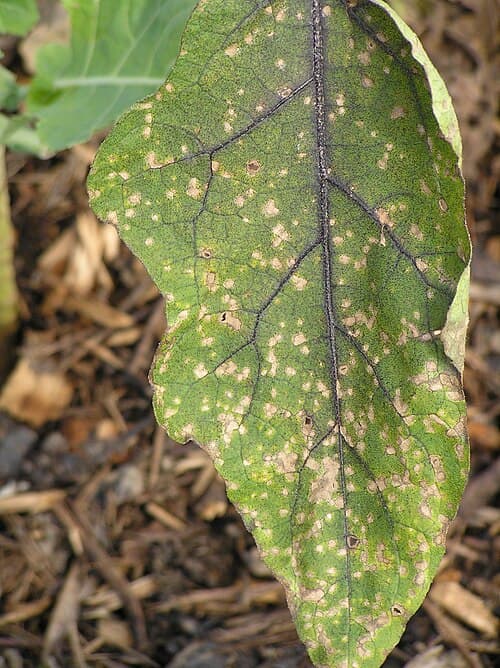

Check these first
- Look for a white powdery coating on the leaves.
- Check if you are watering the leaves instead of the soil.
- Remove any leaves that are touching the ground.
Likely causes
Powdery mildew
Most likelyHow to tell: White, dusty patches appear on the top of the leaves. It eventually spreads to cover the entire leaf surface.
What to do: Remove the most heavily infected leaves to improve airflow. Apply a mixture of 1 tablespoon of baking soda to a gallon of water to help manage the spread.
Fungal leaf spot
PossibleHow to tell: Small brown or tan spots with yellow halos appear on the leaves. These spots often grow larger and cause the leaf to die.
What to do: Avoid overhead watering to keep the foliage dry. Remove and dispose of any infected leaves in the trash, not your compost pile.
Find out what's wrong with your butternut squash
The list above covers the usual causes. Pocket Botanist looks at a photo of your actual plant and tells you the likely cause, how serious it is, and what to try first. Identification and a health check are free.



Scan with your phone's camera to get the app
Or go to pocketbotanist.app/get on your phone
When to worry
Small spots are common in late summer, but if the entire plant is covered in white dust, it will struggle to produce fruit. Remove infected leaves to save the rest of the plant.
Stopping it coming back
Water only at the base of the plant to keep leaves dry. Ensure the plant has plenty of space for air to circulate between the vines.
Butternut Squash: spots? Check yours with a photo
Every plant is a little different. Take a photo of your butternut squash and Pocket Botanist tells you which cause is most likely, how serious it is, and what to try first. A few checks a day are free. Save the plant and you get care reminders timed for it.
Scan with your phone's camera to get the app
Or go to pocketbotanist.app/get on your phone
Get the app · Or check it from a photo now, free
Questions people ask
- Is powdery mildew harmful to the fruit?
- It mostly affects the leaves, but a severe case can weaken the plant and lead to smaller or poorly developed squash.
- Can I compost the spotted leaves?
- No, it is best to throw them in the trash. Fungal spores can survive in compost and spread back to your garden next year.
Guides to these causes
More problems with Butternut Squash
- Why is my butternut squash plant drooping?
- Why is my butternut squash not producing flowers?
- Why are my butternut squash leaves turning yellow?
- What is eating my butternut squash?
- Why are my butternut squash leaf tips turning brown?
- Why are my butternut squash leaves falling off?
- Why is my butternut squash wilting from root rot?
- Why is my butternut squash growing so leggy?
- Why are my butternut squash leaves curling?
Back to the Butternut Squash guide
This article was generated with AI on from the plant’s care profile and is general information, not horticultural advice. Read about how we build these guides.