 Pocket Botanist
Guía de plantas
Butternut Squash.
Cucurbita moschata
Pronunciación koo-KUR-bi-tuh mos-KAH-tuh
También se conoce como Calabaza, Dickinson pumpkin, Kentucky field pumpkin, Large cheese pumpkin, Long Island cheese pumpkin, Neck pumpkin, Seminole pumpkin, Spanish gourd



Butternut squash is a popular winter squash known for its sweet, nutty flavor and smooth texture. These vining plants produce tan, bell shaped fruits that store well throughout the colder months. They are a staple in many home gardens and kitchens alike.
De un vistazo
- Nivel de cuidados
- Media
- Tipo de planta
- Annual vegetable
- Luz
- Full sun
- Luz en interior
- Sol directo
- Riego
- Cada 2 a 4 días
- Tamaño adulto
- 10 to 15 feet long vines
- Ritmo de crecimiento
- Rápido
- Rusticidad
- USDA 3 a 11
- Floración
- Mid summer to early autumn
Cuidados
Provide plenty of space for the vines to spread and ensure the soil stays consistently moist. Watch for powdery mildew on the leaves and harvest when the stem turns woody and brown. Consistent heat is key for fruit development.
- Riego
- Keep the soil evenly moist but avoid wetting the leaves to prevent fungal issues.
- Abonado
- Apply a balanced fertilizer once the plants start to bloom.
- Poda
- Trim back excessive vine growth if the plant is taking over your garden space.
- Trasplante
- These are annuals and are typically grown directly in the garden soil.
- Suelo
- Rich, well draining loam
- pH del suelo
- 6.0 to 6.8
- Temperatura
- 15 a 35°C
- Humedad
- 40 a 70%
- Tolerancia a la sequía
- Moderada
- Longevidad
- Annual, one growing season
- Resistencia a ciervos y conejos
- Baja
Seguridad
- Personas
- The plant is non toxic, though some wild varieties may contain cucurbitacins that cause bitterness and digestive upset.
- Niños
- The large, rough leaves can be abrasive to sensitive skin, and the heavy fruits may pose a crushing hazard if they fall.
- Alérgenos por contacto
- Handling the fuzzy stems and leaves may cause mild skin irritation in sensitive individuals.
- Alérgenos en el aire
- Pollen is generally heavy and sticky, posing little risk for airborne allergies.
- Comestibilidad
- Always cook the flesh thoroughly before consumption to ensure proper digestion.
Cómo identificarla
- Bell shaped tan skin
- Bright orange sweet flesh
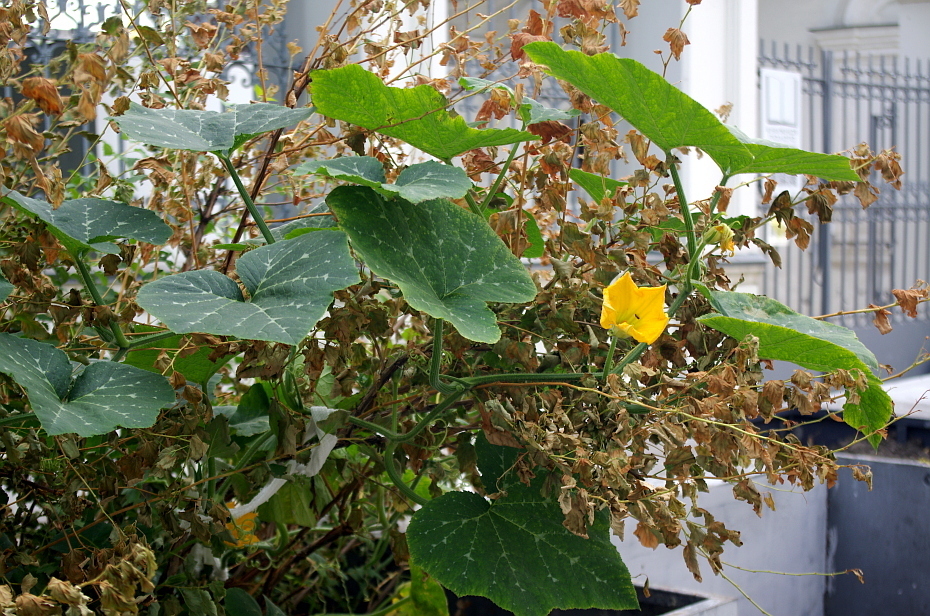
- Large heart shaped leaves
- Yellow trumpet shaped flowers
- Vining growth habit
- Altura
- 0,3 a 0,6m
- Anchura
- 2 a 6m
- Hojas
- green, deciduous
- Flores
- yellow, 5 a 10cm
- Frutos
- tan, orange, green, Late summer to autumn
Problemas frecuentes
- Powdery mildew — A white fungal growth that appears on the surface of leaves during humid weather.
- Squash vine borer — Larvae tunnel into the main stem, causing the plant to wilt and collapse suddenly.
Cómo cultivarla
- Propagación
- seed
- Cuándo plantar
- spring
- Cuidados en invierno
- The plant dies after the first frost, so remove all debris to prevent disease carryover.
- En maceta
- They are generally too large for containers, though dwarf varieties may grow in a 20 liter pot.
Direct Sowing
- 1. Wait until all danger of frost has passed.
- 2. Plant seeds 2 cm deep in warm, fertile soil.
- 3. Space mounds 1 meter apart to allow for vining.
Planting these in a traditional three sisters arrangement maximizes space and soil health.
Buenas compañeras
- Maíz — Corn provides a natural trellis for the squash to climb.
- Capuchina Común — Nasturtiums act as a trap crop for certain pests.
- Judía común — Beans fix nitrogen in the soil, which helps the squash grow.
Mantenla lejos de
- Potato — Potatoes compete for soil nutrients and space.
Especies parecidas
- Courgette — They share similar growth habits but have different fruit characteristics.
- Cucurbita maxima — These are also vining winter squashes but require different growing conditions.
Ciencia
- Familia
- Cucurbitaceae
- Género
- Cucurbita
- Orden
- Cucurbitales
- Clase
- Magnoliopsida
- Distribución natural
- Central and South America
- Conservación
- Not of conservation concern as it is widely cultivated globally.
It thrives in warm, sunny environments with rich soil and ample space to sprawl.
- Valor para la fauna
- nectar source
- Polinizadores
- abejas, mariposas
- Usos
- culinary, ornamental, storage crop
A lo largo del año
Indicadores ecológicos
- Salinidad
- 2/9
- Reacción del suelo
- 6/9
- Luz
- 8/9
- Temperatura
- 7/9
- Humedad
- 6/9
- Nutrientes
- 7/9
Taxonomía cotejada con GBIF.
Lo que más preguntan
- When should I harvest?
- Harvest when the rind is hard and the stem begins to dry or turn corky.
- Why are my fruits rotting?
- Excessive moisture or poor air circulation often leads to fruit rot.
De dónde viene el nombre
The name Cucurbita comes from the Latin word for gourd, while moschata refers to the faint musky scent of the fruit.
Bueno saberlo
- These squash are known for their excellent resistance to vine borers compared to other species.
- The fruits can often be stored for several months in a cool, dry place.
- They are a staple in many traditional dishes across the Americas.
¿Tu butternut squash tiene mal aspecto?
Esta página es una guía general. Pocket Botanist diagnostica problemas a partir de una foto de tu propia planta, calcula el riego según tu luz y tus condiciones, y te avisa cuando toca cuidarla.
Esta guía se ha generado con IA y se ha cotejado con la taxonomía de GBIF. Es información general, no asesoramiento botánico ni veterinario. Descubre cómo elaboramos estas guías.