 Pocket Botanist
Pflanzenratgeber
Winter Melon.
Benincasa hispida
Aussprache ben-in-KAH-suh HISS-pih-duh
Auch bekannt als Chinese preserving-melon, Chinese-watermelon, Waxgourd, Winter Melon, ash gourd, ash-pumpkin


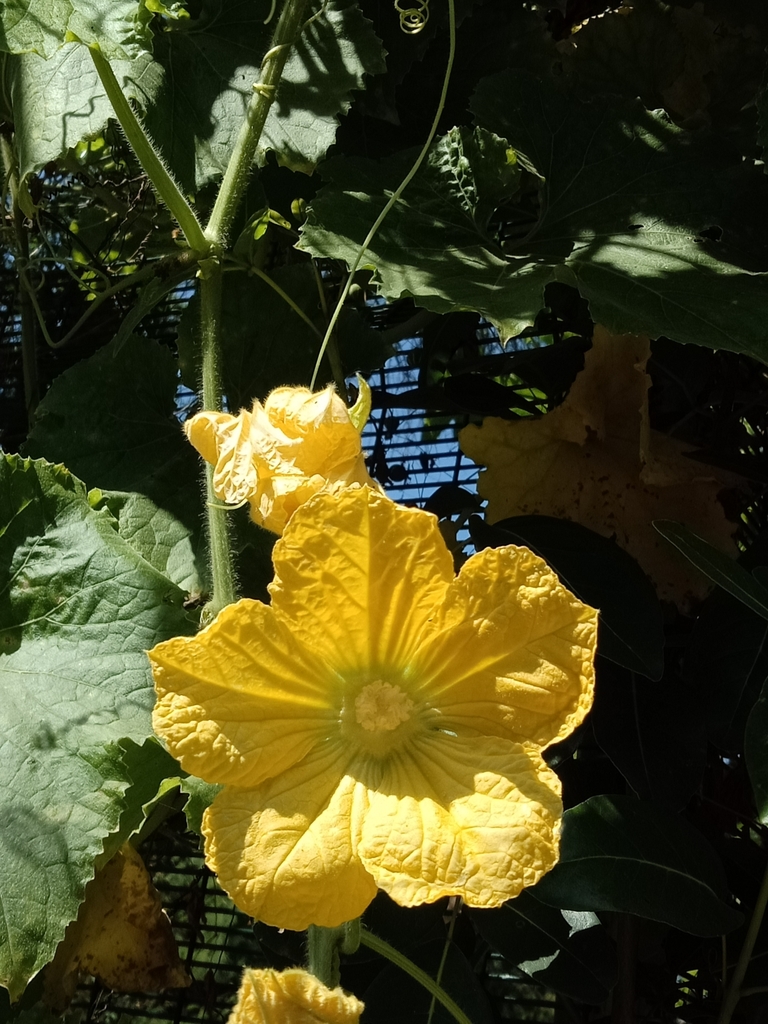
Winter melon is a vigorous vining plant grown for its large, waxy fruits. It thrives in warm climates and is a staple in many traditional dishes. You will love how productive these vines can be in your garden.
Auf einen Blick
- Pflegestufe
- Mittel
- Pflanzenart
- Annual vegetable
- Licht
- Full sun
- Licht im Innenraum
- Direkte Sonne
- Gießen
- Alle 2 bis 4 Tage
- Endgröße
- 10 to 15 feet
- Wachstum
- Schnell
- Winterhärte
- USDA 9 bis 11
- Blütezeit
- Mid to late summer
Pflege
Provide a sturdy trellis for the heavy fruits to climb and develop properly. Keep an eye out for powdery mildew on the leaves during humid weather. Ensure the soil stays consistently moist but not waterlogged.
- Gießen
- Keep the soil evenly moist throughout the growing season.
- Düngen
- Apply a balanced liquid fertilizer every two weeks once flowering begins.
- Schneiden
- Trim back excessive side shoots to encourage better fruit production.
- Umtopfen
- This plant is typically grown directly in the garden soil.
- Boden
- Well draining, fertile loam
- Boden-pH
- 6.0 to 7.0
- Temperatur
- 15 bis 35°C
- Luftfeuchtigkeit
- 60 bis 90%
- Trockenheitstoleranz
- Gering
- Lebensdauer
- Annual, typically one growing season.
- Wildverbiss-Resistenz
- Mittel
Anzeichen fürs Umtopfen
- Roots growing out of drainage holes
- Stunted growth despite regular feeding
Sicherheit
- Menschen
- The plant is non-toxic and widely used in culinary applications.
- Kinder
- The prickly hairs on the stems can scratch delicate skin, so keep children away from the vines.
- Kontaktallergene
- The stems and leaves are covered in stiff, prickly hairs that can cause skin irritation upon contact.
- Allergene in der Luft
- There are no notable respiratory allergens associated with this plant.
- Essbarkeit
- The fruit is widely consumed cooked, but ensure it is harvested at the proper maturity for the best texture.
So erkennst du die Pflanze
- Large, fuzzy, heart shaped leaves
- Yellow, five petaled flowers
- Large, oblong, waxy green fruit
- White, crisp flesh inside
- Vigorous, climbing vine habit
- Höhe
- 0,3 bis 3m
- Breite
- 2 bis 6m
- Blätter
- green, deciduous
- Blüten
- yellow, 5 bis 10cm
- Früchte
- green, white, Autumn
Häufige Probleme
- Powdery mildew — A fungal infection that appears as white dusty patches on the leaves.
- Aphids — Small insects that cluster on new growth and suck plant sap.
Standort und Pflege
- Vermehrung
- seed
- Pflanzzeit
- Spring
- Überwinterung
- This plant is a frost sensitive annual that will die back completely once temperatures drop.
- Im Kübel
- It requires a very large container of at least 40 liters to support its vigorous growth.
Seed
- 1. Soak seeds in warm water for 12 hours.
- 2. Plant in well draining soil.
- 3. Keep warm until germination.
Plant near tall, sturdy crops that can support the heavy weight of the developing fruit.
Gute Pflanzpartner
- Mais — Corn provides a sturdy structure for the vines to climb.
- Kapuzinerkresse — Nasturtiums act as a ground cover to suppress weeds around the base.
Ähnliche Arten
Botanisches
- Familie
- Cucurbitaceae
- Gattung
- Benincasa
- Ordnung
- Cucurbitales
- Klasse
- Magnoliopsida
- Ursprüngliche Heimat
- Tropical and subtropical Asia.
- Artenschutz
- This species is widely cultivated and not of conservation concern.
It thrives in warm, humid environments where it can climb over other vegetation to reach sunlight.
- Nutzen für Wildtiere
- nectar source
- Bestäuber
- Bienen, Schmetterlinge
- Verwendung
- culinary, traditional medicine, ornamental
Im Jahresverlauf
Ökologische Zeigerwerte
- Salzgehalt
- 2/9
- Bodenreaktion
- 6/9
- Licht
- 8/9
- Temperatur
- 8/9
- Feuchtigkeit
- 7/9
- Nährstoffe
- 7/9
Taxonomie abgeglichen mit GBIF.
Häufige Fragen
- Does it need a trellis?
- Yes, it is a vigorous climber and benefits greatly from a strong trellis.
- Can I grow it in a pot?
- It is possible in a very large container, but it prefers being in the ground.
Woher der Name kommt
The specific epithet hispida refers to the bristly hairs covering the plant, while the common name wax gourd describes its unique waxy skin.
Gut zu wissen
- The fruit is often called winter melon because it can be stored through the winter.
- It is a staple ingredient in many Asian soups and stir fries.
- The waxy bloom on the skin is a natural defense against moisture loss.
Probleme mit Winter Melon?
Diese Seite bietet allgemeine Infos. Pocket Botanist erkennt Probleme anhand eines Fotos deiner echten Pflanze, passt das Gießen an dein Licht und deinen Standort an und erinnert dich an die Pflege.
Dieser Ratgeber wurde mit KI erstellt und mit der GBIF-Taxonomie abgeglichen. Er dient zur allgemeinen Information und ersetzt keine gärtnerische oder tierärztliche Beratung. Hier erfährst du, wie wir diese Ratgeber erstellen.