 Pocket Botanist
Guide botanique
Winter Melon.
Benincasa hispida
Prononciation ben-in-KAH-suh HISS-pih-duh
Aussi appelée Chinese preserving-melon, Chinese-watermelon, Waxgourd, Winter Melon, ash gourd, ash-pumpkin


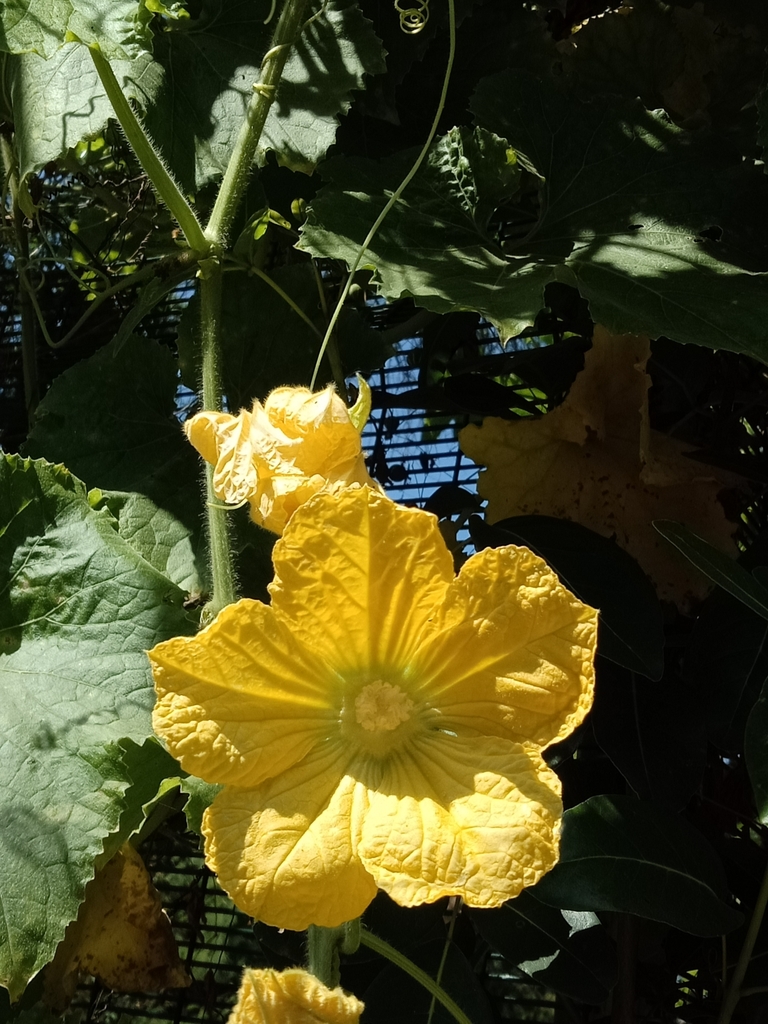
Winter melon is a vigorous vining plant grown for its large, waxy fruits. It thrives in warm climates and is a staple in many traditional dishes. You will love how productive these vines can be in your garden.
En un coup d'œil
- Niveau d'entretien
- Moyenne
- Type de plante
- Annual vegetable
- Lumière
- Full sun
- Lumière en intérieur
- Soleil direct
- Arrosage
- Tous les 2 à 4 jours
- Taille adulte
- 10 to 15 feet
- Croissance
- Rapide
- Rusticité
- USDA 9 à 11
- Floraison
- Mid to late summer
Entretien
Provide a sturdy trellis for the heavy fruits to climb and develop properly. Keep an eye out for powdery mildew on the leaves during humid weather. Ensure the soil stays consistently moist but not waterlogged.
- Arrosage
- Keep the soil evenly moist throughout the growing season.
- Engrais
- Apply a balanced liquid fertilizer every two weeks once flowering begins.
- Taille
- Trim back excessive side shoots to encourage better fruit production.
- Rempotage
- This plant is typically grown directly in the garden soil.
- Sol
- Well draining, fertile loam
- pH du sol
- 6.0 to 7.0
- Température
- 15 à 35°C
- Humidité
- 60 à 90%
- Résistance à la sécheresse
- Faible
- Durée de vie
- Annual, typically one growing season.
- Résistance aux chevreuils et lapins
- Moyenne
Signes qu'il faut rempoter
- Roots growing out of drainage holes
- Stunted growth despite regular feeding
Sécurité
- Humains
- The plant is non-toxic and widely used in culinary applications.
- Enfants
- The prickly hairs on the stems can scratch delicate skin, so keep children away from the vines.
- Allergènes de contact
- The stems and leaves are covered in stiff, prickly hairs that can cause skin irritation upon contact.
- Allergènes aéroportés
- There are no notable respiratory allergens associated with this plant.
- Comestibilité
- The fruit is widely consumed cooked, but ensure it is harvested at the proper maturity for the best texture.
Comment l'identifier
- Large, fuzzy, heart shaped leaves
- Yellow, five petaled flowers
- Large, oblong, waxy green fruit
- White, crisp flesh inside
- Vigorous, climbing vine habit
- Hauteur
- 0,3 à 3m
- Envergure
- 2 à 6m
- Feuilles
- green, deciduous
- Fleurs
- yellow, 5 à 10cm
- Fruits
- green, white, Autumn
Problèmes courants
- Powdery mildew — A fungal infection that appears as white dusty patches on the leaves.
- Aphids — Small insects that cluster on new growth and suck plant sap.
La cultiver
- Multiplication
- seed
- Quand planter
- Spring
- Hivernage
- This plant is a frost sensitive annual that will die back completely once temperatures drop.
- En pot
- It requires a very large container of at least 40 liters to support its vigorous growth.
Seed
- 1. Soak seeds in warm water for 12 hours.
- 2. Plant in well draining soil.
- 3. Keep warm until germination.
Plant near tall, sturdy crops that can support the heavy weight of the developing fruit.
Bonnes associations
Espèces similaires
Science
- Famille
- Cucurbitaceae
- Genre
- Benincasa
- Ordre
- Cucurbitales
- Classe
- Magnoliopsida
- Région d'origine
- Tropical and subtropical Asia.
- Préservation
- This species is widely cultivated and not of conservation concern.
It thrives in warm, humid environments where it can climb over other vegetation to reach sunlight.
- Intérêt pour la faune
- nectar source
- Pollinisateurs
- abeilles, papillons
- Utilisations
- culinary, traditional medicine, ornamental
Au fil des saisons
Repères écologiques
- Salinité
- 2/9
- Réaction du sol
- 6/9
- Lumière
- 8/9
- Température
- 8/9
- Humidité
- 7/9
- Nutriments
- 7/9
Taxonomie vérifiée avec le GBIF.
Ce qu'on demande souvent
- Does it need a trellis?
- Yes, it is a vigorous climber and benefits greatly from a strong trellis.
- Can I grow it in a pot?
- It is possible in a very large container, but it prefers being in the ground.
D'où vient le nom
The specific epithet hispida refers to the bristly hairs covering the plant, while the common name wax gourd describes its unique waxy skin.
Bon à savoir
- The fruit is often called winter melon because it can be stored through the winter.
- It is a staple ingredient in many Asian soups and stir fries.
- The waxy bloom on the skin is a natural defense against moisture loss.
Ta plante a mauvaise mine ?
Cette page est un guide général. Pocket Botanist diagnostique les problèmes directement à partir d'une photo de ta plante, adapte l'arrosage à sa luminosité et te prévient quand il faut t'en occuper.
Ce guide a été généré par IA et vérifié avec la taxonomie du GBIF. Il s'agit d'informations générales, et non de conseils horticoles ou vétérinaires. Découvre comment nous concevons ces guides.