 Pocket Botanist
Plant guide
Peach tree.
Prunus persica
Pronounced PROO-nus PER-si-ka
Also known as Peach



Scan with your phone's camera to get the app
Or go to pocketbotanist.app/get on your phone
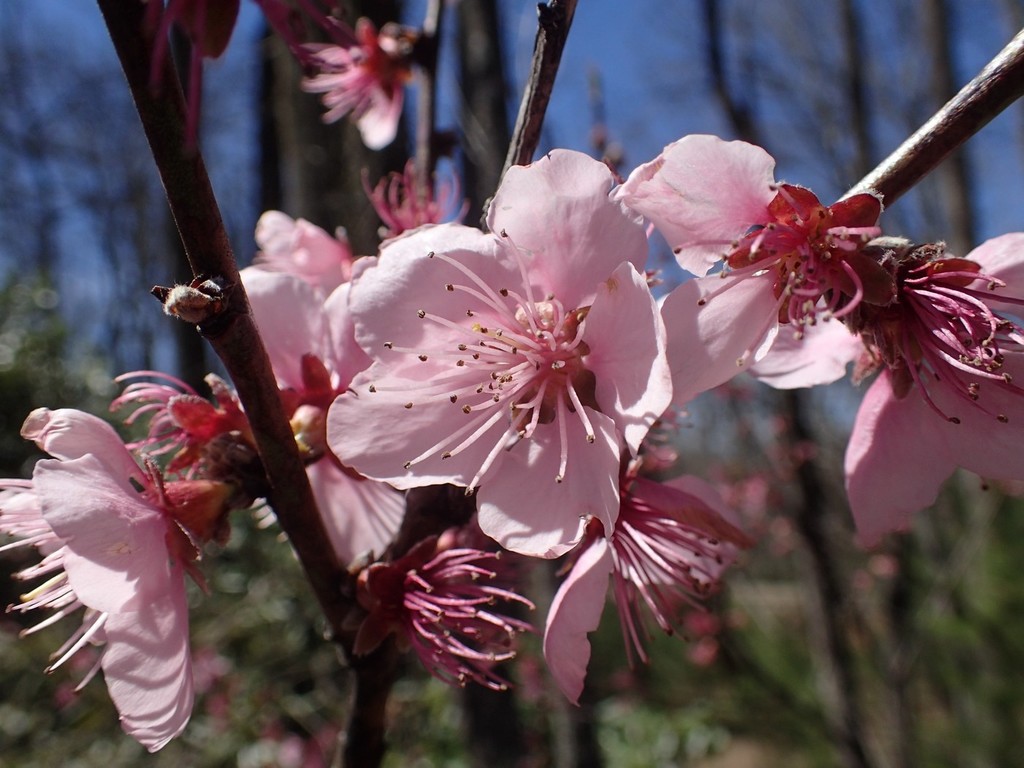
The peach tree is a lovely deciduous fruit tree that thrives in temperate climates. It produces beautiful spring blossoms followed by sweet, juicy fruit in the summer. You will need to provide a sunny spot and consistent care to enjoy a good harvest.

At a glance
- Care level
- Moderate
- Plant type
- Deciduous fruit tree
- Light
- Full sun
- Indoor light
- Direct sun
- Water
- Every 7 to 14 days
- Mature size
- 4 to 8 meters
- Growth rate
- Fast
- Hardiness
- USDA 5 to 9
- Bloom time
- Early to mid spring
Care
Plant your tree in well draining soil and ensure it gets plenty of direct sunlight for the best fruit production. Keep an eye out for leaf curl or pests like aphids, and prune annually to maintain an open center for airflow. Water deeply during dry spells to help the fruit develop properly.
- Watering
- Water deeply once a week, increasing frequency during hot, dry summer months.
- Feeding
- Apply a balanced fertilizer in early spring and again in early summer.
- Pruning
- Prune in late winter while the tree is dormant to remove dead wood and shape the canopy.
- Repotting
- Repot young trees every few years if grown in containers, though they prefer being planted in the ground.
- Soil
- Well draining sandy loam
- Soil pH
- 6.0 to 7.0
- Temperature
- -25 to 35°C
- Humidity
- 40 to 70%
- Drought tolerance
- Moderate
- Lifespan
- Perennial, typically 15 to 20 years.
- Fragrance
- Strong
- Deer and rabbits
- Low
Signs it needs repotting
- Roots growing out of the drainage holes.
- Water running straight through the soil without soaking in.
- Stunted growth despite regular feeding.
Safety
- People
- The leaves and seeds contain amygdalin, which releases cyanide when ingested.
- Pets
- The leaves, stems, and seeds contain cyanogenic glycosides which are toxic to cats and dogs if ingested.
- Children
- The hard pits pose a significant choking hazard to small children.
- Contact allergens
- Handling the fuzzy skin of the fruit can cause contact dermatitis in sensitive individuals.
- Airborne allergens
- Pollen from the flowers can trigger seasonal allergies in some people.
- Edibility
- Peach pits contain cyanogenic glycosides and should never be consumed.
How to identify it
- Lance shaped leaves with serrated edges
- Showy pink flowers in early spring
- Fuzzy skin on rounded stone fruit
- Smooth gray bark on younger branches
- Height
- 3 to 7.5m
- Spread
- 3 to 6m
- Leaves
- green, deciduous
- Flowers
- pink, 2 to 4cm
- Fruit
- yellow, red, Summer
Problems to watch for
- AphidsCommon
- Late Frost DamageCommon
- Peach Leaf CurlCommon
- Plum CurculioCommon
- CankerUncommon
- ChlorosisUncommon
- Powdery MildewUncommon
- Shot Hole DiseaseUncommon
Check your peach tree from a photo
Pocket Botanist looks at a photo of your plant and tells you what's wrong and what to try first.
Scan with your phone's camera to get the app
Or go to pocketbotanist.app/get on your phone
Growing it
- Propagation
- grafting, seed
- When to plant
- early spring, late autumn
- Overwintering
- Ensure the tree is dormant before winter and apply a layer of mulch to protect the roots from extreme temperature fluctuations.
- In containers
- Dwarf varieties can grow well in large containers of at least 15 to 20 gallons.
Grafting
- 1. Select a healthy rootstock suited to your soil.
- 2. Take a scion from a desired peach variety.
- 3. Use a whip or cleft graft to join the scion to the rootstock.
- 4. Secure the graft with grafting tape and seal with wax.
- 5. Keep the union protected until it heals.
Planting aromatic herbs like chives or garlic beneath the canopy can help mask the scent of the tree from pests.
Grows well with
- Garlic · It helps deter certain pests that target fruit trees.
- Nasturtium · It acts as a trap crop for aphids.
Keep away from
- Apricot · They share similar pests and diseases, increasing the risk of cross infection.
Similar species
- Nectarine · It is a genetic variant of the peach that lacks the fuzzy skin.
Science
- Family
- Rosaceae
- Genus
- Prunus
- Order
- Rosales
- Class
- Magnoliopsida
- Native range
- Northwest China
- Conservation
- Not of conservation concern.
It thrives in well drained soils with a distinct cold period to break dormancy.
- Value to wildlife
- nectar source
- Pollinators
- bees
- Uses
- culinary fruit, ornamental spring blossoms
Through the year
Ecological indicators
- Salinity
- 2/9
- Soil reaction
- 6/9
- Light
- 8/9
- Moisture
- 5/9
- Nutrients
- 6/9
- Temperature
- 6/9
Taxonomy resolved against GBIF.
Questions people ask
- Do I need two trees to get fruit?
- Most peach trees are self fertile, so you only need one.
- When should I prune my peach tree?
- Prune in late winter while the tree is still dormant.
Where the name comes from
The species name persica reflects the historical, though incorrect, belief that peaches originated in Persia.
Good to know
- Peaches originated in China and were brought to the West via the Silk Road.
- The fuzzy texture of the skin is a defense mechanism against insects.
- There are over 2,000 varieties of peaches grown worldwide.
- Georgia is known as the Peach State, but it is not the top producer in the US.
Also in
Keep your peach tree growing
This page is a general guide. Save your plant in Pocket Botanist and you get care reminders timed for this plant, plus a care history that shows what worked.
Scan with your phone's camera to get the app
Or go to pocketbotanist.app/get on your phone
This guide was generated with AI on and checked against GBIF taxonomy. It is general information, not horticultural or veterinary advice. Read about how we build these guides.