 Pocket Botanist
Symptoms by part
Leaves
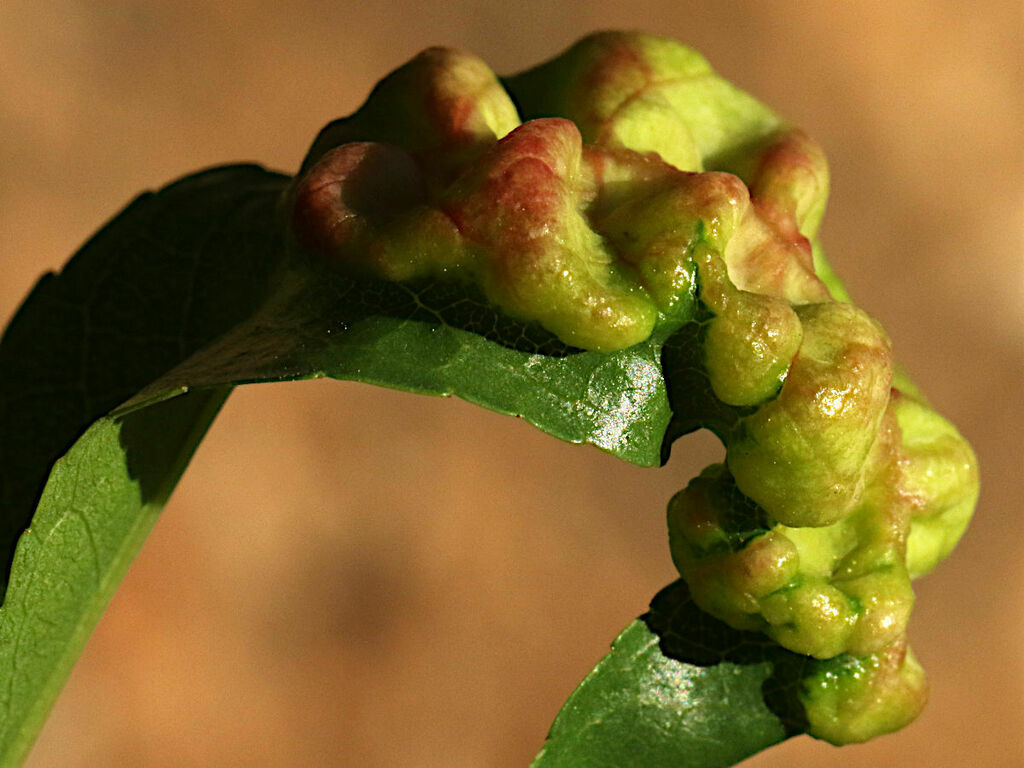
Leaves emerge puckered, curled, and thickened with a reddish or purple tint, eventually turning yellow or brown before dropping off.
Causes
- Cool, wet weather during the early spring when buds are beginning to swell.
- Prolonged periods of rain or high humidity that allow fungal spores to infect the new growth.
Could be confused with
- Aphid infestation · Aphids cause leaf curling but you will see the insects themselves or their sticky honeydew residue on the undersides of leaves.
- Leaf miner damage · Leaf miners create distinct tunnels or trails inside the leaf tissue rather than causing the entire leaf to thicken and pucker.
Find out what's really wrong with your plant
Problems that look alike are easy to mix up. Pocket Botanist looks at a photo of your actual plant and tells you what's going on, how serious it is, and what to try first. Identification and a health check are free.



Scan with your phone's camera to get the app
Or go to pocketbotanist.app/get on your phone
Treatment
- 1. Remove and destroy any infected leaves as soon as you spot them to reduce the amount of fungal spores in the area.
- 2. Provide the tree with extra water and a balanced fertilizer during the growing season to help it recover from the stress of losing its leaves.
- 3. Install a rain cover or temporary shelter over small trees before the buds begin to swell in early spring to keep the foliage dry.
Without chemicals
- Prune away any branches that show signs of severe infection to improve airflow.
- Use a rain cover to protect the tree canopy from spring rains.
- Ensure the tree is planted in a sunny, well drained location to discourage fungal growth.
Chemical options
- Copper-based fungicide or lime sulfur, apply as a dormant spray to the branches and trunk before buds swell, follow the label.
Preventing it
- Apply a dormant spray of a copper-based fungicide or lime sulfur in late winter before the buds begin to swell.
- Plant resistant varieties of peach trees if you live in an area with frequent spring rains.
- Apply a second dormant spray in late autumn after the leaves have fallen, since the spores overwinter on the bark and bud scales, not in fallen leaves.
Season
The cool, wet period at the start of the growing season.
Spread risk
Moderate
Severity
Moderate
When to act
You must apply preventative treatments before the buds break in early spring, as there is no effective treatment once the leaves are already curled. If the tree is severely weakened over several years, you may need to consider replacing it.
Keep your plants healthy from here
Save your plants in Pocket Botanist and you get care reminders timed for each one, plus a care history that shows what worked. Identification and a health check are free.
Questions people ask
- Will my tree die from peach leaf curl?
- Usually not, but it can significantly weaken the tree and reduce fruit production if it happens year after year.
- Can I spray the tree once I see the curled leaves?
- No, fungicides are ineffective once the fungus has already entered the leaf tissue.
- Does the disease spread to other plants?
- It primarily affects peaches and nectarines, and while spores can travel on the wind, it does not typically infect non-stone fruit plants.
Plants it affects
This guide was generated with AI on and is general information, not horticultural advice. Read about how we build these guides.