 Pocket Botanist
Plant guide
Fig.
Ficus carica
Pronounced FY-kus KAR-ih-kuh
Also known as Common Fig, Edible Fig, Fig, Fig Tree



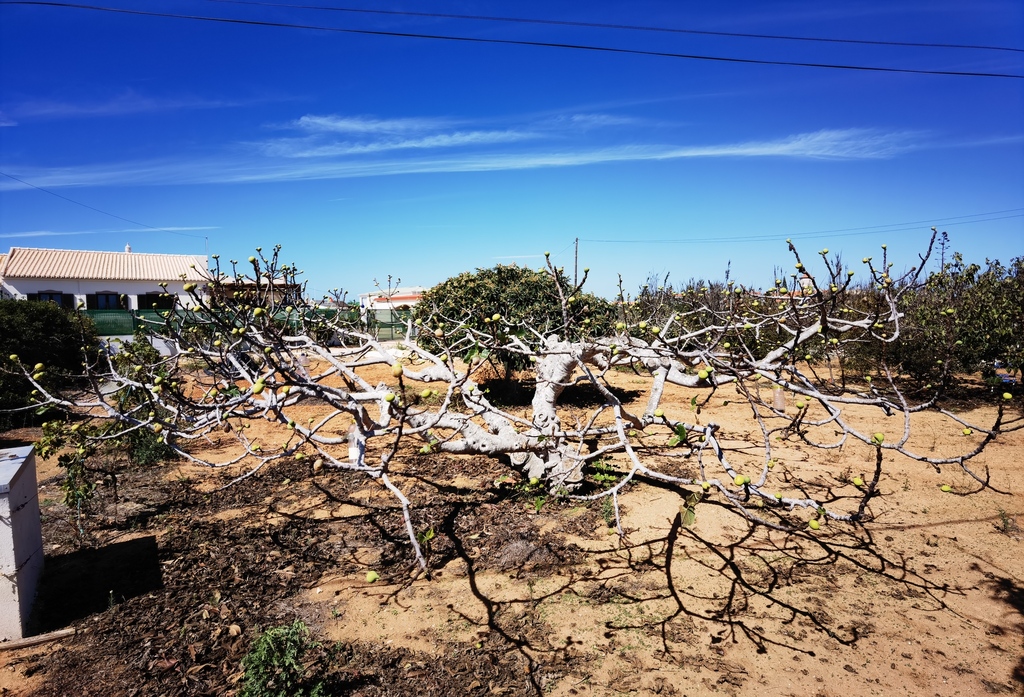
The common fig is a beautiful, deciduous tree known for its sweet, edible fruit and lobed leaves. It thrives in warm climates and can be grown in containers in cooler regions. You will love the Mediterranean charm it brings to your garden or patio.
At a glance
- Care level
- Moderate
- Plant type
- Deciduous fruit tree
- Light
- Full sun
- Indoor light
- Direct sun
- Water
- Every 3 to 7 days
- Mature size
- 3 to 10 meters
- Growth rate
- Medium
- Hardiness
- USDA 6 to 10
- Bloom time
- Late spring to early summer
Care
Provide plenty of sunlight to encourage fruit production and keep the soil consistently moist during the growing season. Watch for spider mites or scale insects on the undersides of leaves. Prune in late winter while the tree is dormant to maintain shape and improve airflow.
- Watering
- Water deeply when the top few centimeters of soil feel dry to the touch.
- Feeding
- Apply a balanced fertilizer during the active growing season from spring through mid summer.
- Pruning
- Prune during winter dormancy to remove dead wood and encourage new fruit bearing branches.
- Repotting
- Repot every few years when the roots become crowded or the tree stops growing vigorously.
- Soil
- Well draining, fertile loam
- Soil pH
- 6.0 to 7.8
- Temperature
- -12 to 40°C
- Humidity
- 40 to 70%
- Drought tolerance
- High
- Lifespan
- Perennial, typically 30 to 50 years.
- Fragrance
- Light
- Deer and rabbits
- Moderate
Signs it needs repotting
- Roots growing out of the drainage holes.
- Water running straight through the pot without soaking in.
- Stunted growth during the active season.
Safety
- People
- The milky latex sap can cause skin irritation and photosensitivity in some people.
- Pets
- The milky sap can cause irritation to the skin and mouth of cats and dogs if ingested or touched.
- Children
- The milky sap is irritating to the skin and eyes, so keep children away from broken stems.
- Contact allergens
- The milky sap contains furanocoumarins which can cause contact dermatitis or blistering when exposed to sunlight.
- Airborne allergens
- The pollen is generally not considered a significant allergen.
- Edibility
- Unripe fruit and leaves contain a latex sap that can cause significant mouth and throat irritation.
How to identify it
- Deeply lobed, palmately veined leaves
- Milky white sap in stems
- Smooth, greyish bark
- Pear shaped edible fruits
- Rough textured leaf surface
- Height
- 3 to 9m
- Spread
- 3 to 9m
- Leaves
- green, deciduous
- Flowers
- green, 1 to 2cm
- Fruit
- purple, brown, green, Late summer to autumn
Problems to watch for
- Fig BeetleCommon
- Fig RustCommon
- Peacock SpotCommon
- Leaf DropUncommon
- Root RotUncommon
- Scale InsectsUncommon
- Sooty MoldUncommon
- Verticillium WiltUncommon
By symptom
Check your fig from a photo
Pocket Botanist looks at a photo of your plant and tells you what's wrong and what to try first.
Growing it
- Propagation
- cuttings, layering, division
- When to plant
- spring, autumn
- Overwintering
- In cold climates, move containerized figs to an unheated garage or shed once leaves drop. If planted in the ground, wrap the trunk with burlap or straw to protect it from harsh winter winds.
- In containers
- Figs grow very well in large containers, which also helps restrict their size and encourages fruit production.
Hardwood cuttings
- 1. Take a 20 cm cutting in late winter while the tree is dormant.
- 2. Dip the base in rooting hormone.
- 3. Plant in a pot with well-draining soil.
- 4. Keep in a cool, bright spot until spring growth appears.
Plant drought-tolerant Mediterranean herbs beneath the canopy to make the most of the dry soil conditions.
Grows well with
Similar species
- Creeping Fig — It is a related species but grows as a vine rather than a tree.
Science
- Family
- Moraceae
- Genus
- Ficus
- Order
- Rosales
- Class
- Magnoliopsida
- Native range
- Mediterranean region and Western Asia.
- Conservation
- Not of conservation concern.
Figs are highly adaptable to rocky, dry soils and thrive in areas with long, hot summers.
- Value to wildlife
- provides shelter for birds, fruit source for wildlife
- Pollinators
- wasps
- Uses
- culinary fruit, ornamental specimen, container plant
Through the year
Ecological indicators
- Salinity
- 3/9
- Light
- 8/9
- Moisture
- 4/9
- Nutrients
- 5/9
- Soil reaction
- 6/9
- Temperature
- 7/9
Taxonomy resolved against GBIF.
Questions people ask
- Do I need two trees to get fruit?
- Most common garden varieties are self-fertile and do not require a second tree.
- Why is my tree not fruiting?
- It may be too young, or it might be receiving too much nitrogen fertilizer which encourages leaves instead of fruit.
Where the name comes from
The genus name Ficus is the Latin word for fig, while the species name carica refers to Caria, an ancient region in Asia Minor.
Good to know
- Figs have been cultivated for thousands of years.
- They are one of the few plants that can be grown successfully in large containers.
- The fig wasp is essential for the pollination of many wild fig varieties.
Also in
Keep your fig growing
This page is a general guide. Save your plant in Pocket Botanist and you get care reminders timed for this plant, plus a care history that shows what worked.
This guide was generated with AI and checked against GBIF taxonomy. It is general information, not horticultural or veterinary advice. Read about how we build these guides.