 Pocket Botanist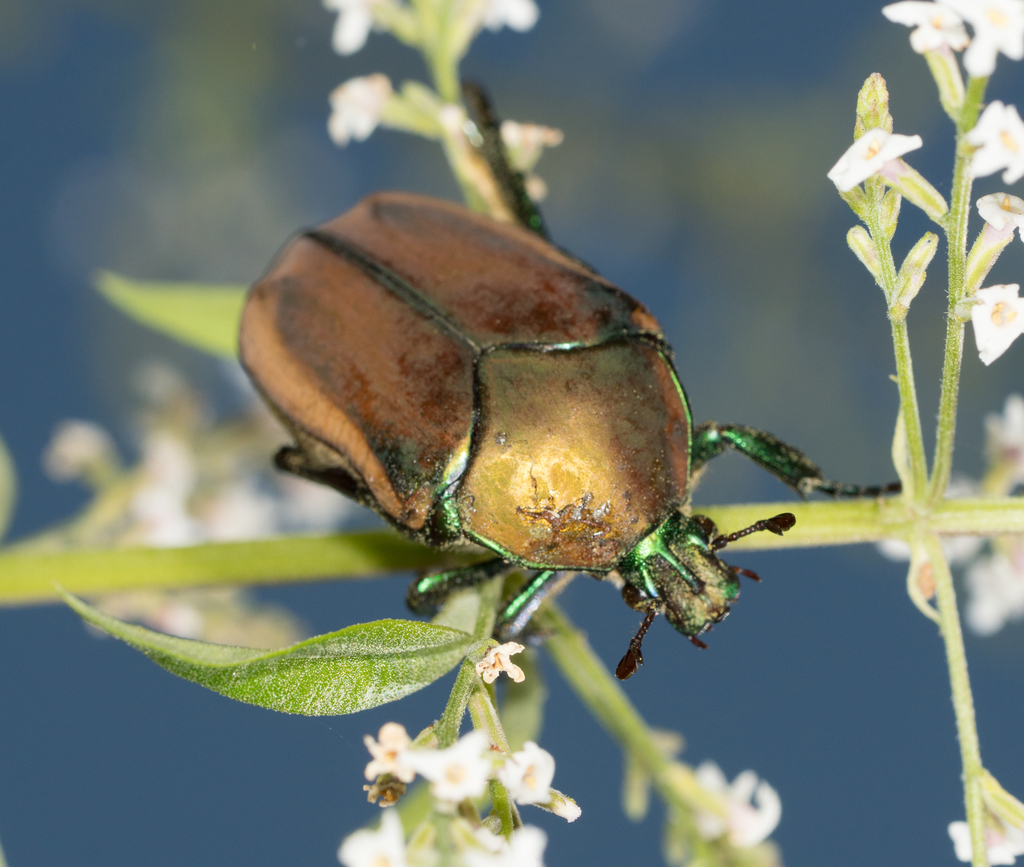
Symptoms by part
Fruit
You will see large, ragged holes in the skin and flesh of ripening fruit, often with multiple beetles clustered together feeding on the same piece.
Causes
- The presence of overripe or fermenting fruit on the tree or ground.
- Warm, sunny weather that encourages the adult beetles to fly and seek out sugary food sources.
Could be confused with
- Birds · Birds typically leave smaller, pecked marks rather than the large, messy gouges caused by beetle mouthparts.
- Wasps · Wasps usually enlarge existing holes or feed on the juices of already damaged fruit, whereas beetles actively tear into the skin.
Treatment
- Handpick the beetles off the fruit during the cooler morning hours when they are less active.
- Drop the collected beetles into a bucket of soapy water to dispose of them.
- Harvest all ripe and overripe fruit immediately to remove the food source.
Without chemicals
- Place fine mesh fruit bags over individual figs to prevent beetles from reaching the skin.
- Clear away all fallen fruit from the ground beneath the tree to discourage further attraction.
- Prune branches to improve airflow and visibility, making it easier to spot and remove beetles.
Preventing it
- Keep the area under the tree clean by removing any dropped or rotting fruit daily.
- Harvest fruit as soon as it reaches peak ripeness to avoid attracting beetles with overly soft or fermenting produce.
- Use physical barriers like netting or individual fruit bags early in the ripening process.
Season
The warm growing season, specifically when fruit is reaching full maturity.
Spread risk
Moderate
Severity
Low
When to act
Act as soon as you spot the first beetle on your fruit to save the rest of your harvest. If the tree is too large to manage by hand, you may need a tree surgeon to assist with netting or pruning.
Think it's Fig Beetle?
This guide covers the general picture. Pocket Botanist looks at your actual plant from a photo and tells you what's really going on, how serious it is, and what to try first. Identification and a health check are free.


Questions people ask
- Do Fig Beetles harm the tree itself?
- No, they are primarily interested in the fruit and do not cause structural damage to the leaves or branches of the tree.
- Are these beetles dangerous to humans?
- Not at all. They are harmless to handle and do not bite or sting, though they can be quite startling due to their large size and loud buzzing.
- Will the beetles go away on their own?
- They will naturally move on once the supply of ripe fruit is exhausted, but they will likely return if new fruit ripens while they are still active in the area.
Plants it affects
This guide was generated with AI and is general information, not horticultural advice. Read about how we build these guides.