 Pocket Botanist
Plant guide
Camellia.
Camellia
Pronounced kuh-MEE-lee-uh juh-PON-ih-kuh
Also known as Camellias, Tea, camellia, cammelias



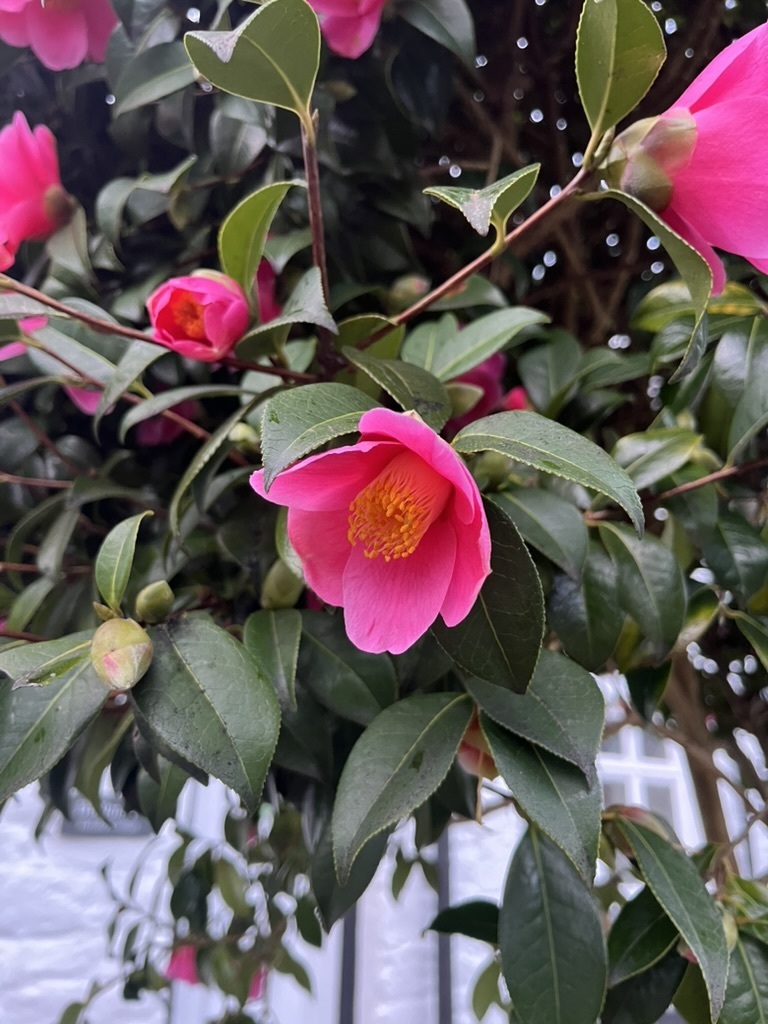
Camellias are elegant evergreen shrubs prized for their glossy foliage and stunning, rose-like blooms. They thrive in mild climates and add a touch of classic beauty to any garden. These plants prefer cool, humid conditions and consistent moisture.
At a glance
- Care level
- Moderate
- Plant type
- Evergreen shrub
- Light
- Partial shade to dappled sunlight
- Indoor light
- Bright indirect
- Water
- Every 5 to 10 days
- Mature size
- 6 to 12 feet
- Growth rate
- Slow
- Hardiness
- USDA 7 to 9
- Bloom time
- Late autumn to early spring
Care
Keep the soil consistently moist but never soggy to prevent root issues. Watch for yellowing leaves which often indicate poor drainage or incorrect soil pH. Provide a sheltered spot to protect the buds from late frosts.
- Watering
- Water deeply whenever the top inch of soil feels dry to the touch.
- Feeding
- Apply an acid-loving plant fertilizer during the active growing season.
- Pruning
- Prune immediately after flowering finishes to shape the plant and encourage new growth.
- Repotting
- Repot only when the plant becomes root-bound, using a high-quality acidic potting mix.
- Soil
- Acidic, well-draining, organic-rich soil
- Soil pH
- 5.5 to 6.5
- Temperature
- -10 to 30°C
- Humidity
- 60 to 90%
- Drought tolerance
- Low
- Lifespan
- Perennial, can live for over 50 years with proper care.
- Fragrance
- Light
- Deer and rabbits
- Moderate
Signs it needs repotting
- roots growing out of drainage holes
- water running straight through the pot
- stunted growth
Safety
- People
- The plant is generally considered non-toxic to humans.
- Pets
- Camellias are generally considered non-toxic to cats and dogs.
- Children
- The plant is safe for children, though the woody stems may be sharp if broken.
- Contact allergens
- Handling the foliage or flowers rarely causes skin irritation in sensitive individuals.
- Airborne allergens
- Camellias are not considered significant contributors to seasonal pollen allergies.
- Edibility
- While some species are used for tea, most ornamental camellias are not intended for consumption and may cause digestive upset.
How to identify it
- Glossy dark green leathery leaves
- Showy flowers with many petals
- Dense evergreen shrub growth habit
- Serrated leaf margins
- Height
- 1.5 to 4.5m
- Spread
- 1.2 to 3m
- Leaves
- dark green, glossy, evergreen
- Flowers
- white, pink, red, 5 to 12cm
Problems to watch for
- Camellia Petal BlightCommon
- Scale InsectsCommon
- AphidsUncommon
- Bud DropUncommon
- ChlorosisUncommon
- Leaf ScorchUncommon
- Root RotUncommon
- Sooty MoldUncommon
By symptom
Check your camellia from a photo
Pocket Botanist looks at a photo of your plant and tells you what's wrong and what to try first.
Growing it
- Propagation
- cuttings, layering, seed
- When to plant
- spring, early autumn
- Overwintering
- Apply a thick layer of mulch around the base to protect roots from freezing. In severe cold, cover the plant with burlap to prevent windburn.
- In containers
- They grow well in large pots, provided the container is at least 40 cm wide and has excellent drainage.
Semi-hardwood cuttings
- Take a 10 cm cutting from new growth in late summer.
- Remove the lower leaves and dip the end in rooting hormone.
- Plant in a moist, sandy potting mix.
- Cover with a plastic bag to maintain humidity.
- Keep in bright, indirect light until roots form.
Group them with other acid-loving plants to simplify soil management.
Grows well with
- Azalea — They share similar acidic soil and shade requirements.
- Japanese Maple — It provides the dappled shade that camellias prefer.
- Hosta — These perennials fill the space beneath the shrub with lush foliage.
Similar species
- Tea plant — It is a close relative grown primarily for its leaves rather than flowers.
Science
- Family
- Theaceae
- Genus
- Camellia
- Order
- Ericales
- Class
- Magnoliopsida
- Native range
- Eastern and Southern Asia
- Conservation
- Some wild species are threatened by habitat loss, but common garden varieties are widely cultivated.
They naturally grow as understory shrubs in moist, shaded woodland environments.
- Value to wildlife
- late season nectar source
- Pollinators
- bees
- Uses
- ornamental shrub, hedging, container plant
Through the year
Ecological indicators
- Salinity
- 1/9
- Soil reaction
- 3/9
- Light
- 4/9
- Nutrients
- 5/9
- Temperature
- 5/9
- Moisture
- 6/9
Taxonomy resolved against GBIF.
Questions people ask
- Why are my buds dropping?
- This is often caused by inconsistent watering or extreme temperature fluctuations.
- Do they need acidic soil?
- Yes, they thrive in acidic, well-draining soil rich in organic matter.
Where the name comes from
The genus was named by Linnaeus in honor of Georg Joseph Kamel, a Jesuit missionary and botanist.
Good to know
- Camellias are often called the rose of winter.
- They were introduced to Europe from Asia in the 18th century.
- The flowers can last for several weeks on the bush.
Also in
Keep your camellia growing
This page is a general guide. Save your plant in Pocket Botanist and you get care reminders timed for this plant, plus a care history that shows what worked.
This guide was generated with AI and checked against GBIF taxonomy. It is general information, not horticultural or veterinary advice. Read about how we build these guides.