 Pocket Botanist
Plant guide
Rhododendron.
Rhododendron
Pronounced roh-duh-DEN-drun
Also known as Azalea, Rhododendron, Azaleas, Rhododendron, Rhododendrons, Rhododenron, Rosebay, azalea, rhododendrons and azaleas


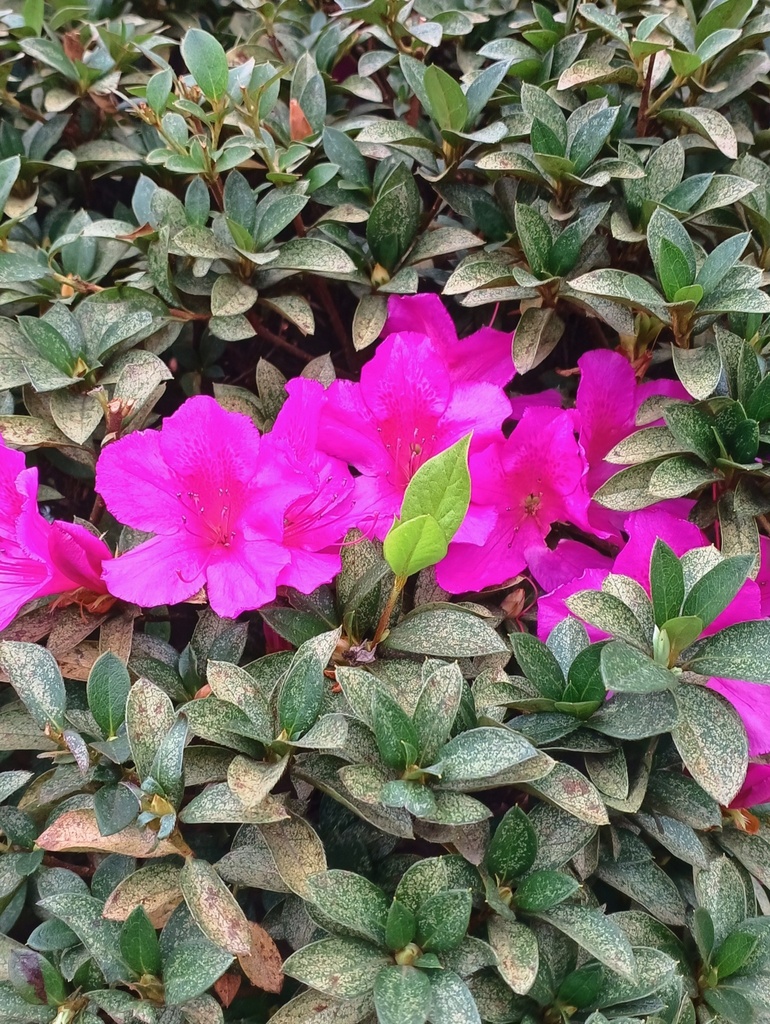
Rhododendrons are stunning woody shrubs known for their massive, showy flower clusters. They thrive in cool, moist environments with acidic soil. Most varieties prefer dappled shade to protect their foliage from harsh afternoon sun.
At a glance
- Care level
- Moderate
- Plant type
- Shrub
- Light
- Partial shade
- Indoor light
- Bright indirect
- Water
- Every 5 to 10 days
- Mature size
- 1 to 6 meters
- Growth rate
- Medium
- Hardiness
- USDA 4 to 9
- Bloom time
- Mid spring to early summer
Care
Keep the soil consistently moist but never waterlogged to prevent root rot. Mulch around the base to maintain root coolness and moisture. Watch for yellowing leaves which often signal poor drainage or incorrect soil pH.
- Watering
- Water deeply whenever the top few centimeters of soil feel dry.
- Feeding
- Apply an acid loving fertilizer once in early spring after flowering.
- Pruning
- Prune immediately after flowering to shape the shrub and remove dead wood.
- Repotting
- Repot only when the plant has clearly outgrown its container.
- Soil
- Well draining, acidic, organic rich soil
- Soil pH
- 4.5 to 6.0
- Temperature
- -25 to 30°C
- Humidity
- 60 to 90%
- Drought tolerance
- Low
- Lifespan
- Perennial, typically 20 to 50 years or more.
- Fragrance
- Light
- Deer and rabbits
- Low
Signs it needs repotting
- Roots growing out of the drainage holes.
- Water running straight through the pot without soaking in.
- Stunted growth during the active season.
Safety
- People
- The plant contains grayanotoxins which are poisonous to humans and pets if consumed.
- Pets
- All parts of the plant are highly toxic to cats and dogs if ingested.
- Children
- Keep children away from the plant as ingestion of any part can lead to severe poisoning.
- Contact allergens
- The leaves and stems can cause mild skin irritation in sensitive individuals.
- Airborne allergens
- The pollen is generally not considered a major airborne allergen.
- Edibility
- All parts of the plant are highly toxic if ingested and can cause serious illness.
How to identify it
- Large, leathery evergreen leaves
- Showy, bell shaped flower clusters
- Woody, multi stemmed growth habit
- Leaves often have scaly undersides
- Height
- 0.6 to 4.5m
- Spread
- 0.6 to 4m
- Leaves
- dark green, evergreen
- Flowers
- pink, purple, white, red, yellow, 2 to 10cm
- Fruit
- brown, late summer
Problems to watch for
- ChlorosisCommon
- Lace BugCommon
- PhytophthoraCommon
- Leaf ScorchUncommon
- Root RotUncommon
- Vine WeevilUncommon
By symptom
Check your rhododendron from a photo
Pocket Botanist looks at a photo of your plant and tells you what's wrong and what to try first.
Growing it
- Propagation
- cuttings, seed, layering
- When to plant
- spring, autumn
- Overwintering
- Apply a thick layer of mulch around the base to protect roots from freezing temperatures. Ensure the soil remains moist but not waterlogged during dry winter spells.
- In containers
- They grow well in large containers, provided you use a high-quality, acidic potting mix and ensure excellent drainage.
Stem Cuttings
- Take a 10 cm cutting from new growth in late summer.
- Remove the lower leaves and dip the end in rooting hormone.
- Plant in a mix of peat and perlite.
- Cover with a plastic bag to maintain humidity.
- Keep in bright, indirect light until rooted.
Group them with other acid-loving plants to make soil management easier.
Grows well with
- Japanese Maple — They share similar requirements for acidic soil and partial shade.
- Ferns — Ferns provide a beautiful textural contrast and thrive in the same woodland conditions.
- Pieris — This companion shares the same cultural needs and blooms at a similar time.
Similar species
- Azalea — Azaleas are technically a subgenus of Rhododendron with similar care needs.
- Mountain Laurel — It is a related ericaceous shrub that thrives in identical woodland environments.
Science
- Family
- Ericaceae
- Genus
- Rhododendron
- Order
- Ericales
- Class
- Magnoliopsida
- Native range
- Widely distributed across the Northern Hemisphere, particularly in the Himalayas and North America.
- Conservation
- Some rare species are protected, but most common garden varieties are not of conservation concern.
They typically grow in cool, moist, acidic forest understories where they benefit from dappled shade.
- Value to wildlife
- nectar source, shelter for small birds
- Pollinators
- bees, butterflies, hummingbirds
- Uses
- ornamental shrub, woodland garden feature, privacy screen
Through the year
Ecological indicators
- Salinity
- 1/9
- Soil reaction
- 3/9
- Light
- 4/9
- Moisture
- 6/9
- Temperature
- 5/9
- Nutrients
- 4/9
Taxonomy resolved against GBIF.
Questions people ask
- Why are my leaves turning yellow?
- This is often due to iron chlorosis caused by soil that is not acidic enough.
- Do I need to prune them?
- Only prune immediately after flowering to shape the plant and remove dead wood.
Where the name comes from
The name Rhododendron is derived from the Greek words rhodon, meaning rose, and dendron, meaning tree. It was named by Linnaeus to describe these woody plants with rose-like flowers.
Good to know
- Rhododendrons are the national flower of Nepal.
- The genus name comes from the Greek words for rose and tree.
- Some species can grow into massive trees in their native habitats.
- They prefer acidic soil to thrive.
Also in
Keep your rhododendron growing
This page is a general guide. Save your plant in Pocket Botanist and you get care reminders timed for this plant, plus a care history that shows what worked.
This guide was generated with AI and checked against GBIF taxonomy. It is general information, not horticultural or veterinary advice. Read about how we build these guides.