 Pocket Botanist
Plant guide
Mountain Laurel.
Kalmia latifolia
Pronounced KAL-mee-uh lat-ih-FOH-lee-uh
Also known as Calico Bush, Calico-bush, Clamoun, Ivybush, Lambkill, Mountain Laurel, Mountain-laurel, Sheep Laurel



Scan with your phone's camera to get the app
Or go to pocketbotanist.app/get on your phone
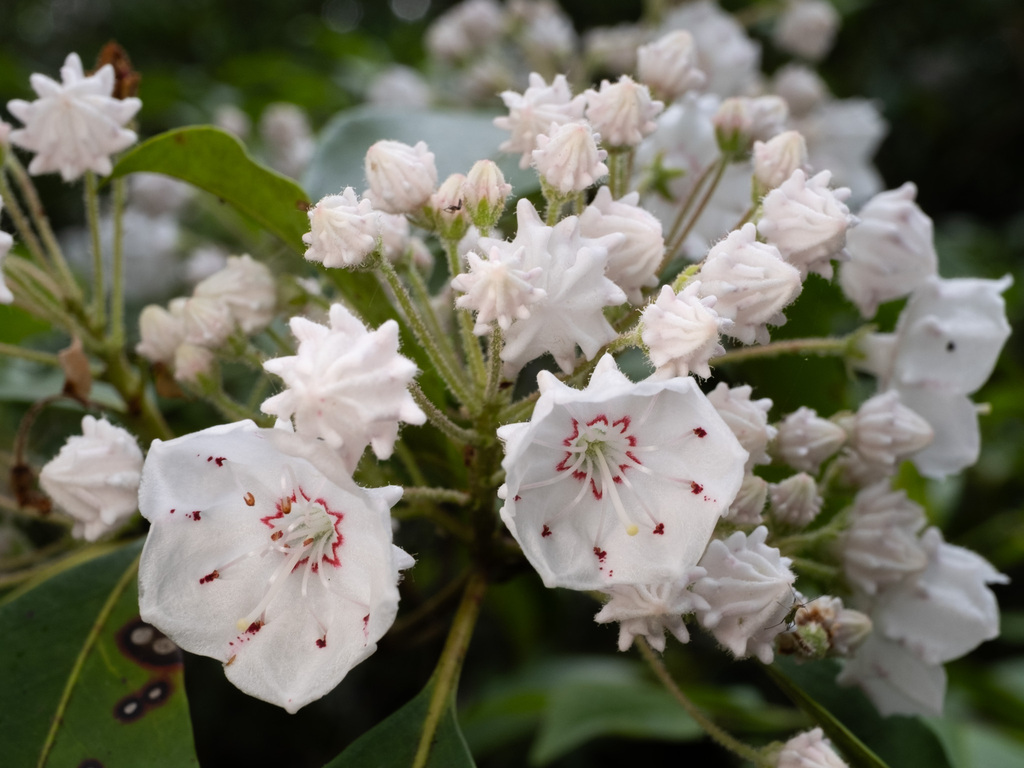
Mountain laurel is a stunning evergreen shrub native to the eastern United States. It is famous for its clusters of intricate, cup shaped flowers that bloom in late spring. You will love how it brings a touch of woodland elegance to your garden.
At a glance
- Care level
- Moderate
- Plant type
- Evergreen shrub
- Light
- Partial shade to partial sun
- Indoor light
- Bright indirect
- Water
- Every 7 to 14 days
- Mature size
- 5 to 15 feet
- Growth rate
- Slow
- Hardiness
- USDA 4 to 9
- Bloom time
- Late spring to early summer
Care
Plant in acidic, well draining soil and keep the roots cool with a layer of mulch. Watch for leaf spot or lace bugs, which can damage the foliage if left unchecked. Ensure the soil stays consistently moist but never waterlogged to keep the plant happy.
- Watering
- Keep the soil consistently moist but avoid letting the roots sit in standing water.
- Feeding
- Apply an acid loving fertilizer once in early spring before new growth begins.
- Pruning
- Prune immediately after flowering to shape the shrub and remove any dead wood.
- Repotting
- Repot only if the plant has outgrown its container or the soil has become depleted.
- Soil
- Acidic, moist, well draining soil
- Soil pH
- 4.5 to 5.5
- Temperature
- -30 to 30°C
- Humidity
- 40 to 70%
- Drought tolerance
- Low
- Lifespan
- Perennial, typically 20 to 50 years
- Deer and rabbits
- High
Signs it needs repotting
- Roots growing out of the drainage holes.
- Water running straight through the pot without soaking in.
Safety
- People
- The plant contains grayanotoxins which cause severe gastrointestinal distress and cardiac issues if consumed.
- Pets
- This plant is highly toxic to cats and dogs if ingested.
- Children
- Keep this plant away from children because all parts are poisonous if eaten.
- Contact allergens
- The leaves and stems can cause skin irritation in sensitive individuals.
- Airborne allergens
- There is no significant evidence of airborne pollen allergies for this species.
- Edibility
- All parts of this plant are highly toxic if ingested by humans or animals.
How to identify it
- Glossy, dark green leathery leaves
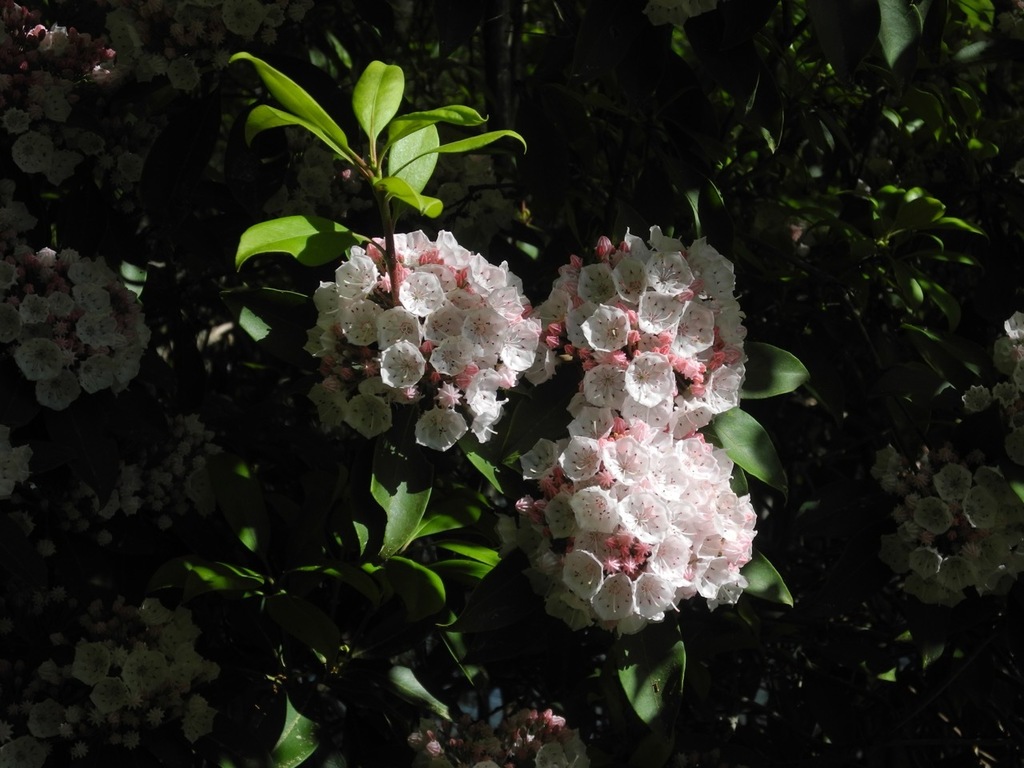
- Clusters of cup shaped flowers
- Distinctive pentagonal flower structure
- Reddish brown exfoliating bark
- Evergreen shrub habit
- Height
- 1.5 to 4.5m
- Spread
- 1.5 to 4.5m
- Leaves
- dark green, evergreen
- Flowers
- pink, white, rose, 2 to 3cm
- Fruit
- brown, Autumn
Problems to watch for
- Lace BugCommon
- Leaf SpotCommon
- ChlorosisUncommon
- Leaf ScorchUncommon
- PhytophthoraUncommon
- Root RotUncommon
Check your mountain laurel from a photo
Pocket Botanist looks at a photo of your plant and tells you what's wrong and what to try first.
Scan with your phone's camera to get the app
Or go to pocketbotanist.app/get on your phone
Growing it
- Propagation
- cuttings, seed
- When to plant
- spring, autumn
- Overwintering
- Apply a layer of mulch around the base to protect roots from temperature fluctuations. Ensure the soil does not dry out completely during winter thaws.
- In containers
- It is generally not well suited for containers due to its specific root requirements and size.
Stem Cuttings
- Take semi hardwood cuttings in late summer.
- Dip the cut end in rooting hormone.
- Place in a moist, well draining medium under high humidity.
Group with other acid loving plants to simplify soil management.
Grows well with
- Rhododendron · They share similar requirements for acidic soil and partial shade.
- Ferns · Ferns provide a soft textural contrast beneath the shrub.
Similar species
- Rhododendron · They share similar cultural needs and evergreen foliage.
Science
- Family
- Ericaceae
- Genus
- Kalmia
- Order
- Ericales
- Class
- Magnoliopsida
- Native range
- Eastern North America
- Conservation
- It is not currently listed as endangered but should never be collected from the wild.
It naturally grows in rocky, acidic woodlands and mountain slopes where it forms dense thickets.
- Value to wildlife
- nectar source
- Pollinators
- bees, butterflies, hummingbirds
- Uses
- ornamental shrub, woodland garden, pollinator habitat
Through the year
Ecological indicators
- Salinity
- 1/9
- Soil reaction
- 3/9
- Light
- 4/9
- Temperature
- 5/9
- Moisture
- 5/9
- Nutrients
- 3/9
Taxonomy resolved against GBIF.
Questions people ask
- Does it need acidic soil?
- Yes, it thrives in well drained, acidic soil rich in organic matter.
- Can I prune it?
- Light pruning after flowering helps maintain a compact shape.
Where the name comes from
The genus honors Pehr Kalm, a Swedish botanist who explored North America, while the species name refers to the broad leaves.
Good to know
- It is the state flower of Connecticut and Pennsylvania.
- The wood is extremely hard and was historically used for tool handles.
- It belongs to the Ericaceae family, just like blueberries and rhododendrons.
Also in
Keep your mountain laurel growing
This page is a general guide. Save your plant in Pocket Botanist and you get care reminders timed for this plant, plus a care history that shows what worked.
Scan with your phone's camera to get the app
Or go to pocketbotanist.app/get on your phone
This guide was generated with AI on and checked against GBIF taxonomy. It is general information, not horticultural or veterinary advice. Read about how we build these guides.