 Pocket Botanist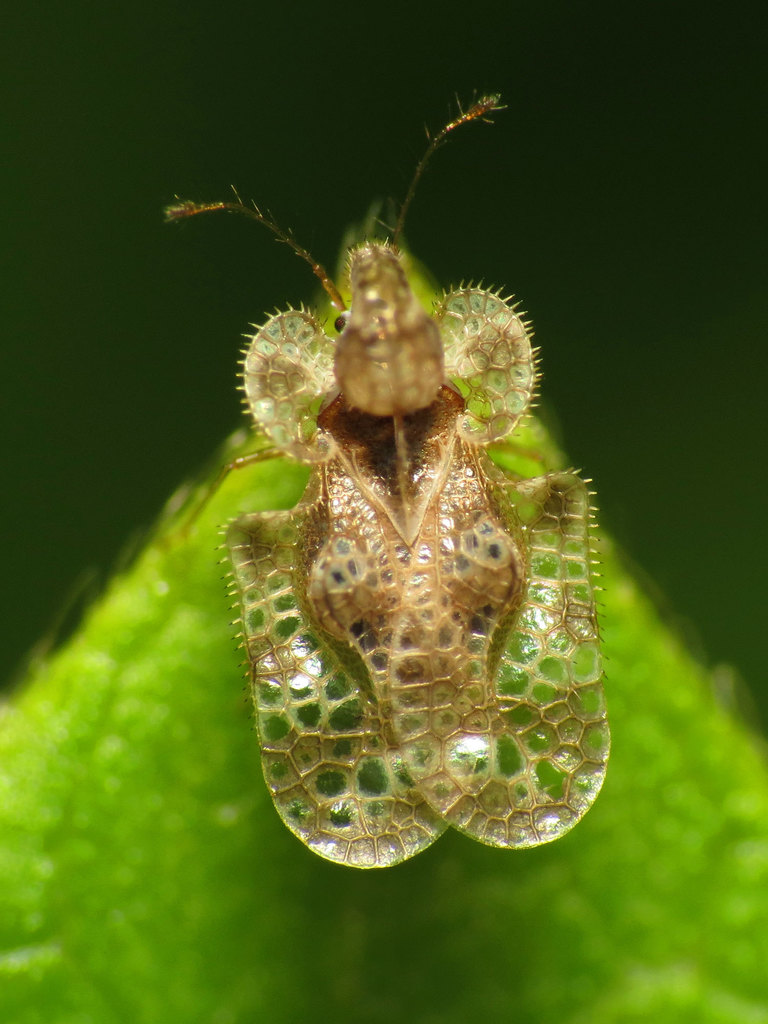
Symptoms by part
Leaves
The upper surface develops a speckled, yellow or white stippled pattern, while the undersides show dark, varnish like spots of excrement and cast off skins.
Causes
- Plants growing in full sun are often more susceptible than those in partial shade.
- Drought stressed plants are less able to defend themselves against feeding damage.
- Warm, dry weather conditions encourage rapid population growth.
Could be confused with
- Spider Mites · Spider mites create fine webbing between leaves or stems, which lace bugs do not produce.
- Leafhoppers · Leafhoppers are more mobile and jump away quickly when disturbed, whereas lace bugs are slow moving.
Treatment
- Spray the undersides of the leaves with a strong stream of water to physically dislodge the insects.
- Apply fatty acids directly to the undersides of the leaves where the insects are feeding, follow the label.
- Apply spinosad to the foliage during the early morning or evening to target the nymphs, follow the label.
Without chemicals
- Prune away and dispose of heavily infested branches to reduce the population.
- Plant susceptible species in partial shade rather than full sun to discourage colonization.
- Provide consistent irrigation to prevent drought stress, which makes plants more attractive to the pests.
Chemical options
- Fatty acids, spray directly on insects, follow the label.
- Spinosad, apply to foliage, follow the label.
Preventing it
- Keep plants well watered during dry spells to maintain their natural vigor.
- Encourage natural predators like lacewings and lady beetles in your garden.
- Choose resistant varieties of plants when selecting new additions for your landscape.
Season
The warm growing season.
Spread risk
Moderate
Severity
Moderate
When to act
Act as soon as you notice the first signs of stippling on the leaves to prevent a large population buildup. If the infestation is on a very large tree and beyond your reach, contact a professional tree surgeon for assistance.
Think it's Lace Bug?
This guide covers the general picture. Pocket Botanist looks at your actual plant from a photo and tells you what's really going on, how serious it is, and what to try first. Identification and a health check are free.


Questions people ask
- Will my plant die from lace bugs?
- Usually no, but the damage can be severe enough to cause premature leaf drop and weaken the plant over several seasons.
- Why are they called lace bugs?
- The adults have intricate, lacy, or net like patterns on their wings that look like delicate embroidery.
- Do I need to spray the top of the leaves?
- No, lace bugs feed almost exclusively on the undersides of the leaves, so that is where you must direct your treatment.
Plants it affects
This guide was generated with AI and is general information, not horticultural advice. Read about how we build these guides.