 Pocket Botanist
Guide botanique
Rhododendron.
Rhododendron
Prononciation roh-duh-DEN-drun
Aussi appelée Azalée, Rhododendron, Azalées, Rhododendron, Rhododendrons, Rhododendrons, Rosebay, azalée, rhododendrons et azalées


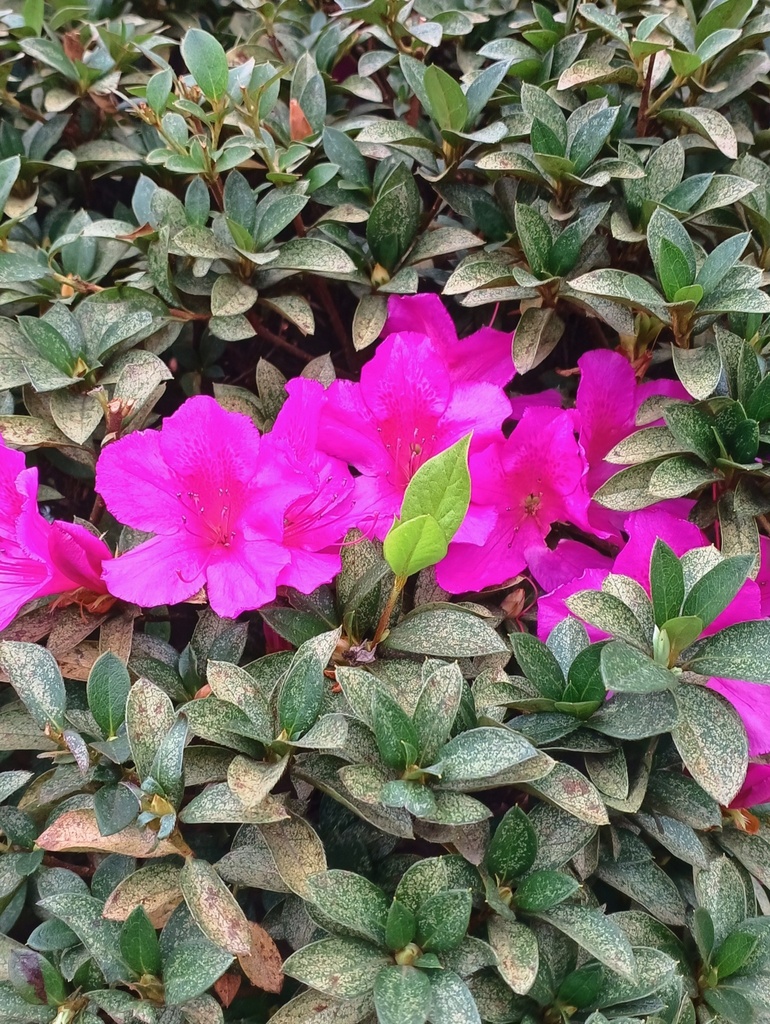
Les rhododendrons sont de magnifiques arbustes ligneux connus pour leurs grappes de fleurs massives et voyantes. Ils prospèrent dans les environnements frais et humides avec un sol acide. La plupart des variétés préfèrent une ombre mouchetée pour protéger leur feuillage du soleil intense de l'après-midi.
En un coup d'œil
- Niveau d'entretien
- Moyenne
- Type de plante
- Arbuste
- Lumière
- Mi-ombre
- Lumière en intérieur
- Lumière vive indirecte
- Arrosage
- Tous les 5 à 10 jours
- Taille adulte
- 1 à 6 mètres
- Croissance
- Moyenne
- Rusticité
- USDA 4 à 9
- Floraison
- Milieu du printemps au début de l'été
Entretien
Gardez le sol constamment humide mais jamais détrempé pour éviter la pourriture des racines. Pailler autour de la base pour maintenir la fraîcheur et l'humidité des racines. Surveillez le jaunissement des feuilles, qui signale souvent un mauvais drainage ou un pH du sol incorrect.
- Arrosage
- Arrosez profondément chaque fois que les quelques centimètres supérieurs du sol semblent secs.
- Engrais
- Appliquez un engrais pour plantes acidophiles une fois au début du printemps après la floraison.
- Taille
- Taillez immédiatement après la floraison pour façonner l'arbuste et enlever le bois mort.
- Rempotage
- Rempotez uniquement lorsque la plante a clairement dépassé son contenant.
- Sol
- Sol bien drainé, acide et riche en matière organique
- pH du sol
- 4,5 à 6,0
- Température
- -25 à 30°C
- Humidité
- 60 à 90%
- Résistance à la sécheresse
- Faible
- Durée de vie
- Vivace, généralement 20 à 50 ans ou plus.
- Parfum
- Léger
- Résistance aux chevreuils et lapins
- Faible
Signes qu'il faut rempoter
- Les racines sortent des trous de drainage.
- L'eau traverse le pot sans l'imbiber.
- Croissance ralentie pendant la saison active.
Sécurité
- Humains
- La plante contient des grayanotoxines qui sont toxiques pour l'homme et les animaux domestiques en cas de consommation.
- Animaux
- Toutes les parties de la plante sont très toxiques pour les chats et les chiens s'ils sont ingérés.
- Enfants
- Tenez les enfants à l'écart de la plante, car l'ingestion de toute partie peut entraîner un empoisonnement grave.
- Allergènes de contact
- Les feuilles et les tiges peuvent provoquer une légère irritation cutanée chez les personnes sensibles.
- Allergènes aéroportés
- Le pollen n'est généralement pas considéré comme un allergène aérien majeur.
- Comestibilité
- Toutes les parties de la plante sont très toxiques en cas d'ingestion et peuvent causer de graves maladies.
Comment l'identifier
- Grandes feuilles persistantes et coriaces
- Grappes de fleurs voyantes en forme de cloche
- Habitus de croissance ligneux, à tiges multiples
- Feuilles souvent avec des écailles sur le dessous
- Hauteur
- 0,6 à 4,5m
- Envergure
- 0,6 à 4m
- Feuilles
- vert foncé, sempervirent
- Fleurs
- rose, violet, blanc, rouge, jaune, 2 à 10cm
- Fruits
- brun, fin d'été
Problèmes à surveiller
- ChloroseCourant
- PhytophthoraCourant
- TigresCourant
- Brûlures du feuillagePeu courant
- Otiorhynque sillonnéPeu courant
- Pourriture des racinesPeu courant
- Pourriture des racines à Phytophthora — Un champignon du sol qui provoque le flétrissement et la mort dans un sol mal drainé.
- Tétranyque à dentelle — De petits insectes qui sucent la sève des feuilles, provoquant des marbrures jaunes.
Par symptôme
Vérifie la santé de ta plante en photo
Pocket Botanist analyse une photo de ta plante et te dit ce qui ne va pas et quoi essayer en premier.
La cultiver
- Multiplication
- bouturage, semis, marcottage
- Quand planter
- printemps, automne
- Hivernage
- Appliquez une épaisse couche de paillis autour de la base pour protéger les racines du gel. Assurez-vous que le sol reste humide mais pas détrempé pendant les périodes sèches d'hiver.
- En pot
- Ils poussent bien dans de grands contenants, à condition d'utiliser un terreau acide de haute qualité et d'assurer un excellent drainage.
Bouturage de tige
- Prélevez une bouture de 10 cm sur une nouvelle pousse à la fin de l'été.
- Retirez les feuilles inférieures et trempez l'extrémité dans de l'hormone de bouturage.
- Plantez dans un mélange de tourbe et de perlite.
- Couvrez d'un sac en plastique pour maintenir l'humidité.
- Conservez à la lumière vive et indirecte jusqu'à l'enracinement.
Regroupez-les avec d'autres plantes aimant les sols acides pour faciliter la gestion du sol.
Bonnes associations
- Érable du Japon — Ils partagent des exigences similaires en matière de sol acide et d'ombre partielle.
- Polystic à feuilles de sabre — Les fougères offrent un beau contraste textuel et prospèrent dans les mêmes conditions forestières.
- Pieris japonica — Ce compagnon partage les mêmes besoins culturels et fleurit à la même période.
Espèces similaires
- Rhododendron subg. Pentanthera — Les azalées sont techniquement un sous-genre de Rhododendron avec des besoins de soins similaires.
- Laurier des montagnes — C'est un arbuste éricacé apparenté qui prospère dans des environnements forestiers identiques.
Science
- Famille
- Ericaceae
- Genre
- Rhododendron
- Ordre
- Ericales
- Classe
- Magnoliopsida
- Région d'origine
- Largement répandu dans l'hémisphère Nord, en particulier dans l'Himalaya et en Amérique du Nord.
- Préservation
- Certaines espèces rares sont protégées, mais la plupart des variétés de jardin courantes ne sont pas préoccupantes en matière de conservation.
Ils poussent généralement dans les sous-bois frais, humides et acides des forêts où ils bénéficient d'une ombre tachetée.
- Intérêt pour la faune
- source de nectar, abri pour les petits oiseaux
- Pollinisateurs
- abeilles, papillons, colibris
- Utilisations
- arbuste d'ornement, élément de jardin forestier, écran d'intimité
Au fil des saisons
Repères écologiques
- Salinité
- 1/9
- Réaction du sol
- 3/9
- Lumière
- 4/9
- Humidité
- 6/9
- Température
- 5/9
- Nutriments
- 4/9
Taxonomie vérifiée avec le GBIF.
Ce qu'on demande souvent
- Pourquoi mes feuilles jaunissent-elles ?
- C'est souvent dû à une chlorose ferrique causée par un sol pas assez acide.
- Dois-je les tailler ?
- Taillez uniquement juste après la floraison pour donner une forme à la plante et enlever le bois mort.
D'où vient le nom
Le nom Rhododendron vient des mots grecs rhodon, signifiant rose, et dendron, signifiant arbre. Il a été nommé par Linné pour décrire ces plantes ligneuses aux fleurs semblables à des roses.
Bon à savoir
- Les rhododendrons sont la fleur nationale du Népal.
- Le nom du genre vient des mots grecs pour rose et arbre.
- Certaines espèces peuvent devenir des arbres massifs dans leurs habitats d'origine.
- Ils préfèrent un sol acide pour prospérer.
Aussi dans
Garde ta plante en pleine forme
Cette page est un guide général. Enregistre ta plante dans Pocket Botanist et tu reçois des rappels d'entretien adaptés à cette plante, ainsi qu'un historique d'entretien qui montre ce qui a marché.
Ce guide a été généré par IA et vérifié avec la taxonomie du GBIF. Il s'agit d'informations générales, et non de conseils horticoles ou vétérinaires. Découvre comment nous concevons ces guides.