 Pocket Botanist
Guide botanique
Érable du Japon.
Acer palmatum
Prononciation AY-ser pal-MAY-tum
Aussi appelée Érable du Japon, Palmate Maple, Érable du Japon pourpre, Érable du Japon lisse, Érable du Japon lisse, japanese-maple



L'Érable du Japon est un arbre gracile à croissance lente, apprécié pour ses feuilles délicates profondément lobées et ses couleurs saisonnières saisissantes. Il prospère dans des endroits abrités où il peut éviter les vents forts et le soleil intense de l'après-midi. Ces arbres ajoutent une touche sophistiquée à tout jardin, surtout comme point focal.
En un coup d'œil
- Niveau d'entretien
- Moyenne
- Type de plante
- Arbre caduc
- Lumière
- Mi-ombre à soleil filtré
- Lumière en intérieur
- Lumière vive indirecte
- Arrosage
- Tous les 3 à 7 jours
- Taille adulte
- 6 à 10 mètres
- Croissance
- Lente
- Rusticité
- USDA 5 à 9
- Floraison
- Mi à fin du printemps
Entretien
Gardez le sol constamment humide mais jamais saturé d'eau pour éviter la pourriture des racines. Surveillez les brûlures des feuilles pendant les chaudes journées d'été, signe que la plante a besoin de plus d'ombre ou d'humidité. Appliquez une couche de paillis autour de la base pour aider à retenir l'humidité et protéger les racines.
- Arrosage
- Arrosez copieusement dès que les quelques centimètres supérieurs du sol sont secs au toucher.
- Engrais
- Appliquez un engrais équilibré à libération lente au début du printemps, juste au moment où les bourgeons commencent à gonfler.
- Taille
- Taille uniquement pendant la saison dormante d'hiver pour enlever les branches mortes ou croisées.
- Rempotage
- Rempotez les jeunes arbres tous les quelques années au début du printemps pour renouveler le sol et laisser de la place à la croissance des racines.
- Sol
- Sol bien drainé, légèrement acide et riche en matière organique
- pH du sol
- 5.5 à 6.5
- Température
- -20 à 35°C
- Humidité
- 40 à 70%
- Résistance à la sécheresse
- Moyenne
- Durée de vie
- Plante vivace, généralement de 50 à 100 ans.
- Résistance aux chevreuils et lapins
- Moyenne
Signes qu'il faut rempoter
- Les racines sortent des trous de drainage.
- L'eau stagne à la surface pendant longtemps.
- Croissance ralentie pendant la saison active.
Sécurité
- Humains
- Cette plante est généralement considérée comme non toxique pour l'homme.
- Enfants
- Il n'y a pas de préoccupations de sécurité spécifiques pour les enfants concernant cette plante.
- Allergènes de contact
- La sève peut provoquer une légère irritation cutanée chez les personnes sensibles.
- Allergènes aéroportés
- Le pollen n'est généralement pas considéré comme un allergène important.
- Comestibilité
- Les feuilles et les graines ne sont pas considérées comme comestibles pour l'homme.
Comment l'identifier
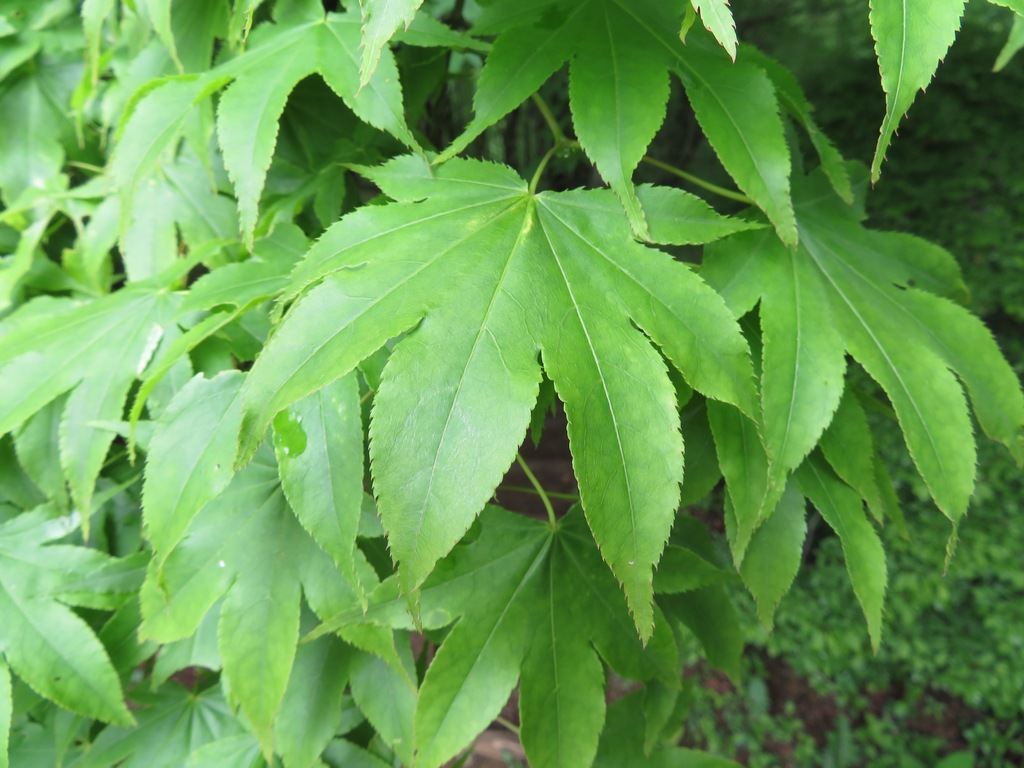
- Feuilles palmées profondément lobées
- Rameaux délicats et fins
- Feuillage d'automne rouge vif ou orange
- Petites fleurs discrètes au printemps
- Hauteur
- 2 à 6m
- Envergure
- 2 à 5m
- Feuilles
- vert, rouge, violet, bronze, caduc
- Fleurs
- rouge, violet, jaune, 0,5 à 1cm
- Fruits
- brun, tan, Automne
Problèmes à surveiller
- Brûlures du feuillageCourant
- PuceronsCourant
- VerticillioseCourant
- CochenillesPeu courant
- Dégâts de gel tardifPeu courant
- Pourriture des racinesPeu courant
Vérifie la santé de ta plante en photo
Pocket Botanist analyse une photo de ta plante et te dit ce qui ne va pas et quoi essayer en premier.
La cultiver
- Multiplication
- boutures, greffage, semis
- Quand planter
- printemps, automne
- Hivernage
- Appliquez une couche de paillis autour de la base pour protéger les racines des fluctuations extrêmes de température. Si la plante est en pot, déplacez-la dans un endroit abrité, à l'abri des vents d'hiver desséchants.
- En pot
- Ils poussent très bien en pots, à condition que le pot ait un excellent drainage et ait au moins 40 centimètres de large.
Boutures herbacées
- 1. Prenez des boutures de 10 cm au début de l'été.
- 2. Trempez la base dans de l'hormone d'enracinement.
- 3. Placez dans un terreau bien drainant.
- 4. Couvrez de plastique pour maintenir l'humidité.
- 5. Gardez à la lumière indirecte vive jusqu'à l'enracinement.
Plantez des vivaces de sous-étage qui aident à garder le sol frais et humide autour du système racinaire peu profond.
Bonnes associations
- Hosta — Ils partagent des exigences similaires en matière de lumière et d'humidité dans le jardin d'ombre.
- Hakonechloa macra — L'habitude en cascade de l'herbe complète le feuillage délicat de l'érable.
Espèces similaires
- Acer shirasawanum — Il a un port similaire et est également très apprécié pour son feuillage.
Science
- Famille
- Sapindaceae
- Genre
- Acer
- Ordre
- Sapindales
- Classe
- Magnoliopsida
- Région d'origine
- Japon, Corée et est de la Chine.
- Préservation
- Cette espèce n'est actuellement pas répertoriée comme en danger ou menacée.
Il pousse comme arbre de sous-étage dans les forêts tempérées, prospérant dans la lumière tamisée et un sol humide.
- Intérêt pour la faune
- source de nectar
- Pollinisateurs
- abeilles, papillons
- Utilisations
- spécimen ornemental, sujet bonsaï, plante en pot, jardin boisé
Au fil des saisons
Repères écologiques
- Nutriments
- 5/9
- Température
- 5/9
- Salinité
- 1/9
- Réaction du sol
- 4/9
- Lumière
- 5/9
- Humidité
- 6/9
Taxonomie vérifiée avec le GBIF.
Ce qu'on demande souvent
- Pourquoi les pointes de mes feuilles brunissent-elles ?
- Cela est souvent dû à une faible humidité, à l'exposition au vent ou à un arrosage irrégulier.
- Puis-je les cultiver en plein soleil ?
- La plupart des variétés préfèrent la mi-ombre, surtout dans les climats chauds pour éviter les brûlures du feuillage.
D'où vient le nom
Le nom de l'espèce palmatum décrit la forme de feuille semblable à une paume, tandis que le nom commun reflète son origine native.
Bon à savoir
- Il existe plus de 1 000 cultivars nommés d'érable du Japon.
- Le nom palmatum fait référence aux feuilles ressemblant à une main ouverte.
- Ces arbres sont un pilier de la conception traditionnelle des jardins japonais.
Aussi dans
Garde ta plante en pleine forme
Cette page est un guide général. Enregistre ta plante dans Pocket Botanist et tu reçois des rappels d'entretien adaptés à cette plante, ainsi qu'un historique d'entretien qui montre ce qui a marché.
Ce guide a été généré par IA et vérifié avec la taxonomie du GBIF. Il s'agit d'informations générales, et non de conseils horticoles ou vétérinaires. Découvre comment nous concevons ces guides.