 Pocket Botanist
Plant guide
Japanese Maple.
Acer palmatum
Pronounced AY-ser pal-MAY-tum
Also known as Japanese Maple, Palmate Maple, Purple Japanese-Maple, Smooth Japanese Maple, Smooth Japanese-Maple, japanese-maple



The Japanese maple is a graceful, slow growing tree prized for its delicate, deeply lobed leaves and stunning seasonal color. It thrives in sheltered spots where it can avoid harsh winds and intense afternoon sun. These trees add a sophisticated touch to any garden, especially as a focal point.
At a glance
- Care level
- Moderate
- Plant type
- Deciduous tree
- Light
- Partial shade to dappled sunlight
- Indoor light
- Bright indirect
- Water
- Every 3 to 7 days
- Mature size
- 6 to 10 meters
- Growth rate
- Slow
- Hardiness
- USDA 5 to 9
- Bloom time
- Mid to late spring
Care
Keep the soil consistently moist but never waterlogged to prevent root rot. Watch for leaf scorch during hot summer days, which indicates the plant needs more shade or humidity. Apply a layer of mulch around the base to help retain moisture and protect the roots.
- Watering
- Water deeply whenever the top few centimeters of soil feel dry to the touch.
- Feeding
- Apply a balanced, slow release fertilizer in early spring just as buds begin to swell.
- Pruning
- Prune only during the dormant winter season to remove dead or crossing branches.
- Repotting
- Repot young trees every few years in early spring to refresh the soil and provide room for root growth.
- Soil
- Well draining, slightly acidic, organic rich soil
- Soil pH
- 5.5 to 6.5
- Temperature
- -20 to 35°C
- Humidity
- 40 to 70%
- Drought tolerance
- Moderate
- Lifespan
- Perennial, typically 50 to 100 years.
- Deer and rabbits
- Moderate
Signs it needs repotting
- Roots growing out of the drainage holes.
- Water sitting on the surface for too long.
- Reduced growth rate during the season.
Safety
- People
- This plant is generally considered non toxic to humans.
- Children
- There are no specific safety concerns for children regarding this plant.
- Contact allergens
- The sap may cause mild skin irritation in sensitive individuals.
- Airborne allergens
- The pollen is generally not considered a significant allergen.
- Edibility
- The leaves and seeds are not considered edible for humans.
How to identify it
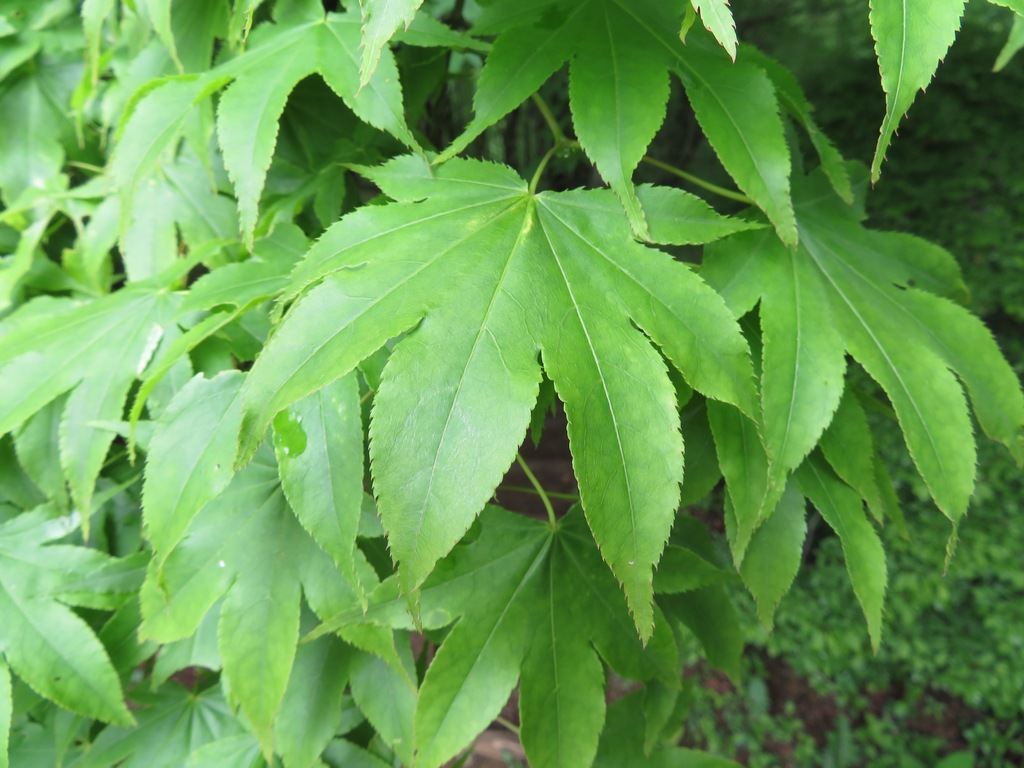
- Deeply lobed, palmate leaves
- Delicate, slender branches
- Vibrant red or orange autumn foliage
- Small, inconspicuous spring flowers
- Height
- 2 to 6m
- Spread
- 2 to 5m
- Leaves
- green, red, purple, bronze, deciduous
- Flowers
- red, purple, yellow, 0.5 to 1cm
- Fruit
- brown, tan, Autumn
Problems to watch for
- AphidsCommon
- Leaf ScorchCommon
- Verticillium WiltCommon
- Late Frost DamageUncommon
- Root RotUncommon
- Scale InsectsUncommon
By symptom
Check your japanese maple from a photo
Pocket Botanist looks at a photo of your plant and tells you what's wrong and what to try first.
Growing it
- Propagation
- cuttings, grafting, seed
- When to plant
- spring, autumn
- Overwintering
- Apply a layer of mulch around the base to protect roots from extreme temperature fluctuations. If in a pot, move to a sheltered location away from drying winter winds.
- In containers
- They grow very well in containers, provided the pot has excellent drainage and is at least 40 centimeters wide.
Softwood Cuttings
- 1. Take 10 cm cuttings in early summer.
- 2. Dip the base in rooting hormone.
- 3. Place in a well draining potting mix.
- 4. Cover with plastic to maintain humidity.
- 5. Keep in bright indirect light until rooted.
Plant understory perennials that help keep the soil cool and moist around the shallow root system.
Grows well with
- Hosta — They share similar light and moisture requirements in the shade garden.
- Japanese Forest Grass — The cascading habit of the grass complements the delicate foliage of the maple.
Similar species
- Fullmoon Maple — It has a similar growth habit and is also highly valued for foliage.
Science
- Family
- Sapindaceae
- Genus
- Acer
- Order
- Sapindales
- Class
- Magnoliopsida
- Native range
- Japan, Korea, and eastern China.
- Conservation
- This species is not currently listed as endangered or threatened.
It grows as an understory tree in temperate forests, thriving in dappled light and moist soil.
- Value to wildlife
- nectar source
- Pollinators
- bees, butterflies
- Uses
- ornamental specimen, bonsai subject, container plant, woodland garden
Through the year
Ecological indicators
- Nutrients
- 5/9
- Temperature
- 5/9
- Salinity
- 1/9
- Soil reaction
- 4/9
- Light
- 5/9
- Moisture
- 6/9
Taxonomy resolved against GBIF.
Questions people ask
- Why are my leaf tips turning brown?
- This is often caused by low humidity, wind exposure, or inconsistent watering.
- Can I grow them in full sun?
- Most varieties prefer partial shade, especially in hot climates to prevent leaf scorch.
Where the name comes from
The species name palmatum describes the palm like shape of the leaves, while the common name reflects its native origin.
Good to know
- There are over 1,000 named cultivars of Japanese maple.
- The name palmatum refers to the leaves resembling an open hand.
- These trees are a staple of traditional Japanese garden design.
Also in
Keep your japanese maple growing
This page is a general guide. Save your plant in Pocket Botanist and you get care reminders timed for this plant, plus a care history that shows what worked.
This guide was generated with AI and checked against GBIF taxonomy. It is general information, not horticultural or veterinary advice. Read about how we build these guides.