 Pocket Botanist
Plant guide
Tea.
Camellia sinensis
Pronounced kuh-MEE-lee-uh sy-NEN-sis
Also known as Japanese tea, Tea, Tea camellia, black tea, chai, common tea, green tea



Scan with your phone's camera to get the app
Or go to pocketbotanist.app/get on your phone
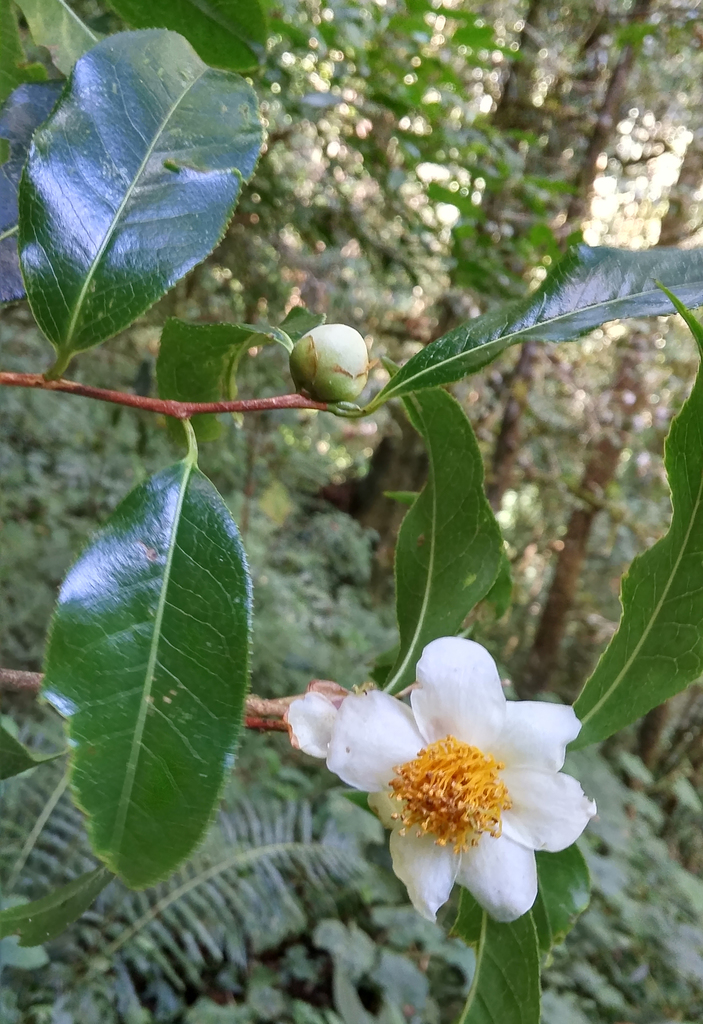
The tea plant is a lovely evergreen shrub that produces the leaves used for black, green, and white teas. It enjoys a steady environment and makes a beautiful addition to a bright sunroom. You will love watching its glossy foliage grow over time.
At a glance
- Care level
- Moderate
- Plant type
- Evergreen shrub
- Light
- Partial shade to full sun
- Indoor light
- Bright indirect
- Water
- Every 5 to 10 days
- Mature size
- 3 to 15 feet
- Growth rate
- Slow
- Hardiness
- USDA 7 to 9
- Bloom time
- Mid to late autumn
Care
Keep the soil consistently moist but never soggy to prevent root issues. Watch for yellowing leaves which often signal overwatering or poor drainage. It appreciates high humidity and protection from harsh afternoon sun.
- Watering
- Water when the top inch of soil feels dry to the touch.
- Feeding
- Use an acidic fertilizer during the active growing season.
- Pruning
- Prune in late winter to maintain shape and encourage bushier growth.
- Repotting
- Repot when the roots begin to circle the bottom of the container.
- Soil
- Acidic, well-draining, rich soil
- Soil pH
- 5.5 to 6.5
- Temperature
- -10 to 35°C
- Humidity
- 60 to 90%
- Drought tolerance
- Moderate
- Lifespan
- Perennial, can live for many decades.
- Fragrance
- Light
- Deer and rabbits
- Moderate
Signs it needs repotting
- Roots growing out of drainage holes
- Water running straight through the pot
- Stunted growth during the active season
Safety
- People
- The plant is generally non toxic, but excessive consumption of concentrated extracts can cause issues due to high caffeine content.
- Pets
- The leaves contain caffeine, which is toxic to cats and dogs if eaten in quantity and can cause restlessness, vomiting and a racing heart, so keep the plant out of reach of pets.
- Children
- The leaves contain caffeine, which can be harmful to small children if ingested in large quantities.
- Contact allergens
- Some individuals may experience skin irritation from handling the leaves.
- Airborne allergens
- Pollen can trigger mild allergic reactions in sensitive individuals.
- Edibility
- While the leaves are used for tea, they must be processed correctly to be palatable and safe for consumption.
How to identify it
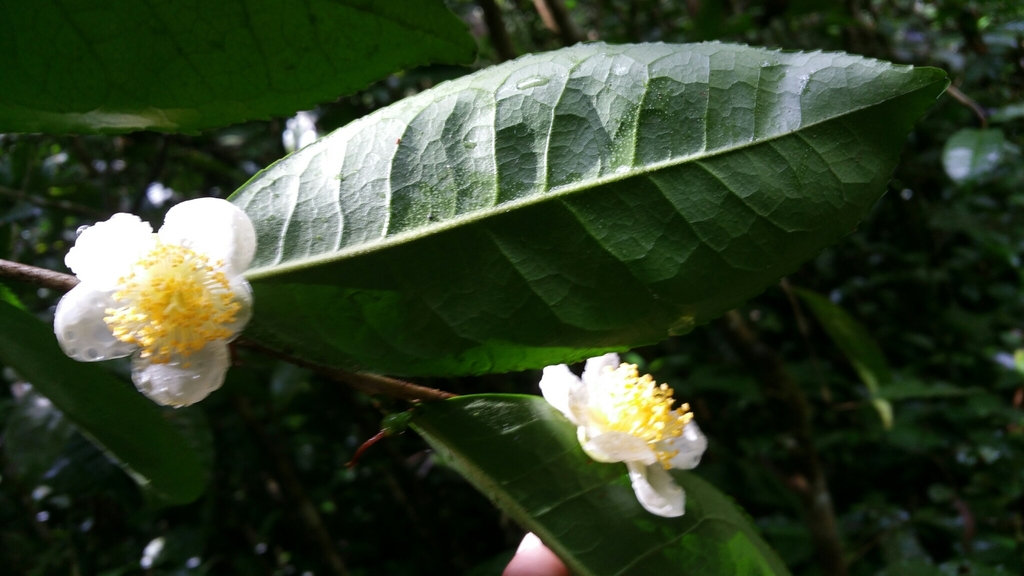
- Glossy dark green serrated leaves
- Fragrant white flowers with yellow centers
- Evergreen woody shrub growth habit
- Small round seed capsules
- Height
- 1.5 to 4.5m
- Spread
- 1 to 3m
- Leaves
- dark green, evergreen
- Flowers
- white, yellow, 3 to 5cm
- Fruit
- brown, Autumn
Problems to watch for
- Leaf SpotCommon
- Tea ScaleCommon
- ChlorosisUncommon
- Leaf ScorchUncommon
- Root RotUncommon
- Sooty MoldUncommon
- Tea Mosquito BugUncommon
- AphidsRare
Check your tea from a photo
Pocket Botanist looks at a photo of your plant and tells you what's wrong and what to try first.
Scan with your phone's camera to get the app
Or go to pocketbotanist.app/get on your phone
Growing it
- Propagation
- cuttings, seed
- When to plant
- spring, early autumn
- Overwintering
- Move containers to a sheltered, frost free location if temperatures drop significantly. Ensure the soil does not dry out completely during winter months.
- In containers
- It grows very well in pots, provided you use a large container with excellent drainage and acidic potting mix.
Stem Cuttings
- 1. Take a 10cm cutting from new growth.
- 2. Remove lower leaves.
- 3. Dip in rooting hormone.
- 4. Place in moist, well draining medium.
- 5. Keep humid until rooted.
Group this plant with other acid loving species to simplify soil management.
Grows well with
- Azalea · They share similar requirements for acidic soil and partial shade.
- Fern · Ferns provide a lovely textural contrast and thrive in the same moist environment.
Similar species
- Sasanqua Camellia · A closely related species often grown for its showy flowers rather than tea production.
Science
- Family
- Theaceae
- Genus
- Camellia
- Order
- Ericales
- Class
- Magnoliopsida
- Native range
- East Asia, specifically China and India.
- Conservation
- The species is widely cultivated and not currently threatened in the wild.
It grows naturally as an understory shrub in humid, mountainous forest regions.
- Value to wildlife
- nectar source
- Pollinators
- bees
- Uses
- tea production, ornamental shrub, hedging
Through the year
Ecological indicators
- Salinity
- 1/9
- Soil reaction
- 3/9
- Light
- 6/9
- Temperature
- 6/9
- Moisture
- 6/9
- Nutrients
- 5/9
Taxonomy resolved against GBIF.
Questions people ask
- Can I grow tea at home?
- Yes, it makes an excellent container plant in cooler climates.
- How often should I harvest?
- You can harvest the young leaves once the plant is well established.
Where the name comes from
The genus name Camellia honors the Jesuit botanist Georg Joseph Kamel, while sinensis is Latin for Chinese.
Good to know
- Tea is the second most consumed beverage in the world after water.
- The plant is a member of the Theaceae family.
- It thrives in acidic soil conditions.
- Tea bushes can live for over 100 years if maintained well.
Also in
Keep your tea growing
This page is a general guide. Save your plant in Pocket Botanist and you get care reminders timed for this plant, plus a care history that shows what worked.
Scan with your phone's camera to get the app
Or go to pocketbotanist.app/get on your phone
This guide was generated with AI on and checked against GBIF taxonomy. It is general information, not horticultural or veterinary advice. Read about how we build these guides.