 Pocket Botanist
Plant guide
Sasanqua camellia.
Camellia sasanqua
Pronounced kuh-MEE-lee-uh suh-SANG-kwuh
Also known as Sasanqua Camellia



Scan with your phone's camera to get the app
Or go to pocketbotanist.app/get on your phone
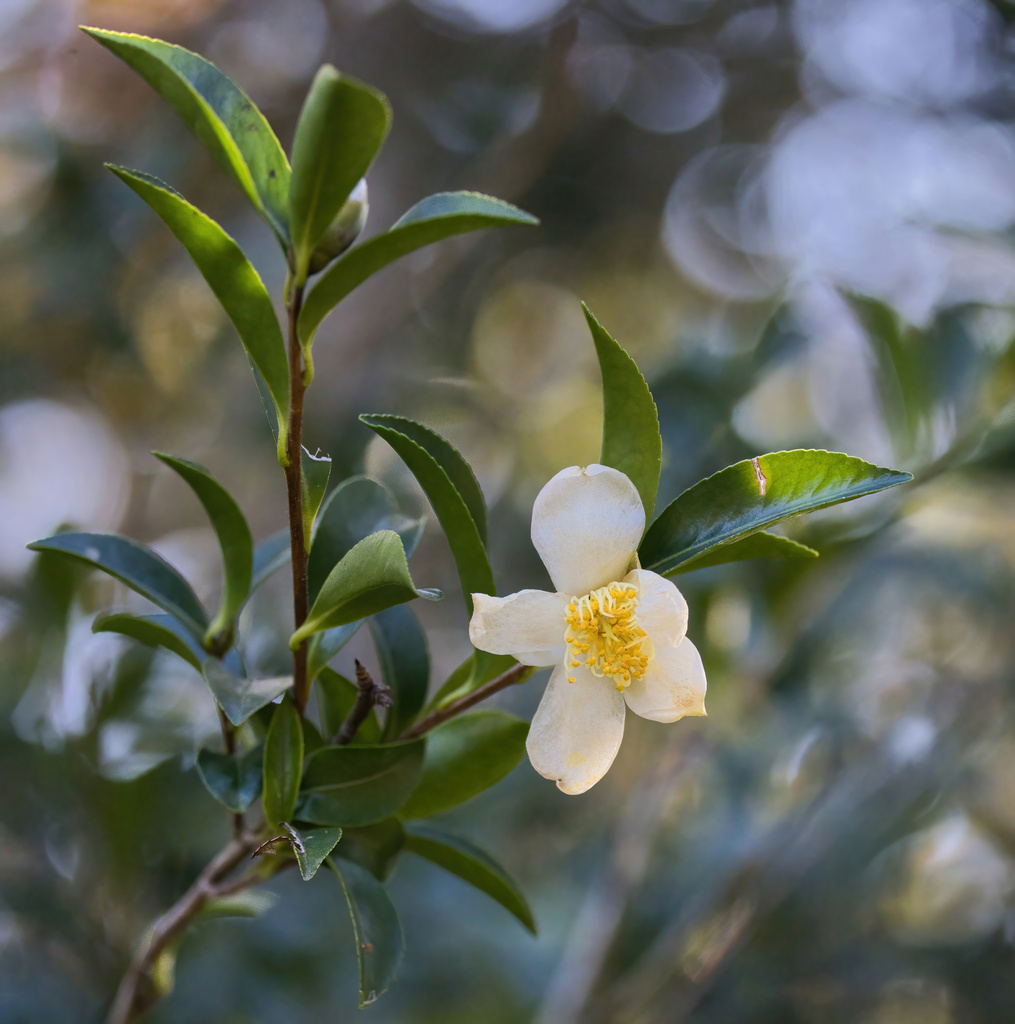
The Sasanqua camellia is a lovely evergreen shrub that brings beautiful blooms to your garden during the cooler months. It is quite versatile and works well as a hedge, a screen, or even a focal point in your landscape. You will love how its glossy foliage stays green all year round.

At a glance
- Care level
- Moderate
- Plant type
- Evergreen shrub
- Light
- Partial shade to full sun
- Indoor light
- Bright indirect
- Water
- Every 5 to 10 days
- Mature size
- 10 to 15 feet
- Growth rate
- Medium
- Hardiness
- USDA 7 to 9
- Bloom time
- Fall to early winter
Care
Keep the soil consistently moist but never soggy to prevent root issues. Watch for yellowing leaves, which often signal that the soil is too alkaline or drainage is poor. A layer of mulch helps keep the roots cool and retains moisture.
- Watering
- Water deeply whenever the top inch of soil feels dry to the touch.
- Feeding
- Feed with an acid-loving plant fertilizer during the active growing season.
- Pruning
- Prune lightly right after the flowering season ends to shape the plant.
- Repotting
- Repot only when the plant becomes root-bound, typically every few years.
- Soil
- Acidic, well-draining, organic-rich soil
- Soil pH
- 5.5 to 6.5
- Temperature
- -12 to 35°C
- Humidity
- 50 to 80%
- Drought tolerance
- Moderate
- Lifespan
- Perennial, typically 50 plus years
- Fragrance
- Light
- Deer and rabbits
- Moderate
Signs it needs repotting
- Roots growing out of the drainage holes
- Water running straight through the pot without soaking in
- Stunted growth during the active season
Safety
- People
- The plant is generally considered non toxic to humans, though it is best to keep it away from pets.
- Pets
- This plant is considered non-toxic to cats and dogs.
- Children
- The plant is safe for children, but the woody stems can be sharp if broken.
- Contact allergens
- Some people may experience mild skin irritation from handling the foliage.
- Airborne allergens
- Pollen is generally heavy and sticky, making it a low risk for airborne allergies.
- Edibility
- While not highly toxic, the plant is not considered edible and ingestion may cause mild stomach upset.
How to identify it
- Glossy dark green leaves
- Fragrant flowers with many petals
- Upright and branching growth habit
- Blooms in autumn and winter
- Height
- 1.8 to 3.6m
- Spread
- 1.8 to 2.4m
- Leaves
- dark green, glossy, evergreen
- Flowers
- white, pink, red, 5 to 10cm
- Fruit
- green, brown, late summer
Problems to watch for
- Tea scale · Small insects that appear as white cottony patches on the undersides of leaves.
- Petal blight · A fungal issue that causes flowers to turn brown and drop prematurely.
Check your sasanqua camellia from a photo
Pocket Botanist looks at a photo of your plant and tells you what's wrong and what to try first.
Scan with your phone's camera to get the app
Or go to pocketbotanist.app/get on your phone
Growing it
- Propagation
- cuttings, seed
- When to plant
- spring, fall
- Overwintering
- Apply a layer of mulch around the base to protect roots from freezing temperatures. Ensure the soil remains moist but not waterlogged during dry winter spells.
- In containers
- It grows very well in containers, provided you use a large pot with excellent drainage and acidic potting mix.
Semi-hardwood cuttings
- Take 4 to 6 inch cuttings in late summer.
- Remove lower leaves and dip the base in rooting hormone.
- Place in a moist, well-draining medium and cover with plastic to maintain humidity.
Group these with other acid loving plants to make soil management easier.
Grows well with
- Azalea · They share similar requirements for acidic soil and partial shade.
- Japanese Maple · The delicate foliage provides a beautiful contrast to the glossy camellia leaves.
- Hosta · These thrive in the same shady spots and provide a nice textural difference.
Similar species
- Common Camellia · It is the most closely related species but blooms in late winter and spring.
Science
- Family
- Theaceae
- Genus
- Camellia
- Order
- Ericales
- Class
- Magnoliopsida
- Native range
- Southern Japan and China
- Conservation
- Not of conservation concern.
It grows naturally in woodland understories where it benefits from dappled light and moist, acidic soil.
- Value to wildlife
- nectar source in late season
- Pollinators
- bees, butterflies
- Uses
- ornamental shrub, hedging, espalier, container plant
Through the year
Ecological indicators
- Salinity
- 1/9
- Soil reaction
- 3/9
- Light
- 5/9
- Temperature
- 6/9
- Moisture
- 6/9
- Nutrients
- 5/9
Taxonomy resolved against GBIF.
Questions people ask
- Does it need full sun?
- It prefers partial shade but can handle more sun than other camellias if given enough water.
- How often should I prune it?
- Prune immediately after flowering to shape the plant and encourage new growth.
Where the name comes from
The genus name honors Georg Joseph Kamel, a Jesuit missionary and botanist. The species name sasanqua comes from the Japanese name for the plant.
Good to know
- Sasanqua camellias are more sun tolerant than their Japanese cousins.
- The flowers are often fragrant, unlike many other camellia species.
- They have a more open, upright growth habit compared to the dense Camellia japonica.
Keep your sasanqua camellia growing
This page is a general guide. Save your plant in Pocket Botanist and you get care reminders timed for this plant, plus a care history that shows what worked.
Scan with your phone's camera to get the app
Or go to pocketbotanist.app/get on your phone
This guide was generated with AI on and checked against GBIF taxonomy. It is general information, not horticultural or veterinary advice. Read about how we build these guides.