 Pocket Botanist
Symptoms by part
Leaves
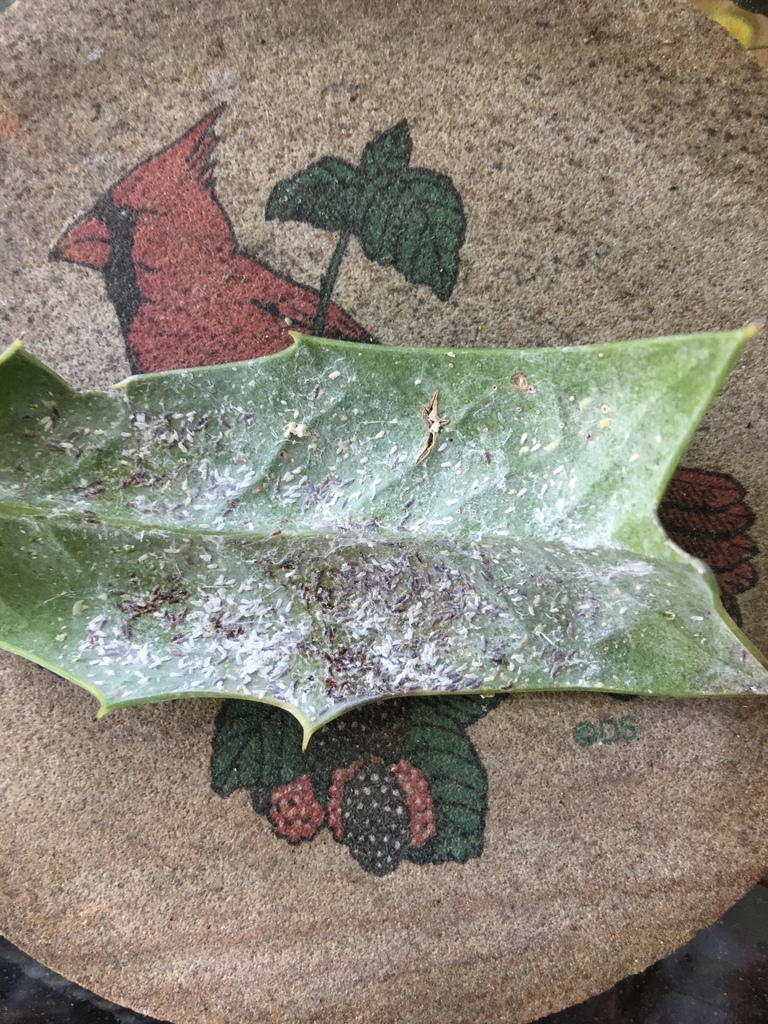
The undersides of leaves show small, brown, cottony, or fuzzy patches that resemble tiny bits of lint. On the upper surface, you will notice irregular yellow or chlorotic spots directly above where the insects are feeding.
Causes
- High humidity and warm temperatures.
- Dense plant foliage that prevents good airflow.
- Plants that are already stressed by poor site conditions or drought.
Could be confused with
- Camellia leaf gall · Leaf gall causes leaves to swell and thicken into fleshy, distorted shapes, whereas tea scale creates flat, fuzzy patches without changing the leaf structure.
- Whiteflies · Whiteflies are mobile, flying insects that scatter when you disturb the plant, while tea scale remains fixed in place as a stationary, crusty layer.
Find out what's really wrong with your plant
Problems that look alike are easy to mix up. Pocket Botanist looks at a photo of your actual plant and tells you what's going on, how serious it is, and what to try first. Identification and a health check are free.



Scan with your phone's camera to get the app
Or go to pocketbotanist.app/get on your phone
Treatment
- Prune away and destroy the most heavily infested branches to reduce the total population.
- Use a strong stream of water from a garden hose to physically dislodge the scales from the undersides of the leaves.
- Apply fatty acids to the undersides of the leaves when crawlers are active during the warm growing season to kill them on contact, follow the label.
Without chemicals
- Prune out crowded branches to improve air circulation.
- Isolate infested plants from healthy ones to prevent the crawlers from moving to new hosts.
Chemical options
- Fatty acids, spray directly onto the undersides of leaves to contact the insects, follow the label.
Preventing it
- Space plants properly to ensure good airflow.
- Inspect the undersides of leaves on new plants before adding them to your garden.
- Keep plants well watered to reduce stress.
Season
The warm growing season.
Spread risk
High
Severity
Moderate
When to act
Act as soon as you spot the first fuzzy patches on the undersides of leaves. If the infestation covers more than half of the plant and does not respond to treatment, it is best to remove and replace the plant.
Keep your plants healthy from here
Save your plants in Pocket Botanist and you get care reminders timed for each one, plus a care history that shows what worked. Identification and a health check are free.
Questions people ask
- Will tea scale kill my camellia?
- It rarely kills a healthy, mature plant outright, but it can severely weaken it and make it susceptible to other diseases.
- Can I just scrape the scales off?
- You can scrape them off small areas, but because they are so numerous and tiny, it is not a practical way to clear a whole plant.
Plants it affects
Answers plant by plant
This guide was generated with AI on and is general information, not horticultural advice. Read about how we build these guides.