 Pocket Botanist
Plant guide
Breadfruit.
Artocarpus altilis
Pronounced ar-toh-KAR-pus AL-tih-liss
Also known as Breadfruit, Breadfruit Tree



Scan with your phone's camera to get the app
Or go to pocketbotanist.app/get on your phone
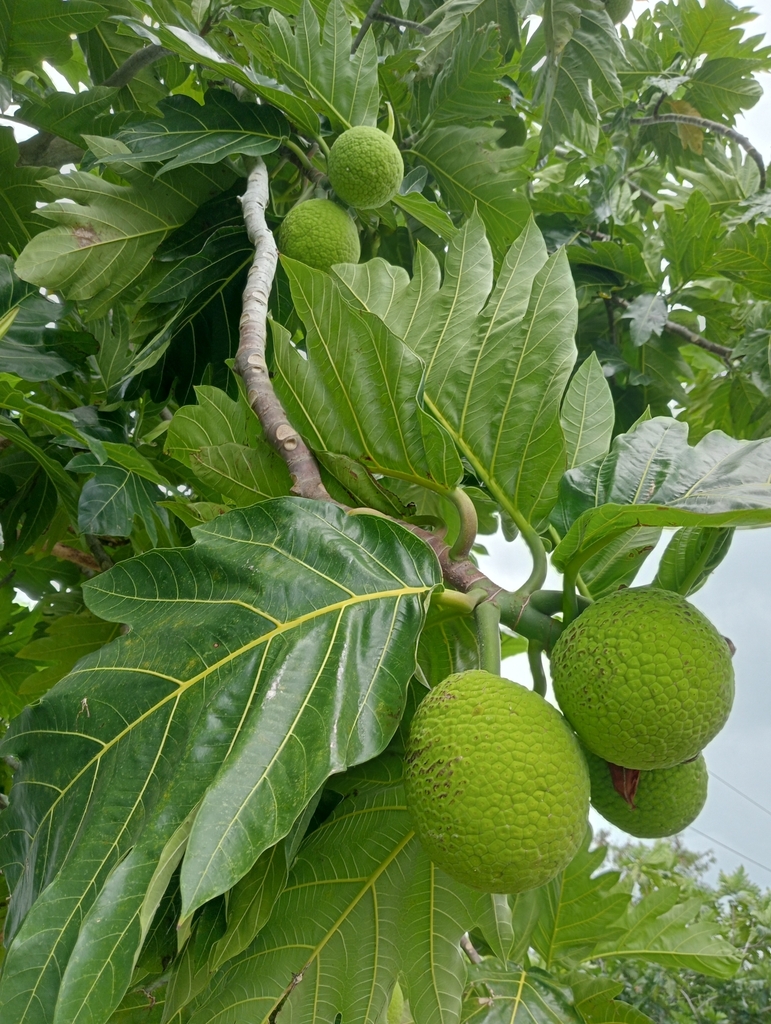
Breadfruit is a stunning tropical tree that produces large, starchy fruits often used as a staple food. It thrives in warm, humid climates and makes a beautiful ornamental addition to large gardens. You will love its lush, deeply lobed leaves that bring a real island feel to your space.

At a glance
- Care level
- Moderate
- Plant type
- Tropical evergreen tree
- Light
- Full sun
- Indoor light
- Direct sun
- Water
- Every 3 to 7 days
- Mature size
- 60 feet
- Growth rate
- Fast
- Hardiness
- USDA 10 to 12
- Bloom time
- Year round in tropical climates
Care
Keep the soil consistently moist but never waterlogged to ensure the tree stays happy. Watch for yellowing leaves, which often signal that the soil is too dry or lacks proper drainage. It really needs plenty of warmth and sunshine to produce its signature fruit.
- Watering
- Water deeply whenever the top inch of soil feels dry to the touch.
- Feeding
- Apply a balanced fertilizer during the active growing season to support fruit production.
- Pruning
- Remove dead or crossing branches once a year to maintain a healthy shape.
- Repotting
- Repot young trees every few years until they reach a size that requires permanent planting.
- Soil
- Deep, fertile, well draining soil
- Soil pH
- 6.1 to 7.4
- Temperature
- 15 to 35°C
- Humidity
- 70 to 90%
- Drought tolerance
- Low
- Lifespan
- Perennial, typically 50 to 100 years.
- Deer and rabbits
- Moderate
Signs it needs repotting
- Roots growing out of the drainage holes.
- Stunted growth despite regular fertilization.
- Soil drying out too quickly.
Safety
- People
- The milky latex sap can cause skin irritation in sensitive individuals.
- Children
- The tree produces heavy fruits that can pose a falling hazard to children playing underneath.
- Contact allergens
- The sticky latex sap can cause contact dermatitis upon skin exposure.
- Airborne allergens
- Pollen may cause mild respiratory irritation in some individuals.
- Edibility
- The fruit must be cooked or roasted before consumption as it is inedible when raw.
How to identify it
- Large, deeply lobed glossy green leaves
- Round or oval bumpy green fruit
- Milky white latex sap in stems
- Sturdy trunk with greyish bark
- Height
- 12 to 20m
- Spread
- 6 to 12m
- Leaves
- dark green, evergreen
- Flowers
- yellow, green, 5 to 20cm
- Fruit
- green, yellow, brown, Year round
Problems to watch for
- Fruit RotCommon
- MealybugsCommon
- AnthracnoseUncommon
- Root RotUncommon
- Scale InsectsUncommon
- Sooty MoldUncommon
Check your breadfruit from a photo
Pocket Botanist looks at a photo of your plant and tells you what's wrong and what to try first.
Scan with your phone's camera to get the app
Or go to pocketbotanist.app/get on your phone
Growing it
- Propagation
- cuttings, root suckers, seed
- When to plant
- Spring, Summer, Fall
- Overwintering
- Protect from any temperatures below 10 degrees Celsius, as the tree is highly sensitive to cold.
- In containers
- Not suitable for long term container growth due to its massive size and extensive root system.
Root Cuttings
- 1. Select a healthy root segment about 2cm thick.
- 2. Cut into 20cm lengths.
- 3. Place horizontally in a moist potting mix.
- 4. Keep in a warm, shaded area until shoots emerge.
Planting understory crops like ginger or turmeric helps maintain soil moisture and suppresses weeds.
Grows well with
Similar species
- Jackfruit · It is a close relative with similar growth habits and tropical requirements.
Science
- Family
- Moraceae
- Genus
- Artocarpus
- Order
- Rosales
- Class
- Magnoliopsida
- Native range
- South Pacific Islands and Southeast Asia.
- Conservation
- Not currently threatened, but wild genetic diversity is managed through traditional agricultural practices.
It thrives in high rainfall tropical environments with deep, well drained volcanic soils.
- Value to wildlife
- provides food for birds, habitat for small mammals
- Pollinators
- bees, beetles
- Uses
- culinary staple, ornamental shade tree, timber, medicinal bark
Through the year
Ecological indicators
- Salinity
- 2/9
- Soil reaction
- 6/9
- Light
- 8/9
- Temperature
- 9/9
- Moisture
- 7/9
- Nutrients
- 7/9
Taxonomy resolved against GBIF.
Questions people ask
- Can I grow breadfruit in a container?
- It is generally too large for long term container growth unless heavily pruned.
- How do I know when the fruit is ripe?
- The skin turns from bright green to a yellowish brown and may leak small drops of sap.
Where the name comes from
The genus name Artocarpus comes from Greek words meaning bread and fruit, referring to the texture of the cooked flesh.
Good to know
- Breadfruit was the subject of the famous Mutiny on the Bounty.
- A single tree can provide enough food to feed a family for years.
- The texture of cooked breadfruit is often compared to freshly baked bread.
- It is a member of the Moraceae family, related to figs and mulberries.
Keep your breadfruit growing
This page is a general guide. Save your plant in Pocket Botanist and you get care reminders timed for this plant, plus a care history that shows what worked.
Scan with your phone's camera to get the app
Or go to pocketbotanist.app/get on your phone
This guide was generated with AI on and checked against GBIF taxonomy. It is general information, not horticultural or veterinary advice. Read about how we build these guides.