 Pocket Botanist
Guide botanique
Fruit à pain.
Artocarpus altilis
Prononciation ar-toh-KAR-pus AL-tih-liss
Aussi appelée Fruit à pain, Arbre à pain


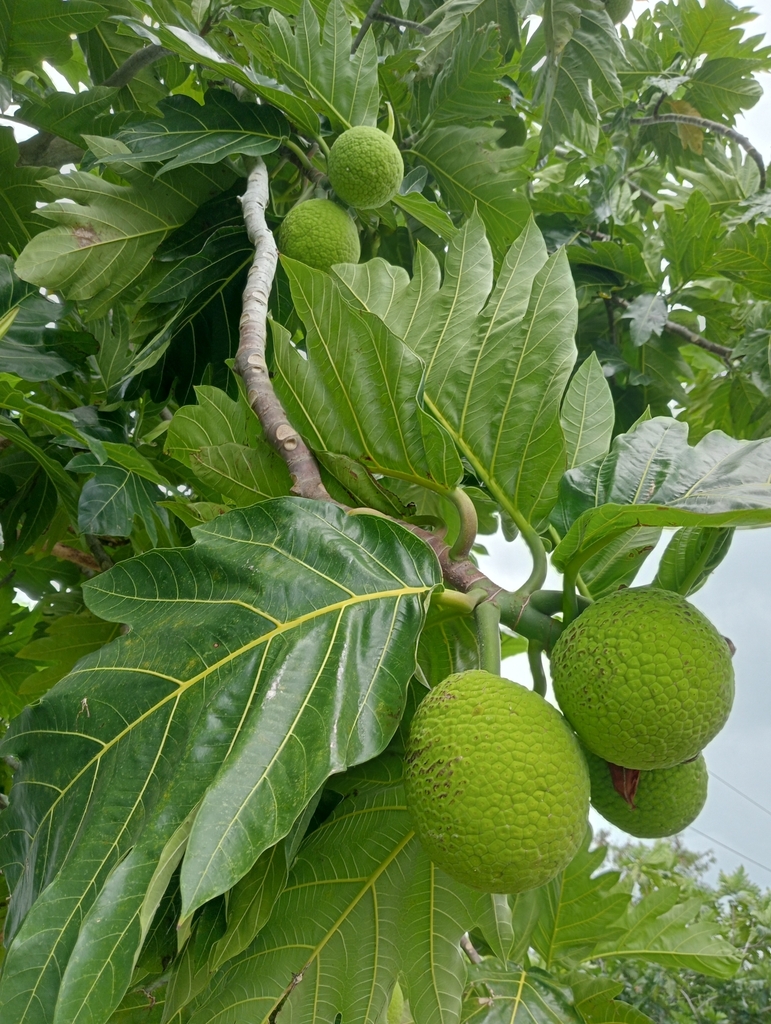
Le fruit à pain est un arbre tropical magnifique qui produit de gros fruits amylacés, souvent utilisés comme aliment de base. Il prospère dans les climats chauds et humides et constitue un bel ajout ornemental aux grands jardins. Vous adorerez ses feuilles luxuriantes et profondément lobées qui apportent une véritable ambiance insulaire à votre espace.

En un coup d'œil
- Niveau d'entretien
- Moyenne
- Type de plante
- Arbre tropical à feuilles persistantes
- Lumière
- Plein soleil
- Lumière en intérieur
- Soleil direct
- Arrosage
- Tous les 3 à 7 jours
- Taille adulte
- 60 pieds
- Croissance
- Rapide
- Rusticité
- USDA 10 à 12
- Floraison
- Year round in tropical climates
Entretien
Gardez le sol constamment humide, mais jamais gorgé d'eau, pour que l'arbre reste heureux. Surveillez le jaunissement des feuilles, qui signale souvent que le sol est trop sec ou manque de bon drainage. Il a vraiment besoin de beaucoup de chaleur et de soleil pour produire ses fruits caractéristiques.
- Arrosage
- Arrosez abondamment chaque fois que le pouce supérieur du sol semble sec au toucher.
- Engrais
- Appliquez un engrais équilibré pendant la saison de croissance active pour favoriser la production de fruits.
- Taille
- Retirez les branches mortes ou croisées une fois par an pour maintenir une forme saine.
- Rempotage
- Rempotez les jeunes arbres tous les quelques années jusqu'à ce qu'ils atteignent une taille qui nécessite une plantation permanente.
- Sol
- Sol profond, fertile et bien drainé
- pH du sol
- 6.1 à 7.4
- Température
- 15 à 35°C
- Humidité
- 70 à 90%
- Résistance à la sécheresse
- Faible
- Durée de vie
- Perennial, typically 50 to 100 years.
- Résistance aux chevreuils et lapins
- Moyenne
Signes qu'il faut rempoter
- Roots growing out of the drainage holes.
- Stunted growth despite regular fertilization.
- Soil drying out too quickly.
Sécurité
- Humains
- The milky latex sap can cause skin irritation in sensitive individuals.
- Enfants
- The tree produces heavy fruits that can pose a falling hazard to children playing underneath.
- Allergènes de contact
- The sticky latex sap can cause contact dermatitis upon skin exposure.
- Allergènes aéroportés
- Pollen may cause mild respiratory irritation in some individuals.
- Comestibilité
- The fruit must be cooked or roasted before consumption as it is inedible when raw.
Comment l'identifier
- Grandes feuilles vert brillant, brillantes et profondément lobées
- Fruit vert rond ou ovale bosselé
- Sève laiteuse et blanche dans les tiges
- Tronc robuste à écorce grisâtre
- Hauteur
- 12 à 20m
- Envergure
- 6 à 12m
- Feuilles
- dark green, evergreen
- Fleurs
- yellow, green, 5 à 20cm
- Fruits
- green, yellow, brown, Year round
Problèmes courants
- Fruit rot — Fungal infection caused by excessive moisture during fruit development.
- Mealybugs — Small sap sucking insects that cluster on leaves and stems.
La cultiver
- Multiplication
- cuttings, root suckers, seed
- Quand planter
- Spring, Summer, Fall
- Hivernage
- Protect from any temperatures below 10 degrees Celsius, as the tree is highly sensitive to cold.
- En pot
- Not suitable for long term container growth due to its massive size and extensive root system.
Root Cuttings
- 1. Select a healthy root segment about 2cm thick.
- 2. Cut into 20cm lengths.
- 3. Place horizontally in a moist potting mix.
- 4. Keep in a warm, shaded area until shoots emerge.
Planting understory crops like ginger or turmeric helps maintain soil moisture and suppresses weeds.
Bonnes associations
- Banane naine — They share similar moisture and shade requirements in a tropical food forest.
- Turmeric — It thrives in the dappled shade provided by the breadfruit canopy.
Espèces similaires
- Jackfruit — It is a close relative with similar growth habits and tropical requirements.
Science
- Famille
- Moraceae
- Genre
- Artocarpus
- Ordre
- Rosales
- Classe
- Magnoliopsida
- Région d'origine
- South Pacific Islands and Southeast Asia.
- Préservation
- Not currently threatened, but wild genetic diversity is managed through traditional agricultural practices.
It thrives in high rainfall tropical environments with deep, well drained volcanic soils.
- Intérêt pour la faune
- provides food for birds, habitat for small mammals
- Pollinisateurs
- abeilles, coléoptères
- Utilisations
- culinary staple, ornamental shade tree, timber, medicinal bark
Au fil des saisons
Repères écologiques
- Salinité
- 2/9
- Réaction du sol
- 6/9
- Lumière
- 8/9
- Température
- 9/9
- Humidité
- 7/9
- Nutriments
- 7/9
Taxonomie vérifiée avec le GBIF.
Ce qu'on demande souvent
- Can I grow breadfruit in a container?
- It is generally too large for long term container growth unless heavily pruned.
- How do I know when the fruit is ripe?
- The skin turns from bright green to a yellowish brown and may leak small drops of sap.
D'où vient le nom
The genus name Artocarpus comes from Greek words meaning bread and fruit, referring to the texture of the cooked flesh.
Bon à savoir
- Breadfruit was the subject of the famous Mutiny on the Bounty.
- A single tree can provide enough food to feed a family for years.
- The texture of cooked breadfruit is often compared to freshly baked bread.
- It is a member of the Moraceae family, related to figs and mulberries.
Ta plante a mauvaise mine ?
Cette page est un guide général. Pocket Botanist diagnostique les problèmes directement à partir d'une photo de ta plante, adapte l'arrosage à sa luminosité et te prévient quand il faut t'en occuper.
Ce guide a été généré par IA et vérifié avec la taxonomie du GBIF. Il s'agit d'informations générales, et non de conseils horticoles ou vétérinaires. Découvre comment nous concevons ces guides.