 Pocket Botanist
Pflanzenratgeber
Raspberry.
Rubus idaeus
Aussprache ROO-bus eye-DAY-us
Auch bekannt als American Red Raspberry, Common Red Raspberry, Raspberry, Raspberry, Red Raspberry, Red Raspberry


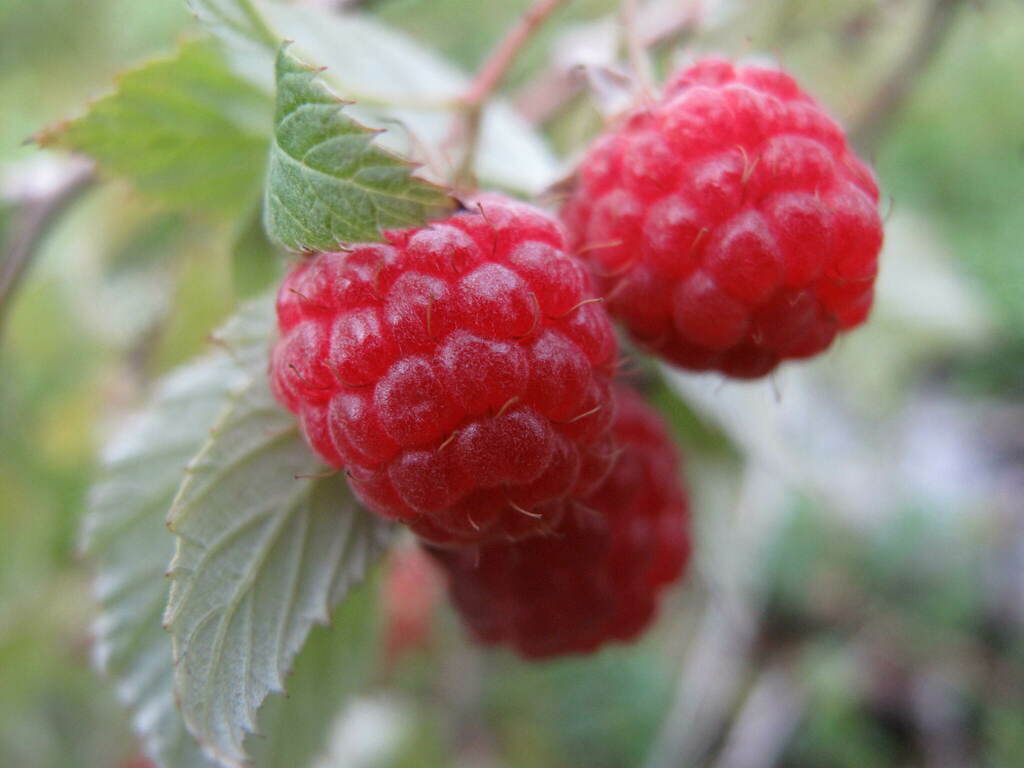
Raspberries are delightful cane fruits that bring a sweet harvest to your garden. They grow on biennial stems called primocanes and floricanes. You will love picking these berries fresh right off the bush.

Auf einen Blick
- Pflegestufe
- Mittel
- Pflanzenart
- Deciduous shrub
- Licht
- Full sun
- Licht im Innenraum
- Direkte Sonne
- Gießen
- Alle 3 bis 7 Tage
- Endgröße
- 6 feet
- Wachstum
- Schnell
- Winterhärte
- USDA 3 bis 8
- Blütezeit
- Late spring to early summer
Pflege
Keep the soil consistently moist but well drained to support fruit production. Watch for wilting leaves which may indicate root rot or underwatering. Prune out old canes after they finish fruiting to keep the plant healthy.
- Gießen
- Water deeply whenever the top inch of soil feels dry.
- Düngen
- Apply a balanced fertilizer in early spring as new growth starts.
- Schneiden
- Remove spent floricanes immediately after the summer harvest.
- Umtopfen
- Raspberries prefer being planted directly in the ground rather than containers.
- Boden
- Well draining loamy soil
- Boden-pH
- 5.5 to 6.5
- Temperatur
- -30 bis 35°C
- Luftfeuchtigkeit
- 40 bis 70%
- Trockenheitstoleranz
- Mittel
- Lebensdauer
- Perennial, typically 10 to 15 years.
- Duft
- Leicht
- Wildverbiss-Resistenz
- Mittel
Anzeichen fürs Umtopfen
- Roots growing out of the drainage holes.
- The plant becomes top heavy and tips over.
- Growth slows significantly during the growing season.
Sicherheit
- Menschen
- The plant is non-toxic to humans.
- Kinder
- The sharp prickles on the canes can scratch young children, so supervise them near the patch.
- Kontaktallergene
- The stems often have small prickles that can cause minor skin scratches or irritation.
- Allergene in der Luft
- The pollen may trigger mild seasonal allergies in sensitive individuals.
- Essbarkeit
- Always ensure you are harvesting from a clean area free of chemical sprays or pollutants.
So erkennst du die Pflanze
- Thorny or prickly woody canes
- Compound leaves with serrated edges
- Small white five petaled flowers
- Aggregate fruit with hollow centers
- Höhe
- 0,9 bis 2m
- Breite
- 0,6 bis 1,2m
- Blätter
- green, deciduous
- Blüten
- white, 1 bis 2cm
- Früchte
- red, yellow, black, Summer to early autumn
Häufige Probleme
- Raspberry cane blight — A fungal infection that causes canes to wilt and die.
- Raspberry beetle — Small beetles that feed on the flowers and larvae that burrow into the fruit.
Standort und Pflege
- Vermehrung
- division, cuttings, seed
- Pflanzzeit
- early spring, late autumn
- Überwinterung
- Cut back spent canes to the ground in late autumn. Apply a layer of mulch around the base to protect the roots from extreme cold.
- Im Kübel
- They grow well in large containers at least 40 centimeters deep, provided they have a trellis for support.
Division
- 1. Dig up a section of the root system in early spring.
- 2. Ensure each piece has healthy buds or shoots.
- 3. Replant immediately in well draining soil.
Planting aromatic herbs nearby can help mask the scent of the berries from hungry insects.
Gute Pflanzpartner
Fernhalten von
- Blackberry — They share similar pests and diseases and can easily outcompete raspberries.
Ähnliche Arten
- Blackberry — They are closely related but have different growth habits and fruit structures.
- Wineberry — It is a related species with distinct red, hairy stems and smaller fruit.
Botanisches
- Familie
- Rosaceae
- Gattung
- Rubus
- Ordnung
- Rosales
- Klasse
- Magnoliopsida
- Ursprüngliche Heimat
- Europe and northern Asia.
- Artenschutz
- Not of conservation concern as it is widely cultivated and naturalized.
It thrives in forest clearings and disturbed soils where it quickly colonizes through underground suckers.
- Nutzen für Wildtiere
- nectar source, wildlife food source
- Bestäuber
- Bienen, Schmetterlinge
- Verwendung
- culinary fruit, jams and jellies, ornamental garden shrub
Im Jahresverlauf
Ökologische Zeigerwerte
- Salzgehalt
- 2/9
- Bodenreaktion
- 6/9
- Licht
- 7/9
- Temperatur
- 5/9
- Feuchtigkeit
- 6/9
- Nährstoffe
- 6/9
Taxonomie abgeglichen mit GBIF.
Häufige Fragen
- Do I need to prune raspberries?
- Yes, pruning old canes after they fruit helps maintain plant health and productivity.
- Can I grow them in pots?
- Yes, use a large container with good drainage and choose a compact variety.
Woher der Name kommt
The name Rubus comes from the Latin word for red, while idaeus refers to Mount Ida in Greece where the plant was famously found.
Gut zu wissen
- Raspberries have been cultivated since the 16th century.
- They are rich in antioxidants and vitamin C.
- The canes are biennial, meaning they grow one year and fruit the next.
Probleme mit Raspberry?
Diese Seite bietet allgemeine Infos. Pocket Botanist erkennt Probleme anhand eines Fotos deiner echten Pflanze, passt das Gießen an dein Licht und deinen Standort an und erinnert dich an die Pflege.
Dieser Ratgeber wurde mit KI erstellt und mit der GBIF-Taxonomie abgeglichen. Er dient zur allgemeinen Information und ersetzt keine gärtnerische oder tierärztliche Beratung. Hier erfährst du, wie wir diese Ratgeber erstellen.