 Pocket Botanist
Pflanzenratgeber
Blackberry.
Rubus fruticosus
Aussprache ROO-bus froo-ti-KOH-sus
Auch bekannt als Blackberry, blackberry, bramble, bramble blackberry, shrubby blackberry, wild blackberry complex, Bramble


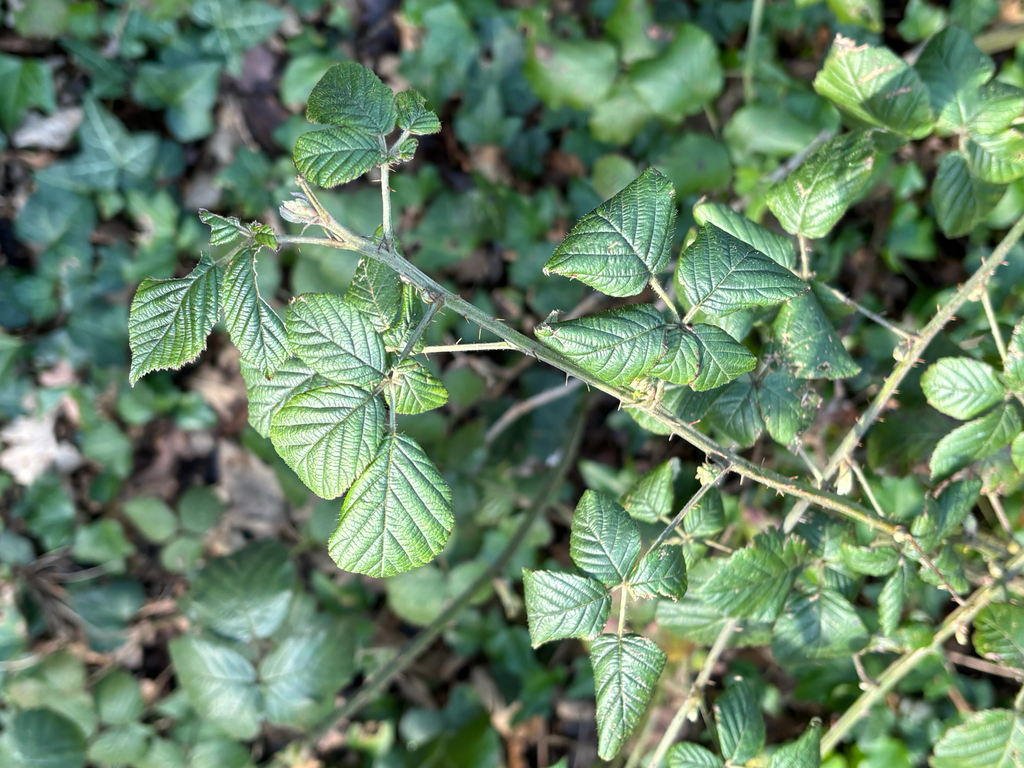
Blackberries are vigorous, sprawling shrubs that produce delicious dark fruit in the summer. They thrive in sunny spots and are perfect for gardeners who enjoy a bountiful harvest. These plants are known for their arching, thorny canes that can quickly fill a garden space.

Auf einen Blick
- Pflegestufe
- Mittel
- Pflanzenart
- Deciduous shrub
- Licht
- Full sun
- Licht im Innenraum
- Direkte Sonne
- Gießen
- Alle 3 bis 7 Tage
- Endgröße
- 6 to 10 feet
- Wachstum
- Schnell
- Winterhärte
- USDA 5 bis 9
- Blütezeit
- Late spring to mid summer
Pflege
Keep the soil consistently moist while the fruit is developing to ensure a good crop. You should train the canes along a trellis to keep them tidy and make picking easier. Watch for yellowing leaves, which can indicate poor drainage or nutrient deficiencies.
- Gießen
- Water deeply once a week, increasing frequency during hot, dry spells.
- Düngen
- Apply a balanced fertilizer in early spring as new growth begins.
- Schneiden
- Cut back canes that have already fruited to the ground in late autumn.
- Umtopfen
- These are best grown in the ground, but if container grown, move to a larger pot every few years.
- Boden
- Well draining loamy soil
- Boden-pH
- 5.5 to 7.0
- Temperatur
- -20 bis 35°C
- Luftfeuchtigkeit
- 40 bis 70%
Sicherheit
- Menschen
- The plant is not toxic, but the sharp thorns can cause significant skin abrasions.
- Kinder
- The sharp thorns pose a significant risk of injury to small children, so keep them away from dense thickets.
- Kontaktallergene
- The stiff, hooked prickles on the stems can cause mechanical skin irritation or scratches.
- Allergene in der Luft
- The pollen is generally not considered a significant airborne allergen.
- Essbarkeit
- Always ensure you are harvesting from a clean area away from roadsides or chemical sprays.
So erkennst du die Pflanze
- Thorny, arching woody canes
- Compound leaves with five leaflets
- White or pink five petaled flowers
- Aggregate fruit turning black when ripe
- Höhe
- 1 bis 3m
- Breite
- 1,5 bis 4m
- Blätter
- dark green, semi-evergreen
- Blüten
- white, pale pink, 2 bis 4cm
- Früchte
- black, Late summer to early autumn
Häufige Probleme
- Rust — Orange pustules appear on the undersides of leaves during damp weather.
- Aphids — Small sap sucking insects that cluster on new growth.
Standort und Pflege
- Vermehrung
- cuttings, division, layering
- Pflanzzeit
- spring, autumn
Keep the area around the base clear of aggressive grasses to reduce competition for water and nutrients.
Gute Pflanzpartner
Ähnliche Arten
- Raspberry — They are closely related and share similar growth habits and care needs.
Botanisches
- Familie
- Rosaceae
- Gattung
- Rubus
- Ordnung
- Rosales
- Klasse
- Magnoliopsida
- Ursprüngliche Heimat
- Europe and parts of Asia.
- Artenschutz
- This species is considered invasive in many parts of the world outside its native range.
It thrives in disturbed areas and forest edges where it can quickly colonize open ground.
- Nutzen für Wildtiere
- nectar source, larval host plant, provides cover for birds
- Bestäuber
- Bienen, Schmetterlinge, Käfer
- Verwendung
- culinary fruit, wildlife habitat, hedgerow barrier
Im Jahresverlauf
Ökologische Zeigerwerte
- Salzgehalt
- 2/9
- Bodenreaktion
- 6/9
- Licht
- 7/9
- Temperatur
- 5/9
- Feuchtigkeit
- 5/9
- Nährstoffe
- 6/9
Taxonomie abgeglichen mit GBIF.
Häufige Fragen
- Do I need to prune my blackberries?
- Yes, pruning out the old canes that have already fruited helps keep the plant healthy and productive.
- Why are my berries sour?
- Berries need plenty of sun and consistent moisture to develop their full sugar content.
Woher der Name kommt
The name Rubus comes from the Latin word for red, while fruticosus means shrubby or bushy.
Gut zu wissen
- Blackberries have been used for thousands of years as both food and medicine.
- The juice of the fruit has been used as a natural dye.
- Blackberry canes typically live for two years, producing leaves the first year and fruit the second.
Probleme mit Blackberry?
Diese Seite bietet allgemeine Infos. Pocket Botanist erkennt Probleme anhand eines Fotos deiner echten Pflanze, passt das Gießen an dein Licht und deinen Standort an und erinnert dich an die Pflege.
Dieser Ratgeber wurde mit KI erstellt und mit der GBIF-Taxonomie abgeglichen. Er dient zur allgemeinen Information und ersetzt keine gärtnerische oder tierärztliche Beratung. Hier erfährst du, wie wir diese Ratgeber erstellen.