 Pocket Botanist
Guide botanique
Blackberry.
Rubus fruticosus
Prononciation ROO-bus froo-ti-KOH-sus
Aussi appelée Blackberry, blackberry, bramble, bramble blackberry, shrubby blackberry, wild blackberry complex, Bramble


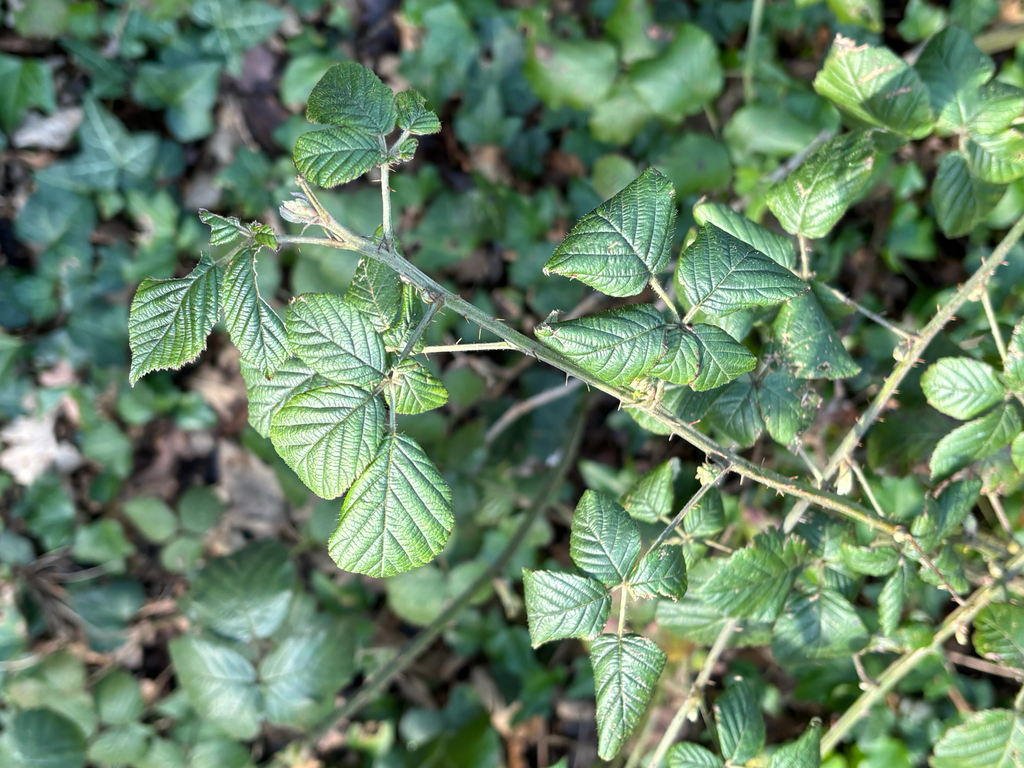
Blackberries are vigorous, sprawling shrubs that produce delicious dark fruit in the summer. They thrive in sunny spots and are perfect for gardeners who enjoy a bountiful harvest. These plants are known for their arching, thorny canes that can quickly fill a garden space.

En un coup d'œil
- Niveau d'entretien
- Moyenne
- Type de plante
- Deciduous shrub
- Lumière
- Full sun
- Lumière en intérieur
- Soleil direct
- Arrosage
- Tous les 3 à 7 jours
- Taille adulte
- 6 to 10 feet
- Croissance
- Rapide
- Rusticité
- USDA 5 à 9
- Floraison
- Late spring to mid summer
Entretien
Keep the soil consistently moist while the fruit is developing to ensure a good crop. You should train the canes along a trellis to keep them tidy and make picking easier. Watch for yellowing leaves, which can indicate poor drainage or nutrient deficiencies.
- Arrosage
- Water deeply once a week, increasing frequency during hot, dry spells.
- Engrais
- Apply a balanced fertilizer in early spring as new growth begins.
- Taille
- Cut back canes that have already fruited to the ground in late autumn.
- Rempotage
- These are best grown in the ground, but if container grown, move to a larger pot every few years.
- Sol
- Well draining loamy soil
- pH du sol
- 5.5 to 7.0
- Température
- -20 à 35°C
- Humidité
- 40 à 70%
Sécurité
- Humains
- The plant is not toxic, but the sharp thorns can cause significant skin abrasions.
- Enfants
- The sharp thorns pose a significant risk of injury to small children, so keep them away from dense thickets.
- Allergènes de contact
- The stiff, hooked prickles on the stems can cause mechanical skin irritation or scratches.
- Allergènes aéroportés
- The pollen is generally not considered a significant airborne allergen.
- Comestibilité
- Always ensure you are harvesting from a clean area away from roadsides or chemical sprays.
Comment l'identifier
- Thorny, arching woody canes
- Compound leaves with five leaflets
- White or pink five petaled flowers
- Aggregate fruit turning black when ripe
- Hauteur
- 1 à 3m
- Envergure
- 1,5 à 4m
- Feuilles
- dark green, semi-evergreen
- Fleurs
- white, pale pink, 2 à 4cm
- Fruits
- black, Late summer to early autumn
Problèmes courants
- Rust — Orange pustules appear on the undersides of leaves during damp weather.
- Aphids — Small sap sucking insects that cluster on new growth.
La cultiver
- Multiplication
- cuttings, division, layering
- Quand planter
- spring, autumn
Keep the area around the base clear of aggressive grasses to reduce competition for water and nutrients.
Bonnes associations
- Pommier d'ornement — They share similar soil requirements and benefit from the same mulching practices.
- Ail — Planting garlic nearby may help deter certain pests.
Espèces similaires
- Raspberry — They are closely related and share similar growth habits and care needs.
Science
- Famille
- Rosaceae
- Genre
- Rubus
- Ordre
- Rosales
- Classe
- Magnoliopsida
- Région d'origine
- Europe and parts of Asia.
- Préservation
- This species is considered invasive in many parts of the world outside its native range.
It thrives in disturbed areas and forest edges where it can quickly colonize open ground.
- Intérêt pour la faune
- nectar source, larval host plant, provides cover for birds
- Pollinisateurs
- abeilles, papillons, coléoptères
- Utilisations
- culinary fruit, wildlife habitat, hedgerow barrier
Au fil des saisons
Repères écologiques
- Salinité
- 2/9
- Réaction du sol
- 6/9
- Lumière
- 7/9
- Température
- 5/9
- Humidité
- 5/9
- Nutriments
- 6/9
Taxonomie vérifiée avec le GBIF.
Ce qu'on demande souvent
- Do I need to prune my blackberries?
- Yes, pruning out the old canes that have already fruited helps keep the plant healthy and productive.
- Why are my berries sour?
- Berries need plenty of sun and consistent moisture to develop their full sugar content.
D'où vient le nom
The name Rubus comes from the Latin word for red, while fruticosus means shrubby or bushy.
Bon à savoir
- Blackberries have been used for thousands of years as both food and medicine.
- The juice of the fruit has been used as a natural dye.
- Blackberry canes typically live for two years, producing leaves the first year and fruit the second.
Ta plante a mauvaise mine ?
Cette page est un guide général. Pocket Botanist diagnostique les problèmes directement à partir d'une photo de ta plante, adapte l'arrosage à sa luminosité et te prévient quand il faut t'en occuper.
Ce guide a été généré par IA et vérifié avec la taxonomie du GBIF. Il s'agit d'informations générales, et non de conseils horticoles ou vétérinaires. Découvre comment nous concevons ces guides.