 Pocket Botanist
Plant guide
Redcurrant.
Ribes rubrum
Pronounced RYE-beez ROO-brum
Also known as Common Currant, Cultivated Currant, European red currant, Garden Currant, Red Currant, Red Garden Currant, Redcurrant



Redcurrants are delightful deciduous shrubs that produce clusters of tart, bright red berries in the summer. They thrive in cool climates and make a wonderful addition to any edible garden. You'll love how easy they are to harvest once the fruit turns a deep, translucent red.
At a glance
- Care level
- Easy
- Plant type
- Deciduous shrub
- Light
- Full sun to partial shade
- Indoor light
- Bright indirect
- Water
- Every 5 to 10 days
- Mature size
- 1.5 to 2 meters
- Growth rate
- Medium
- Hardiness
- USDA 3 to 7
- Bloom time
- Early to mid spring
Care
Plant these in a spot with cool, moist soil and provide a layer of mulch to keep the roots happy. Watch for aphids on new growth and ensure the center of the bush stays open to light for better fruit production. If the leaves start wilting during a heatwave, give them a deep drink immediately.
- Watering
- Keep the soil consistently moist but never waterlogged, especially while fruit is developing.
- Feeding
- Apply a balanced organic fertilizer in early spring before new growth begins.
- Pruning
- Prune in late winter while the plant is dormant to remove old wood and encourage new fruiting stems.
- Repotting
- If grown in a container, move to a larger pot every few years to refresh the soil and provide more room.
- Soil
- Well draining, fertile, loamy soil
- Soil pH
- 6.0 to 7.0
- Temperature
- -30 to 30°C
- Humidity
- 40 to 70%
- Drought tolerance
- Low
- Lifespan
- Perennial, typically 10 to 15 years
- Deer and rabbits
- Moderate
Signs it needs repotting
- Roots growing out of the drainage holes.
- Stunted growth despite regular feeding.
- Water running straight through the pot.
Safety
- People
- The plant is non-toxic to humans.
- Children
- There are no specific safety concerns for children, though the berries can be a choking hazard for toddlers.
- Contact allergens
- The stems have very fine hairs that may cause mild skin irritation in sensitive individuals.
- Airborne allergens
- The pollen is generally not considered a significant allergen.
- Edibility
- The berries are safe to eat, but always ensure you have correctly identified the plant before consuming any fruit.
How to identify it
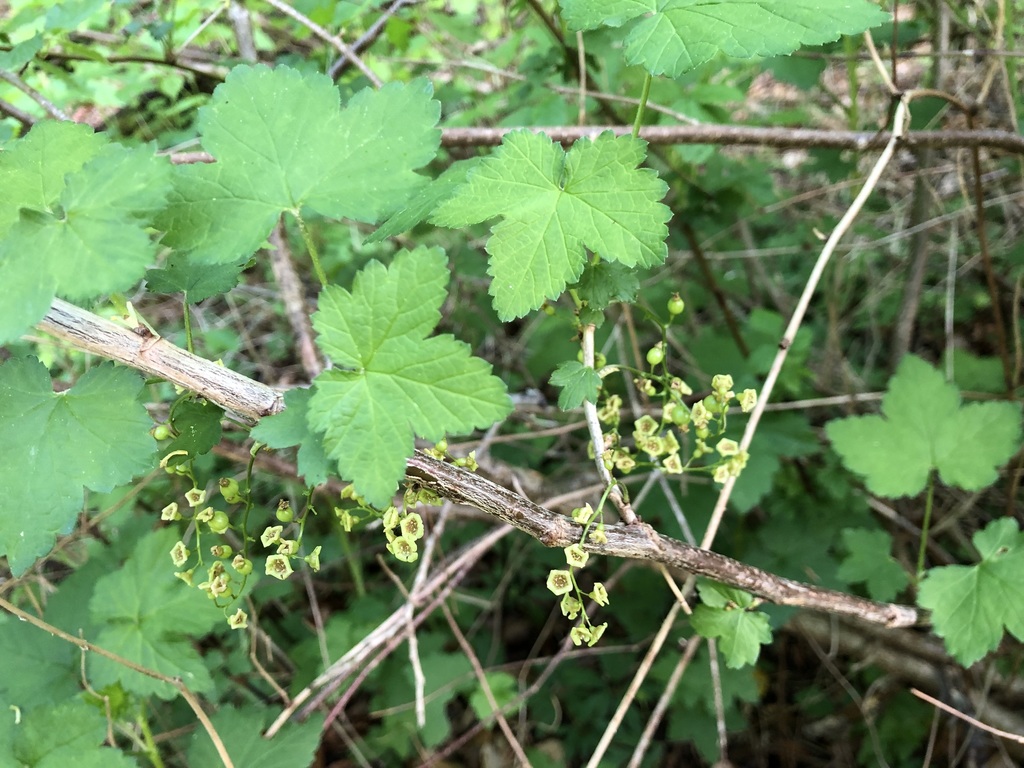
- Three to five lobed maple like leaves
- Clusters of small translucent red berries
- Deciduous woody shrub habit
- Small greenish yellow spring flowers
- Height
- 1 to 1.5m
- Spread
- 1 to 1.5m
- Leaves
- green, deciduous
- Flowers
- greenish-yellow, 0.5 to 1cm
- Fruit
- red, Mid to late summer
Common problems
- Aphids — Small insects that cluster on new growth and cause leaf curling.
- Currant Rust — A fungal infection that causes orange spots on the undersides of leaves.
Growing it
- Propagation
- cuttings, division
- When to plant
- early spring, late autumn
- Overwintering
- Mulch the base in late autumn to protect roots from temperature fluctuations. Prune during the dormant winter period.
- In containers
- They grow well in large containers of at least 40 liters, provided they are kept well watered.
Hardwood Cuttings
- 1. Take 20cm cuttings in late autumn.
- 2. Insert into a pot of moist, gritty compost.
- 3. Keep in a cold frame until spring.
Planting aromatic herbs nearby can help mask the scent of the currants from hungry pests.
Grows well with
Similar species
- Black Currant — Similar growth habit but produces dark, aromatic berries.
- Gooseberry — Related species that also prefers cool, moist conditions.
Science
- Family
- Grossulariaceae
- Genus
- Ribes
- Order
- Saxifragales
- Class
- Magnoliopsida
- Native range
- Western and Central Europe
- Conservation
- This species is common and not of conservation concern.
It thrives in cool, moist woodland edges where it can access filtered sunlight.
- Value to wildlife
- nectar source, provides cover for birds
- Pollinators
- bees
- Uses
- culinary, ornamental, hedging
Through the year
Ecological indicators
- Salinity
- 1/9
- Soil reaction
- 6/9
- Light
- 5/9
- Temperature
- 4/9
- Moisture
- 6/9
- Nutrients
- 6/9
Taxonomy resolved against GBIF.
Questions people ask
- Do I need two plants for fruit?
- No, red currants are self-fertile and will produce fruit with just one plant.
- How do I prune them?
- Prune in late winter to remove old, woody stems and encourage new growth.
Where the name comes from
The genus name Ribes is derived from an Arabic word for a different tart plant, while rubrum means red in Latin.
Good to know
- Red currants were once known as the forbidden fruit in some regions due to their tart flavor.
- They are a staple ingredient in traditional Scandinavian desserts.
- The berries are rich in vitamin C and antioxidants.
Is your redcurrant looking unwell?
This page is a general guide. Pocket Botanist diagnoses problems from a photo of your actual plant, works out watering for your light and conditions, and reminds you when care is due.
This guide was generated with AI and checked against GBIF taxonomy. It is general information, not horticultural or veterinary advice. Read about how we build these guides.