 Pocket Botanist
Plant guide
Frangipani.
Plumeria
Pronounced ploo-MEER-ee-uh
Also known as Frangipani, Frangipani Trees, plumeria


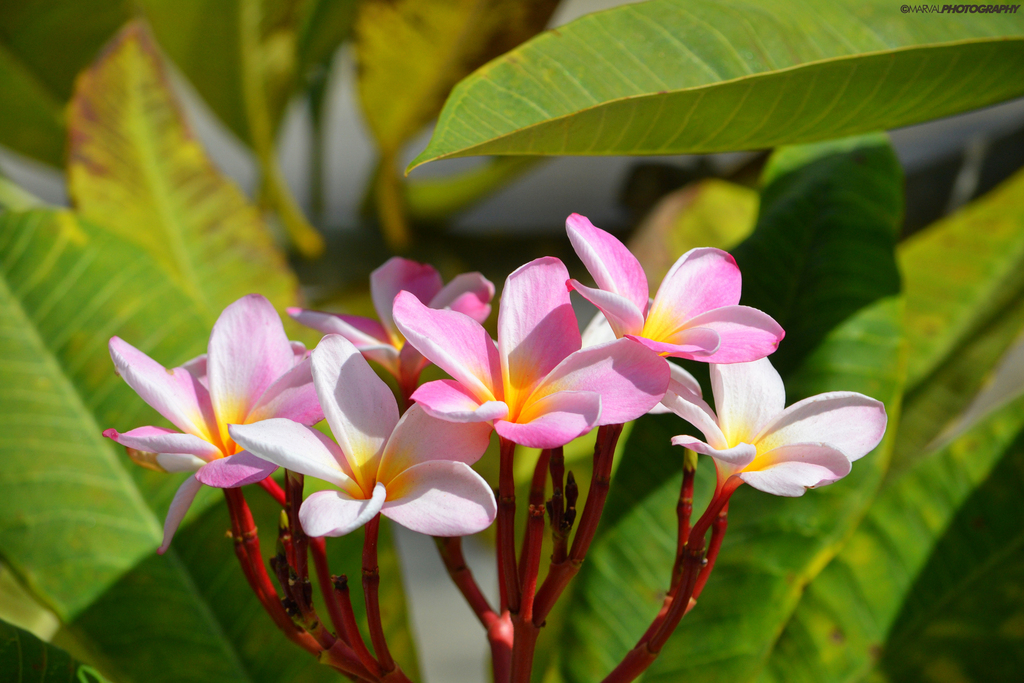
Plumeria are iconic tropical shrubs known for their incredibly fragrant, waxy flowers. They thrive in warm climates and love soaking up the sun. You will find them in a beautiful array of colors like white, yellow, pink, and red.

At a glance
- Care level
- Moderate
- Plant type
- Tropical shrub
- Light
- Full sun
- Indoor light
- Direct sun
- Water
- Every 7 to 14 days
- Mature size
- 15 to 25 feet
- Growth rate
- Medium
- Hardiness
- USDA 10 to 12
- Bloom time
- Late spring to early autumn
Care
Give these plants as much sun as possible to encourage blooming. Watch for yellowing leaves, which often signal overwatering or poor drainage. Keep them warm and dry during their winter dormancy period.
- Watering
- Allow the soil to dry out significantly between waterings to prevent root rot.
- Feeding
- Use a high phosphorus fertilizer during the growing season to boost flower production.
- Pruning
- Prune in late winter or early spring to maintain shape and remove dead branches.
- Repotting
- Repot when the plant becomes root bound, usually every few years.
- Soil
- Well draining cactus or succulent mix
- Soil pH
- 6.0 to 7.0
- Temperature
- 10 to 35°C
- Humidity
- 40 to 60%
- Drought tolerance
- High
- Lifespan
- Perennial, can live for many decades with proper care.
- Fragrance
- Strong
- Deer and rabbits
- High
Signs it needs repotting
- Roots growing out of the drainage holes
- Water running straight through the pot without soaking in
- Stunted growth during the active season
Safety
- People
- The milky sap is a skin irritant and the plant is toxic if eaten.
- Pets
- The milky sap is toxic to cats and dogs if ingested or touched.
- Children
- Keep this plant away from children because the milky sap is irritating and all parts are toxic if ingested.
- Contact allergens
- The milky latex sap can cause contact dermatitis or irritation to sensitive skin.
- Airborne allergens
- There is no significant evidence of respiratory allergies caused by this plant.
- Edibility
- All parts of the plant are considered toxic if ingested and should not be consumed.
How to identify it
- Thick, succulent like stems
- Fragrant five petaled flowers
- Large, leathery, lance shaped leaves
- Milky white sap when cut
- Height
- 1.5 to 6m
- Spread
- 1.5 to 4.5m
- Leaves
- green, deciduous
- Flowers
- white, yellow, pink, red, 5 to 10cm
- Fruit
- brown, Rarely produced in cultivation
Problems to watch for
- Plumeria RustCommon
- Root RotCommon
- Spider MitesCommon
- MealybugsUncommon
- Scale InsectsUncommon
- ThripsUncommon
- Rust — A fungal infection causing orange pustules on the undersides of leaves.
Check your frangipani from a photo
Pocket Botanist looks at a photo of your plant and tells you what's wrong and what to try first.
Growing it
- Propagation
- cuttings, seed
- When to plant
- spring, early summer
- Overwintering
- Move the plant indoors or to a frost-free location before the first autumn chill. Keep it in a bright spot and stop fertilizing, watering only enough to keep the stems from shriveling.
- In containers
- Plumeria grows exceptionally well in containers, provided you use a well-draining potting mix and a pot at least 30 cm wide.
Stem Cuttings
- 1. Take a 30 cm cutting from a healthy branch in spring.
- 2. Allow the cut end to callous over in a dry, shaded area for 1 to 2 weeks.
- 3. Plant the calloused end in a well-draining cactus mix.
- 4. Place in a warm, bright spot and water sparingly until roots form.
Pair with other sun-loving tropicals that appreciate well-draining soil to create a cohesive container display.
Grows well with
Similar species
- Desert Rose — It shares a similar succulent growth habit and tropical origin.
- Oleander — It has similar milky sap and is also a member of the Apocynaceae family.
Science
- Family
- Apocynaceae
- Genus
- Plumeria
- Order
- Gentianales
- Class
- Magnoliopsida
- Native range
- Tropical Americas
- Conservation
- Not of conservation concern, though widely cultivated across tropical regions.
It survives in dry, tropical forests by dropping its leaves during the dry season to conserve moisture.
- Value to wildlife
- fragrant nectar source
- Pollinators
- moths
- Uses
- ornamental shrub, container plant, lei making, perfumery
Through the year
Ecological indicators
- Salinity
- 2/9
- Soil reaction
- 6/9
- Light
- 8/9
- Nutrients
- 5/9
- Temperature
- 8/9
- Moisture
- 3/9
Taxonomy resolved against GBIF.
Questions people ask
- How do I get my Plumeria to bloom?
- They need at least six hours of direct sunlight and regular fertilizer during the growing season.
- Do I need to water it in winter?
- When the plant drops its leaves and goes dormant, reduce watering significantly to prevent rot.
Where the name comes from
The genus is named after the French botanist Charles Plumier, while the common name frangipani honors the Marquis Frangipani.
Good to know
- Plumeria is the national flower of Nicaragua.
- The flowers are commonly used in Hawaiian leis due to their durability and scent.
- They are also known as frangipani, named after an Italian noble family who created a perfume with a similar scent.
- Plumeria can survive long periods of drought by storing water in their thick, succulent stems.
Also in
Keep your frangipani growing
This page is a general guide. Save your plant in Pocket Botanist and you get care reminders timed for this plant, plus a care history that shows what worked.
This guide was generated with AI and checked against GBIF taxonomy. It is general information, not horticultural or veterinary advice. Read about how we build these guides.