 Pocket Botanist
Plant guide
Neon Philodendron.
Philodendron hederaceum
Pronounced fil-oh-DEN-dron hed-er-AY-see-um
Also known as Vilevine, heart-leaf philodendron, heartleaf philodendron



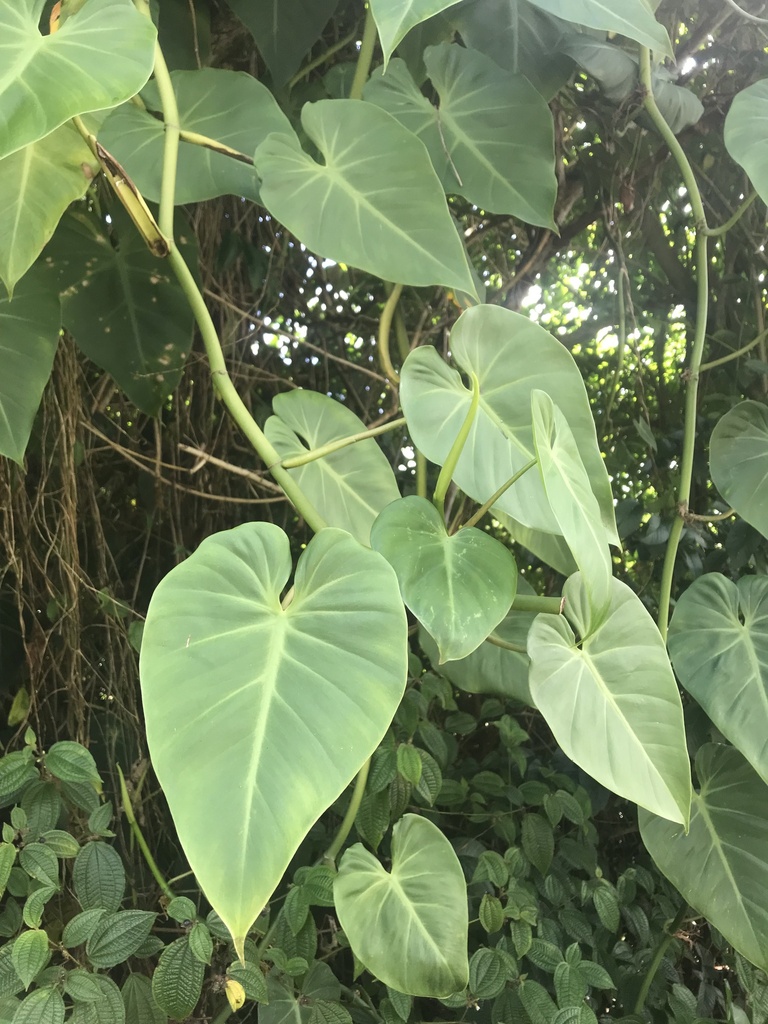
The Neon Philodendron is a vibrant, vining houseplant known for its striking chartreuse foliage. It is a popular choice for hanging baskets or trailing down shelves. This plant is quite adaptable and thrives in most indoor environments.
At a glance
- Care level
- Easy
- Plant type
- Tropical vine
- Light
- Bright indirect light is best for maintaining color.
- Indoor light
- Bright indirect
- Water
- Every 7 to 10 days
- Mature size
- Up to 2 meters long
- Growth rate
- Fast
- Hardiness
- USDA 11 to 12
- Bloom time
- Rarely blooms indoors, but occasionally in late spring.
Care
Keep the soil consistently moist but never soggy to prevent root issues. Watch for drooping leaves which often signal a need for water. Provide bright, indirect light to maintain the intense neon color of the leaves.
- Watering
- Water when the top 3 centimeters of soil feel dry to the touch.
- Feeding
- Use a balanced liquid fertilizer during the growing season.
- Pruning
- Trim back long stems to encourage a bushier appearance.
- Repotting
- Repot when the roots begin to circle the bottom of the container.
- Soil
- Well draining peat based potting mix
- Soil pH
- 5.5 to 6.5
- Temperature
- 15 to 27°C
- Humidity
- 40 to 70%
- Drought tolerance
- Moderate
- Lifespan
- Perennial, typically 5 to 10 years indoors.
- Deer and rabbits
- Low
Signs it needs repotting
- Roots growing out of the drainage holes.
- Water running straight through the pot without soaking in.
- Growth slowing down significantly during the active season.
Safety
- People
- The plant contains calcium oxalate crystals that cause irritation to the mouth, tongue, and throat if chewed or swallowed.
- Pets
- This plant is toxic to cats and dogs if ingested.
- Children
- Keep this plant out of reach of children, as the leaves are toxic and pose a choking and irritation hazard if ingested.
- Contact allergens
- The sap can cause mild skin irritation or dermatitis in sensitive individuals.
- Airborne allergens
- There are no notable respiratory allergens associated with this plant.
- Edibility
- This plant is toxic if ingested and should never be consumed by humans or pets.
How to identify it
- Heart shaped leaves
- Bright neon yellow green color
- Trailing vining growth habit
- Smooth leaf texture
- Height
- 1 to 3m
- Spread
- 0.3 to 0.6m
- Leaves
- dark green, lime green, evergreen
- Flowers
- white, green, 5 to 10cm
Problems to watch for
- Brown Leaf EdgesCommon
- Fungus GnatsCommon
- Root RotCommon
- Spider MitesCommon
- Leaf DropUncommon
- MealybugsUncommon
- Scale InsectsUncommon
- ThripsUncommon
By symptom
Check your neon philodendron from a photo
Pocket Botanist looks at a photo of your plant and tells you what's wrong and what to try first.
Growing it
- Propagation
- cuttings, division
- When to plant
- spring, summer
- Overwintering
- Keep the plant away from cold drafts and heating vents during winter. Reduce watering slightly as growth slows down in cooler months.
- In containers
- It grows very well in containers and hanging baskets, requiring a minimum pot size of 4 to 6 inches for young plants.
Stem cuttings in water
- 1. Snip a 4 to 6 inch stem cutting just below a leaf node.
- 2. Remove the lower leaves so no foliage sits in the water.
- 3. Place the cutting in a jar of water in bright, indirect light.
- 4. Change the water weekly until roots are 2 inches long.
- 5. Pot the rooted cutting into fresh, well draining soil.
Group plants with similar water needs together to make maintenance easier.
Grows well with
- Peace Lily — They share similar light and moisture requirements.
- Snake Plant — It adds a contrasting vertical structure to the trailing philodendron.
Similar species
- Pothos — It has a similar trailing habit but thicker, waxy leaves.
- Satin Pothos — It features similar heart shaped leaves but with silver variegation.
Science
- Family
- Araceae
- Genus
- Philodendron
- Order
- Alismatales
- Class
- Liliopsida
- Native range
- Central and South America, Caribbean.
- Conservation
- Not of conservation concern as it is widely cultivated and common in its native range.
In the wild, it grows as an epiphyte or climber in the understory of tropical rainforests, utilizing trees for support to reach better light.
- Uses
- indoor decor, hanging baskets, air purification
Through the year
Ecological indicators
- Soil reaction
- 6/9
- Light
- 3/9
- Moisture
- 5/9
- Nutrients
- 4/9
- Salinity
- 2/9
- Temperature
- 8/9
Taxonomy resolved against GBIF.
Questions people ask
- Why are my leaves turning yellow?
- This is usually a sign of overwatering or poor drainage.
- How often should I water it?
- Water when the top 2 to 3 centimeters of soil feel dry to the touch.
Where the name comes from
The name Philodendron comes from the Greek words philo, meaning love, and dendron, meaning tree, referring to its climbing habit. The species name hederaceum means ivy-like, describing its trailing growth.
Good to know
- It is commonly called the heartleaf philodendron due to its leaf shape.
- It can grow as a trailing vine or climb if given a moss pole.
- It is one of the easiest plants to propagate in water.
- The plant is native to the tropical Americas and the Caribbean.
- It was once classified under the genus Pothos, but it is not related.
Also in
Keep your neon philodendron growing
This page is a general guide. Save your plant in Pocket Botanist and you get care reminders timed for this plant, plus a care history that shows what worked.
This guide was generated with AI and checked against GBIF taxonomy. It is general information, not horticultural or veterinary advice. Read about how we build these guides.