 Pocket Botanist
Guide botanique
Philodendron Néon.
Philodendron hederaceum
Prononciation fil-oh-DEN-dron hed-er-AY-see-um
Aussi appelée Vilevine, Philodendron cœur, Philodendron à feuilles en coeur



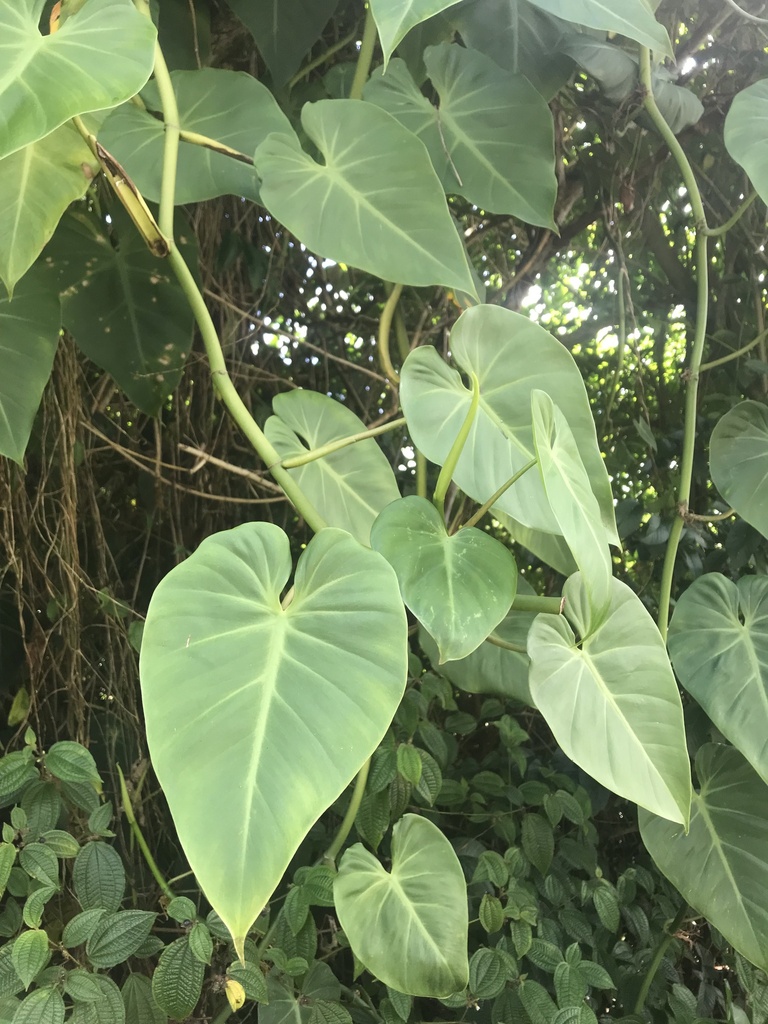
Le Philodendron Néon est une plante d'intérieur grimpante et vibrante, reconnaissable à son feuillage saisissant d'un jaune-vert vif. C'est un choix populaire pour les paniers suspendus ou pour retomber sur les étagères. Cette plante est très adaptable et prospère dans la plupart des environnements intérieurs.
En un coup d'œil
- Niveau d'entretien
- Facile
- Type de plante
- Liane tropicale
- Lumière
- Une lumière indirecte vive est idéale pour maintenir la couleur.
- Lumière en intérieur
- Lumière vive indirecte
- Arrosage
- Tous les 7 à 10 jours
- Taille adulte
- Jusqu'à 2 mètres de long
- Croissance
- Rapide
- Rusticité
- USDA 11 à 12
- Floraison
- Fleurit rarement à l'intérieur, mais occasionnellement à la fin du printemps.
Entretien
Gardez le terreau constamment humide, mais jamais gorgé d'eau pour éviter les problèmes de racines. Surveillez les feuilles qui s'affaissent, signe qu'un arrosage est souvent nécessaire. Offrez une lumière vive et indirecte pour conserver la couleur néon intense des feuilles.
- Arrosage
- Arrosez lorsque les 3 premiers centimètres de terreau sont secs au toucher.
- Engrais
- Utilisez un engrais liquide équilibré pendant la saison de croissance.
- Taille
- Taille les tiges longues pour encourager une apparence plus touffue.
- Rempotage
- Rempotez lorsque les racines commencent à faire le tour du fond du pot.
- Sol
- Mélange de terreau à base de tourbe bien drainant
- pH du sol
- 5.5 à 6.5
- Température
- 15 à 27°C
- Humidité
- 40 à 70%
- Résistance à la sécheresse
- Moyenne
- Durée de vie
- Vivace, généralement 5 à 10 ans à l'intérieur.
- Résistance aux chevreuils et lapins
- Faible
Signes qu'il faut rempoter
- Les racines sortent des trous de drainage.
- L'eau traverse le pot sans s'infiltrer.
- La croissance ralentit considérablement pendant la saison active.
Sécurité
- Humains
- La plante contient des cristaux d'oxalate de calcium qui provoquent une irritation de la bouche, de la langue et de la gorge en cas de mastication ou d'ingestion.
- Animaux
- Cette plante est toxique pour les chats et les chiens en cas d'ingestion.
- Enfants
- Gardez cette plante hors de portée des enfants, car les feuilles sont toxiques et présentent un risque d'étouffement et d'irritation en cas d'ingestion.
- Allergènes de contact
- La sève peut provoquer une légère irritation cutanée ou une dermatite chez les personnes sensibles.
- Allergènes aéroportés
- Il n'y a pas d'allergènes respiratoires notables associés à cette plante.
- Comestibilité
- Cette plante est toxique si ingérée et ne doit jamais être consommée par les humains ou les animaux domestiques.
Comment l'identifier
- Feuilles en forme de coeur
- Couleur jaune vert néon vif
- Port grimpant retombant
- Texture de feuille lisse
- Hauteur
- 1 à 3m
- Envergure
- 0,3 à 0,6m
- Feuilles
- vert foncé, vert lime, feuillage persistant
- Fleurs
- blanc, vert, 5 à 10cm
Problèmes à surveiller
- Brunissement du bord des feuillesCourant
- Mouches du terreauCourant
- Pourriture des racinesCourant
- TétranyquesCourant
- Chute des feuillesPeu courant
- CochenillesPeu courant
- Cochenilles farineusesPeu courant
- ThripsPeu courant
- Acariens — Minuscules parasites qui créent une fine toile et provoquent le jaunissement des feuilles.
Par symptôme
Vérifie la santé de ta plante en photo
Pocket Botanist analyse une photo de ta plante et te dit ce qui ne va pas et quoi essayer en premier.
La cultiver
- Multiplication
- boutures, division
- Quand planter
- printemps, été
- Hivernage
- Gardez la plante à l'abri des courants d'air froids et des bouches de chauffage pendant l'hiver. Réduisez légèrement l'arrosage à mesure que la croissance ralentit pendant les mois plus frais.
- En pot
- Il pousse très bien dans les conteneurs et les paniers suspendus, nécessitant une taille de pot minimale de 10 à 15 cm pour les jeunes plantes.
Boutures de tige dans l'eau
- 1. Coupez une bouture de tige de 10 à 15 cm juste en dessous d'un nœud de feuille.
- 2. Retirez les feuilles inférieures afin qu'aucun feuillage ne trempe dans l'eau.
- 3. Placez la bouture dans un bocal d'eau à la lumière vive et indirecte.
- 4. Changez l'eau chaque semaine jusqu'à ce que les racines mesurent 5 cm de long.
- 5. Plantez la bouture enracinée dans un sol frais et bien drainé.
Regroupez les plantes ayant des besoins en eau similaires pour faciliter l'entretien.
Bonnes associations
- Spathiphyllum — Ils partagent des exigences similaires en matière de lumière et d'humidité.
- Sansevieria — Il ajoute une structure verticale contrastante au philodendron retombant.
Espèces similaires
- Pothos doré — Il a une habitude retombante similaire mais des feuilles plus épaisses et cireuses.
- Philodendron argenté — Il présente des feuilles similaires en forme de cœur mais avec une panachure argentée.
Science
- Famille
- Araceae
- Genre
- Philodendron
- Ordre
- Alismatales
- Classe
- Liliopsida
- Région d'origine
- Amérique centrale et du Sud, Caraïbes.
- Préservation
- Pas une préoccupation pour la conservation car il est largement cultivé et commun dans son aire de répartition native.
Dans la nature, il pousse comme épiphyte ou grimpeur dans le sous-étage des forêts tropicales humides, utilisant les arbres pour se soutenir afin de mieux capter la lumière.
- Utilisations
- décoration intérieure, paniers suspendus, purification de l'air
Au fil des saisons
Repères écologiques
- Réaction du sol
- 6/9
- Lumière
- 3/9
- Humidité
- 5/9
- Nutriments
- 4/9
- Salinité
- 2/9
- Température
- 8/9
Taxonomie vérifiée avec le GBIF.
Ce qu'on demande souvent
- Pourquoi mes feuilles jaunissent-elles ?
- C'est généralement un signe d'arrosage excessif ou de mauvais drainage.
- À quelle fréquence dois-je l'arroser ?
- Arrosez lorsque les 2 à 3 centimètres supérieurs du sol sont secs au toucher.
D'où vient le nom
Le nom Philodendron vient des mots grecs philo, signifiant amour, et dendron, signifiant arbre, faisant référence à son habitude de grimper. Le nom de l'espèce hederaceum signifie "semblable au lierre", décrivant sa croissance retombante.
Bon à savoir
- Il est communément appelé philodendron à feuilles de cœur en raison de la forme de ses feuilles.
- Il peut pousser comme une vigne retombante ou grimper s'il est muni d'un tuteur en mousse.
- C'est l'une des plantes les plus faciles à propager dans l'eau.
- La plante est originaire des Amériques tropicales et des Caraïbes.
- Il était autrefois classé dans le genre Pothos, mais il n'y est pas apparenté.
Aussi dans
Garde ta plante en pleine forme
Cette page est un guide général. Enregistre ta plante dans Pocket Botanist et tu reçois des rappels d'entretien adaptés à cette plante, ainsi qu'un historique d'entretien qui montre ce qui a marché.
Ce guide a été généré par IA et vérifié avec la taxonomie du GBIF. Il s'agit d'informations générales, et non de conseils horticoles ou vétérinaires. Découvre comment nous concevons ces guides.