 Pocket Botanist
Guía de plantas
Filodendro neón.
Philodendron hederaceum
Pronunciación fil-oh-DEN-dron hed-er-AY-see-um
También se conoce como Vilevine, filodendro de hoja de corazón, filodendro hoja corazón



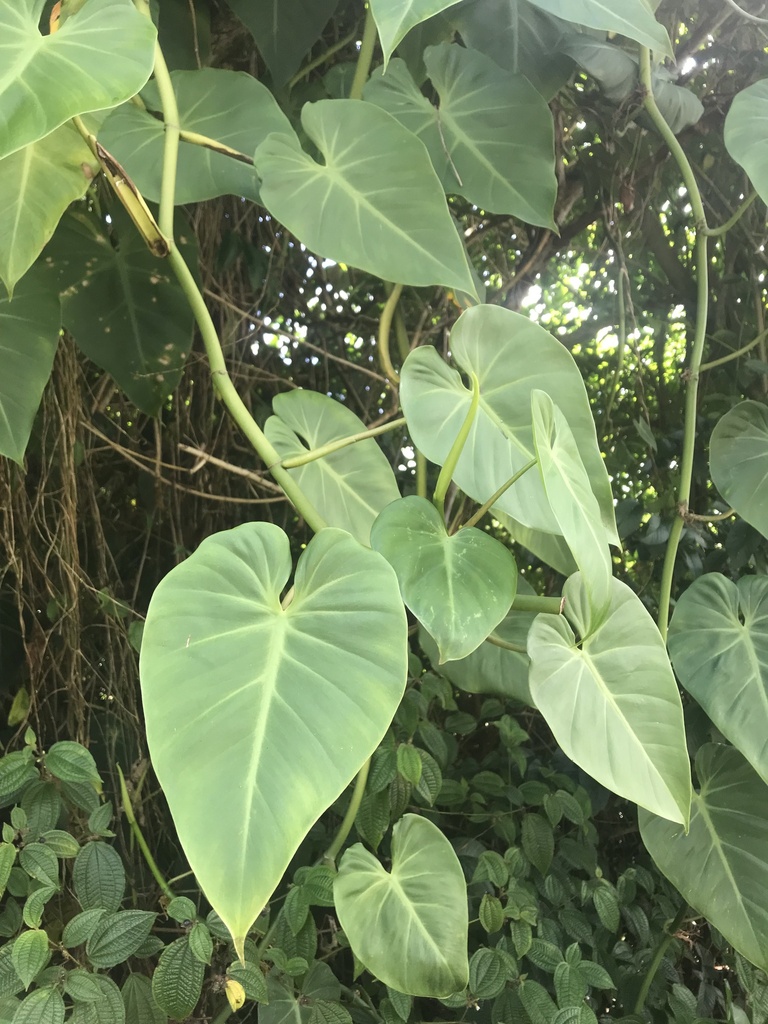
El Filodendro neón es una planta de interior vibrante y trepadora, conocida por su llamativo follaje verde limón. Es una opción popular para cestas colgantes o para que caiga por estantes. Esta planta es bastante adaptable y prospera en la mayoría de los ambientes interiores.
De un vistazo
- Nivel de cuidados
- Fácil
- Tipo de planta
- Enredadera tropical
- Luz
- La luz indirecta brillante es mejor para mantener el color.
- Luz en interior
- Luz indirecta brillante
- Riego
- Cada 7 a 10 días
- Tamaño adulto
- Hasta 2 metros de largo
- Ritmo de crecimiento
- Rápido
- Rusticidad
- USDA 11 a 12
- Floración
- Raramente florece en interiores, pero ocasionalmente a finales de primavera.
Cuidados
Mantén la tierra consistentemente húmeda pero nunca empapada para prevenir problemas en las raíces. Observa si las hojas se caen, lo que a menudo indica la necesidad de agua. Proporciona luz brillante e indirecta para mantener el intenso color neón de las hojas.
- Riego
- Riega cuando los primeros 3 centímetros de tierra se sientan secos al tacto.
- Abonado
- Usa un fertilizante líquido balanceado durante la temporada de crecimiento.
- Poda
- Recorta los tallos largos para fomentar una apariencia más frondosa.
- Trasplante
- Trasplanta cuando las raíces comiencen a dar vueltas en el fondo de la maceta.
- Suelo
- Mezcla para macetas a base de turba bien drenada
- pH del suelo
- 5.5 a 6.5
- Temperatura
- 15 a 27°C
- Humedad
- 40 a 70%
- Tolerancia a la sequía
- Moderada
- Longevidad
- Perenne, típicamente de 5 a 10 años en interiores.
- Resistencia a ciervos y conejos
- Baja
Señales de que necesita trasplante
- Raíces saliendo de los agujeros de drenaje.
- El agua pasa directamente a través de la maceta sin empaparse.
- El crecimiento se ralentiza significativamente durante la temporada activa.
Seguridad
- Personas
- La planta contiene cristales de oxalato de calcio que causan irritación en la boca, lengua y garganta si se mastican o tragan.
- Mascotas
- Esta planta es tóxica para gatos y perros si se ingiere.
- Niños
- Mantén esta planta fuera del alcance de los niños, ya que las hojas son tóxicas y representan un peligro de asfixia e irritación si se ingieren.
- Alérgenos por contacto
- La savia puede causar irritación leve de la piel o dermatitis en personas sensibles.
- Alérgenos en el aire
- No hay alérgenos respiratorios notables asociados con esta planta.
- Comestibilidad
- Esta planta es tóxica si se ingiere y nunca debe ser consumida por humanos o mascotas.
Cómo identificarla
- Hojas con forma de corazón
- Color verde amarillo neón brillante
- Hábito de crecimiento colgante y trepador
- Textura de hoja lisa
- Altura
- 1 a 3m
- Anchura
- 0,3 a 0,6m
- Hojas
- verde oscuro, verde lima, perenne
- Flores
- blanco, verde, 5 a 10cm
Problemas a vigilar
- Araña rojaComún
- Bordes marrones en las hojasComún
- Moscas del mantilloComún
- Podredumbre radicularComún
- Caída de hojasPoco común
- CochinillasPoco común
- Cochinillas algodonosasPoco común
- TripsPoco común
- Ácaros araña — Pequeñas plagas que crean finas telarañas y causan amarillamiento de las hojas.
- Pudrición de raíces — Ocurre cuando la tierra permanece demasiado húmeda durante demasiado tiempo, lo que provoca raíces blandas.
Por síntoma
Revisa tu filodendro neón con una foto
Pocket Botanist mira una foto de tu planta y te dice qué le pasa y qué probar primero.
Cómo cultivarla
- Propagación
- esquejes, división
- Cuándo plantar
- primavera, verano
- Cuidados en invierno
- Mantén la planta alejada de corrientes de aire frío y rejillas de calefacción durante el invierno. Reduce ligeramente el riego a medida que el crecimiento disminuye en los meses más fríos.
- En maceta
- Crece muy bien en contenedores y cestas colgantes, requiriendo un tamaño mínimo de maceta de 4 a 6 pulgadas para plantas jóvenes.
Esquejes de tallo en agua
- 1. Corta un esqueje de tallo de 10 a 15 cm justo debajo de un nudo de hoja.
- 2. Retira las hojas inferiores para que ningún follaje quede en el agua.
- 3. Coloca el esqueje en un frasco de agua a la luz brillante e indirecta.
- 4. Cambia el agua semanalmente hasta que las raíces midan 5 cm de largo.
- 5. Planta el esqueje enraizado en tierra fresca y bien drenada.
Agrupa plantas con necesidades de agua similares para facilitar el mantenimiento.
Buenas compañeras
- Lirio de paz — Comparten requisitos similares de luz y humedad.
- Sansevieria — Añade una estructura vertical contrastante al filodendro colgante.
Especies parecidas
- Potos dorado — Tiene un hábito colgante similar pero con hojas más gruesas y cerosas.
- Filodendro plateado — Presenta hojas similares en forma de corazón pero con variegación plateada.
Ciencia
- Familia
- Araceae
- Género
- Philodendron
- Orden
- Alismatales
- Clase
- Liliopsida
- Distribución natural
- Centro y Sudamérica, Caribe.
- Conservación
- No es motivo de preocupación para la conservación, ya que está ampliamente cultivado y es común en su área nativa.
En la naturaleza, crece como epífita o trepadora en el sotobosque de las selvas tropicales, utilizando los árboles como soporte para alcanzar mejor la luz.
- Usos
- decoración de interiores, cestas colgantes, purificación del aire
A lo largo del año
Indicadores ecológicos
- Reacción del suelo
- 6/9
- Luz
- 3/9
- Humedad
- 5/9
- Nutrientes
- 4/9
- Salinidad
- 2/9
- Temperatura
- 8/9
Taxonomía cotejada con GBIF.
Lo que más preguntan
- ¿Por qué mis hojas se vuelven amarillas?
- Esto suele ser un signo de riego excesivo o mal drenaje.
- ¿Cada cuánto debo regarla?
- Riega cuando los 2 a 3 centímetros superiores de la tierra se sientan secos al tacto.
De dónde viene el nombre
El nombre Philodendron proviene de las palabras griegas philo, que significa amor, y dendron, que significa árbol, refiriéndose a su hábito de trepar. El nombre de la especie hederaceum significa parecido a la hiedra, describiendo su crecimiento colgante.
Bueno saberlo
- Comúnmente se le llama filodendro hoja de corazón debido a la forma de sus hojas.
- Puede crecer como una enredadera colgante o trepar si se le proporciona un tutor de musgo.
- Es una de las plantas más fáciles de propagar en agua.
- La planta es nativa de las Américas tropicales y el Caribe.
- Una vez estuvo clasificada bajo el género Pothos, pero no está relacionada.
También en
Que tu filodendro neón siga creciendo
Esta página es una guía general. Guarda tu planta en Pocket Botanist y tendrás recordatorios de cuidado pensados para esta planta, además de un historial de cuidados que muestra qué ha funcionado.
Esta guía se ha generado con IA y se ha cotejado con la taxonomía de GBIF. Es información general, no asesoramiento botánico ni veterinario. Descubre cómo elaboramos estas guías.