 Pocket Botanist
Guía de plantas
Sansevieria.
Dracaena trifasciata
Pronunciación drah-KEE-nah try-fas-ee-AH-tah
También se conoce como Sansevieria, Lengua de suegra, Cintas, Espada de San Jorge, Hiedra, Planta de la suerte, Nariz de suegra


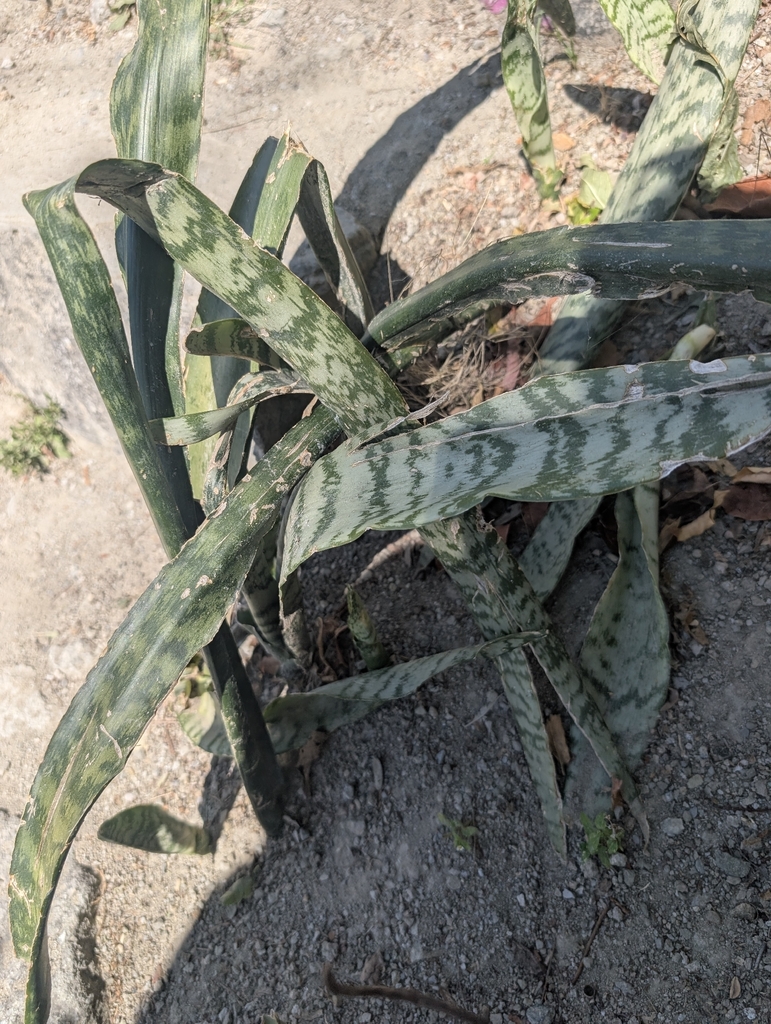
Esta es una planta resistente y arquitectónica que prospera con la negligencia. Presenta hojas rígidas en forma de espada que crecen verticalmente. Es una opción fantástica para principiantes o lugares con poca luz.
De un vistazo
- Nivel de cuidados
- Fácil
- Tipo de planta
- Perenne suculenta.
- Luz
- Luz baja a brillante indirecta.
- Luz en interior
- Luz baja
- Riego
- Cada 14 a 30 días
- Tamaño adulto
- Hasta 120 cm de altura.
- Ritmo de crecimiento
- Lento
- Rusticidad
- USDA 10 a 12
- Floración
- Rara vez en cultivo, generalmente a finales de invierno o principios de primavera.
Cuidados
Deja que la tierra se seque completamente entre riegos para evitar la pudrición de la raíz. Vigila las hojas blandas, que indican riego excesivo. Limpia las hojas ocasionalmente para que no acumulen polvo.
- Riego
- Asegúrate siempre de que la tierra esté completamente seca antes de añadir más agua.
- Abonado
- Alimenta ligeramente con un fertilizante líquido equilibrado durante la temporada de crecimiento.
- Poda
- Retira las hojas dañadas o muertas en la base según sea necesario.
- Trasplante
- Trasplanta solo cuando la planta tenga las raíces apretadas o rompa su contenedor.
- Suelo
- Mezcla bien drenada para suculentas o cactus.
- pH del suelo
- Ligeramente ácido a neutro.
- Temperatura
- 15 a 29°C
- Humedad
- 30 a 50%
- Tolerancia a la sequía
- Alta
- Longevidad
- Perenne, típicamente de 5 a 10 años o más.
- Resistencia a ciervos y conejos
- Alta
Señales de que necesita trasplante
- Las raíces crecen fuera de los agujeros de drenaje.
- La maceta comienza a abultarse o agrietarse por la presión de las raíces.
- El agua pasa directamente a través de la maceta sin empaparse.
Seguridad
- Personas
- Las hojas contienen saponinas que causan irritación bucal, babeo y náuseas si se ingieren.
- Mascotas
- Esta planta es tóxica para gatos y perros si se ingiere.
- Niños
- Mantenga esta planta fuera del alcance de los niños, ya que las hojas son un peligro de asfixia y son tóxicas si se muerden.
- Alérgenos por contacto
- La savia puede causar irritación leve de la piel en personas sensibles.
- Alérgenos en el aire
- No hay riesgos de alergia en el aire asociados con esta planta.
- Comestibilidad
- Esta planta es tóxica si se ingiere y nunca debe ser consumida por humanos o mascotas.
Cómo identificarla
- Hojas rígidas, erguidas y en forma de espada
- Bandas horizontales a través del follaje
- Veteado de verde oscuro a plateado
- Textura de hoja gruesa y suculenta
- Altura
- 0,6 a 1,2m
- Anchura
- 0,15 a 0,3m
- Hojas
- verde oscuro, verde claro, amarillo, siempreverde
- Flores
- blanco, blanco verdoso, 1 a 2cm
- Frutos
- naranja, Rara vez producida
Problemas a vigilar
- Cochinillas algodonosasComún
- Podredumbre radicularComún
- Bordes marrones en las hojasPoco común
- Podredumbre blandaPoco común
- Pudrición de raíces — Causada por exceso de riego o mal drenaje que provoca raíces blandas y en descomposición.
- Cochinillas — Pequeños insectos blancos algodonosos que chupan la savia de las hojas.
Por síntoma
Revisa tu sansevieria con una foto
Pocket Botanist mira una foto de tu planta y te dice qué le pasa y qué probar primero.
Cómo cultivarla
- Propagación
- división, esquejes
- Cuándo plantar
- primavera, verano
- Cuidados en invierno
- Mantenga la planta en un lugar interior cálido y reduzca significativamente el riego durante los meses de invierno.
- En maceta
- Crece muy bien en contenedores y prefiere un ajuste ceñido, así que no uses una maceta demasiado grande.
Esquejes de hoja
- Corta una hoja sana en secciones de 3 pulgadas.
- Deja que los extremos cortados se callen durante dos días.
- Inserta el extremo calloso en una mezcla para macetas húmeda.
- Mantener con luz brillante e indirecta hasta que se formen las raíces.
Agrupe plantas con necesidades de agua similares para evitar el riego excesivo accidental de esta especie tolerante a la sequía.
Buenas compañeras
- Planta ZZ — Comparten requisitos similares de poca luz y poca agua.
- Potos dorado — Proporcionan un buen contraste en la forma de la hoja y el hábito de crecimiento.
Especies parecidas
- Lengua de tigre cilíndrica — Tiene necesidades de cuidado similares pero presenta hojas redondas en forma de lanza.
Ciencia
- Familia
- Asparagaceae
- Género
- Dracaena
- Orden
- Asparagales
- Clase
- Liliopsida
- Distribución natural
- África Occidental Tropical.
- Conservación
- Esta especie no está amenazada actualmente y se cultiva ampliamente a nivel mundial.
Crece en suelos secos y rocosos en su hábitat nativo, confiando en sus gruesas hojas para almacenar agua durante las largas sequías.
- Valor para la fauna
- fuente de néctar de floración nocturna
- Polinizadores
- polillas
- Usos
- purificación del aire interior, decoración con poca luz, paisajismo minimalista
A lo largo del año
Indicadores ecológicos
- Salinidad
- 2/9
- Luz
- 3/9
- Temperatura
- 7/9
- Humedad
- 2/9
- Reacción del suelo
- 5/9
- Nutrientes
- 2/9
Taxonomía cotejada con GBIF.
Lo que más preguntan
- Con qué frecuencia debo regarla?
- Solo riega cuando la tierra esté completamente seca, generalmente cada 2 a 4 semanas.
- Puede crecer con poca luz?
- Sí, es una de las plantas de interior más tolerantes a la sombra disponibles.
De dónde viene el nombre
El nombre Dracaena proviene de la palabra griega drakaina que significa dragona hembra, refiriéndose a la resina roja de algunas especies. El epíteto trifasciata se refiere a las tres bandas distintas de color en las hojas.
Bueno saberlo
- Anteriormente se clasificaba como Sansevieria trifasciata.
- A menudo se le llama planta serpiente debido al patrón de las hojas.
- Es increíblemente tolerante a la sequía y prospera con la negligencia.
- La planta se considera afortunada en algunas culturas.
También en
Que tu sansevieria siga creciendo
Esta página es una guía general. Guarda tu planta en Pocket Botanist y tendrás recordatorios de cuidado pensados para esta planta, además de un historial de cuidados que muestra qué ha funcionado.
Esta guía se ha generado con IA y se ha cotejado con la taxonomía de GBIF. Es información general, no asesoramiento botánico ni veterinario. Descubre cómo elaboramos estas guías.