 Pocket Botanist
Plant guide
Sansevieria.
Dracaena trifasciata
Pronounced drah-KEE-nah try-fas-ee-AH-tah
Also known as Snake plant, Mother-in-law's tongue, Viper's bowstring hemp, Snake Sansevieria, Bowstring hemp, Good luck plant, Mother-in-law's nose


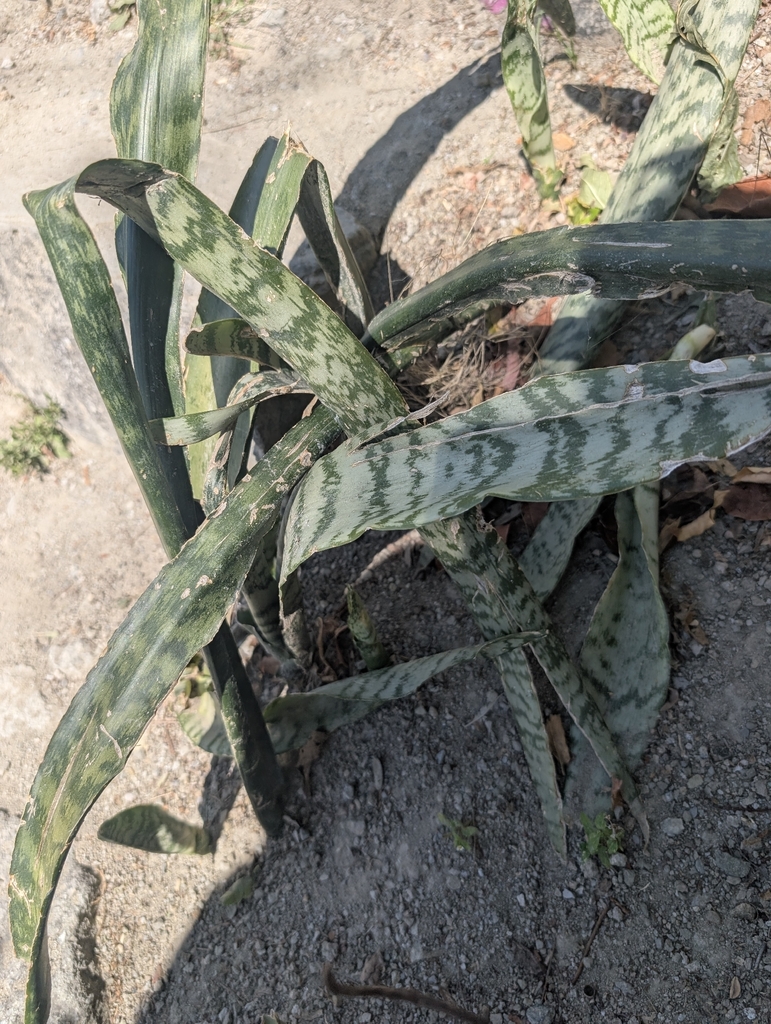
This is a tough, architectural plant that thrives on neglect. It features stiff, sword shaped leaves that grow vertically. It is a fantastic choice for beginners or low light spots.
At a glance
- Care level
- Easy
- Plant type
- Succulent perennial.
- Light
- Low to bright indirect light.
- Indoor light
- Low light
- Water
- Every 14 to 30 days
- Mature size
- Up to 120 cm tall.
- Growth rate
- Slow
- Hardiness
- USDA 10 to 12
- Bloom time
- Rarely in cultivation, usually late winter or early spring.
Care
Let the soil dry out completely between waterings to avoid root rot. Keep an eye out for mushy leaves, which signal overwatering. Wipe the leaves occasionally to keep them dust free.
- Watering
- Always ensure the soil is bone dry before adding more water.
- Feeding
- Feed lightly with a balanced liquid fertilizer during the growing season.
- Pruning
- Remove damaged or dead leaves at the base as needed.
- Repotting
- Repot only when the plant becomes root bound or breaks its container.
- Soil
- Well draining succulent or cactus mix.
- Soil pH
- Slightly acidic to neutral.
- Temperature
- 15 to 29°C
- Humidity
- 30 to 50%
- Drought tolerance
- High
- Lifespan
- Perennial, typically 5 to 10 years or more.
- Deer and rabbits
- High
Signs it needs repotting
- Roots growing out of the drainage holes.
- The pot begins to bulge or crack from root pressure.
- Water runs straight through the pot without soaking in.
Safety
- People
- The leaves contain saponins which cause mouth irritation, drooling, and nausea if eaten.
- Pets
- This plant is toxic to cats and dogs if ingested.
- Children
- Keep this plant out of reach of children as the leaves are a choking hazard and toxic if chewed.
- Contact allergens
- The sap can cause mild skin irritation in sensitive individuals.
- Airborne allergens
- There are no notable airborne allergy risks associated with this plant.
- Edibility
- This plant is toxic if ingested and should never be consumed by humans or pets.
How to identify it
- Stiff, upright, sword shaped leaves
- Horizontal banding across foliage
- Deep green to silver variegation
- Thick, succulent leaf texture
- Height
- 0.6 to 1.2m
- Spread
- 0.15 to 0.3m
- Leaves
- dark green, light green, yellow, evergreen
- Flowers
- white, greenish white, 1 to 2cm
- Fruit
- orange, Rarely produced
Problems to watch for
- MealybugsCommon
- Root RotCommon
- Brown Leaf EdgesUncommon
- Soft RotUncommon
By symptom
Check your sansevieria from a photo
Pocket Botanist looks at a photo of your plant and tells you what's wrong and what to try first.
Growing it
- Propagation
- division, cuttings
- When to plant
- spring, summer
- Overwintering
- Keep the plant in a warm indoor spot and reduce watering significantly during the winter months.
- In containers
- It grows very well in containers and prefers a snug fit, so do not use a pot that is too large.
Leaf cuttings
- Cut a healthy leaf into 3 inch sections.
- Allow the cut ends to callous for two days.
- Insert the calloused end into moist potting mix.
- Keep in bright, indirect light until roots form.
Group plants with similar water needs together to prevent accidental overwatering of this drought tolerant species.
Grows well with
Similar species
- Cylindrical Snake Plant — It has similar care needs but features round, spear like leaves.
Science
- Family
- Asparagaceae
- Genus
- Dracaena
- Order
- Asparagales
- Class
- Liliopsida
- Native range
- Tropical West Africa.
- Conservation
- This species is not currently threatened and is widely cultivated globally.
It grows in dry, rocky soils in its native habitat, relying on its thick leaves to store water during long droughts.
- Value to wildlife
- night blooming nectar source
- Pollinators
- moths
- Uses
- indoor air purification, low light decor, minimalist landscaping
Through the year
Ecological indicators
- Salinity
- 2/9
- Light
- 3/9
- Temperature
- 7/9
- Moisture
- 2/9
- Soil reaction
- 5/9
- Nutrients
- 2/9
Taxonomy resolved against GBIF.
Questions people ask
- How often should I water it?
- Only water when the soil is completely dry, usually every 2 to 4 weeks.
- Can it grow in low light?
- Yes, it is one of the most shade tolerant houseplants available.
Where the name comes from
The name Dracaena comes from the Greek word drakaina meaning female dragon, referring to the red resin of some species. The epithet trifasciata refers to the three distinct bands of color on the leaves.
Good to know
- It was formerly classified as Sansevieria trifasciata.
- It is often called snake plant due to the leaf pattern.
- It is incredibly drought tolerant and thrives on neglect.
- The plant is considered lucky in some cultures.
Also in
Keep your sansevieria growing
This page is a general guide. Save your plant in Pocket Botanist and you get care reminders timed for this plant, plus a care history that shows what worked.
This guide was generated with AI and checked against GBIF taxonomy. It is general information, not horticultural or veterinary advice. Read about how we build these guides.