 Pocket Botanist
Plant guide
Golden Pothos.
Epipremnum aureum
Pronounced eh-pee-PREM-num AW-ree-um
Also known as Devil's Ivy, Golden pothos, Silver Vine, Money Plant, Devil's Ivy, Solomon Islands' Ivy, Hunter's robe, Ivy arum, Taro vine, Devil's vine, Ivy-arum, Marble Queen, Silver Vine, Taro vine, Tonga Vine, devil's-ivy


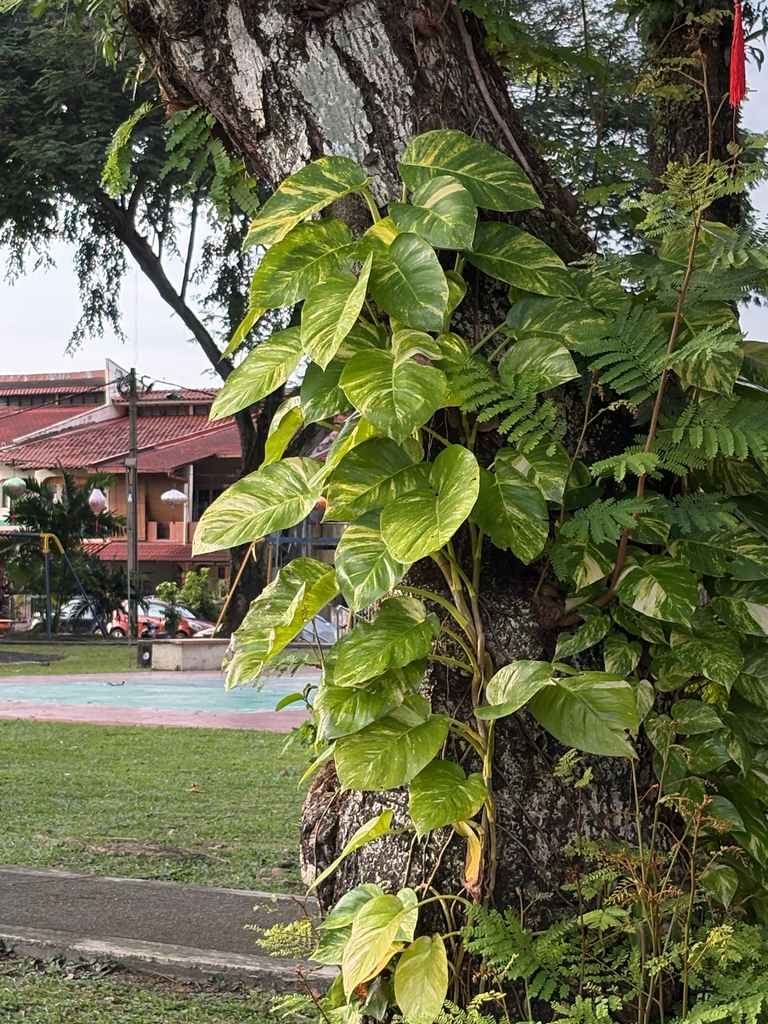
The Golden Pothos is a classic, trailing vine known for its heart shaped leaves splashed with yellow variegation. It is incredibly hardy and adapts well to many indoor conditions. You will love how quickly it grows to fill a space.
At a glance
- Care level
- Easy
- Plant type
- Evergreen vine
- Light
- Bright indirect light is best, though it tolerates lower light.
- Indoor light
- Medium light
- Water
- Every 7 to 10 days
- Mature size
- Up to 2 meters indoors
- Growth rate
- Fast
- Hardiness
- USDA 10 to 12
- Bloom time
- Rarely flowers in cultivation
Care
Keep the soil slightly moist but allow the top inch to dry out between waterings. Watch for drooping leaves as a sign the plant needs a drink. Wipe the leaves occasionally to keep them dust free and healthy.
- Watering
- Water when the top few centimeters of soil feel dry to the touch.
- Feeding
- Apply a balanced liquid fertilizer once a month during the growing season.
- Pruning
- Trim back long stems to encourage a fuller, bushier appearance.
- Repotting
- Move to a slightly larger pot when roots begin to circle the bottom.
- Soil
- Well draining potting mix
- Soil pH
- 6.1 to 6.5
- Temperature
- 15 to 29°C
- Humidity
- 40 to 70%
- Drought tolerance
- Moderate
- Lifespan
- Perennial, typically 5 to 10 years or more.
- Deer and rabbits
- Low
Signs it needs repotting
- Roots growing out of the drainage holes
- Water running straight through the pot
- Stunted growth
Safety
- People
- The plant contains insoluble calcium oxalate crystals that cause irritation and swelling of the mouth and throat if chewed.
- Pets
- This plant is toxic to cats and dogs if ingested.
- Children
- Keep this plant out of reach of children as the leaves are toxic if swallowed and can cause severe mouth pain.
- Contact allergens
- The sap can cause skin irritation or rashes in sensitive individuals.
- Airborne allergens
- There is no significant risk of respiratory allergy from this plant.
- Edibility
- This plant is toxic if ingested and should never be consumed by humans or pets.
How to identify it
- Heart shaped green leaves
- Yellow or cream variegation
- Trailing vine growth habit
- Waxy leaf texture
- Height
- 1.8 to 24m
- Spread
- 0.3 to 0.9m
- Leaves
- green, yellow, white, evergreen
- Flowers
- white, green, 5 to 10cm
- Fruit
- green, rare
Problems to watch for
- Brown Leaf EdgesCommon
- Root RotCommon
- Scale InsectsCommon
- Fungus GnatsUncommon
- MealybugsUncommon
- Spider MitesUncommon
By symptom
Check your golden pothos from a photo
Pocket Botanist looks at a photo of your plant and tells you what's wrong and what to try first.
Growing it
- Propagation
- cuttings
- When to plant
- spring, summer
- Overwintering
- Keep the plant away from cold drafts and heaters during winter. Reduce watering as growth slows down in cooler months.
- In containers
- It is excellent for containers and hanging baskets, needing only a pot with good drainage holes.
Stem cuttings
- 1. Cut a healthy stem just below a node.
- 2. Place the cutting in a jar of water.
- 3. Change the water weekly until roots appear.
- 4. Pot the rooted cutting in fresh soil.
Group plants with similar water needs together to make maintenance easier.
Grows well with
- Peace Lily — They share similar light and humidity requirements.
- Philodendron — They thrive in the same indoor environments and look great together.
Similar species
- Heartleaf Philodendron — It has a similar vining growth habit but with heart shaped leaves.
Science
- Family
- Araceae
- Genus
- Epipremnum
- Order
- Alismatales
- Class
- Liliopsida
- Native range
- French Polynesia
- Conservation
- It is considered invasive in many tropical regions where it has escaped cultivation.
In the wild, it climbs trees using aerial roots to reach higher light levels in the rainforest canopy.
- Value to wildlife
- provides dense cover
- Pollinators
- bees
- Uses
- indoor houseplant, hanging basket, vertical green wall
Through the year
Ecological indicators
- Soil reaction
- 6/9
- Light
- 3/9
- Salinity
- 2/9
- Nutrients
- 4/9
- Temperature
- 8/9
- Moisture
- 4/9
Taxonomy resolved against GBIF.
Questions people ask
- How often should I water it?
- Water when the top inch of soil feels dry to the touch.
- Does it need direct sunlight?
- It prefers bright, indirect light but tolerates low light conditions well.
Where the name comes from
The name Epipremnum comes from Greek words meaning upon and trunk, referring to its climbing habit. Aureum means golden, describing the yellow variegation on the leaves.
Good to know
- It is one of the most popular houseplants in the world.
- The leaves can grow to be over 30 inches long in the wild.
- It helps remove indoor air pollutants like formaldehyde.
- It is a member of the Araceae family.
Also in
Keep your golden pothos growing
This page is a general guide. Save your plant in Pocket Botanist and you get care reminders timed for this plant, plus a care history that shows what worked.
This guide was generated with AI and checked against GBIF taxonomy. It is general information, not horticultural or veterinary advice. Read about how we build these guides.