 Pocket Botanist
Guide botanique
Pothos doré.
Epipremnum aureum
Prononciation eh-pee-PREM-num AW-ree-um
Aussi appelée Diable lierre, Pothos doré, Vigne argentée, Plante de la richesse, Lierre du diable, Lierre des îles Salomon, Robe du chasseur, Arum lierre, Liane de taro, Liane du diable, Arum lierre, Marble Queen, Vigne argentée, Liane de taro, Vigne Tonga, lierre du diable


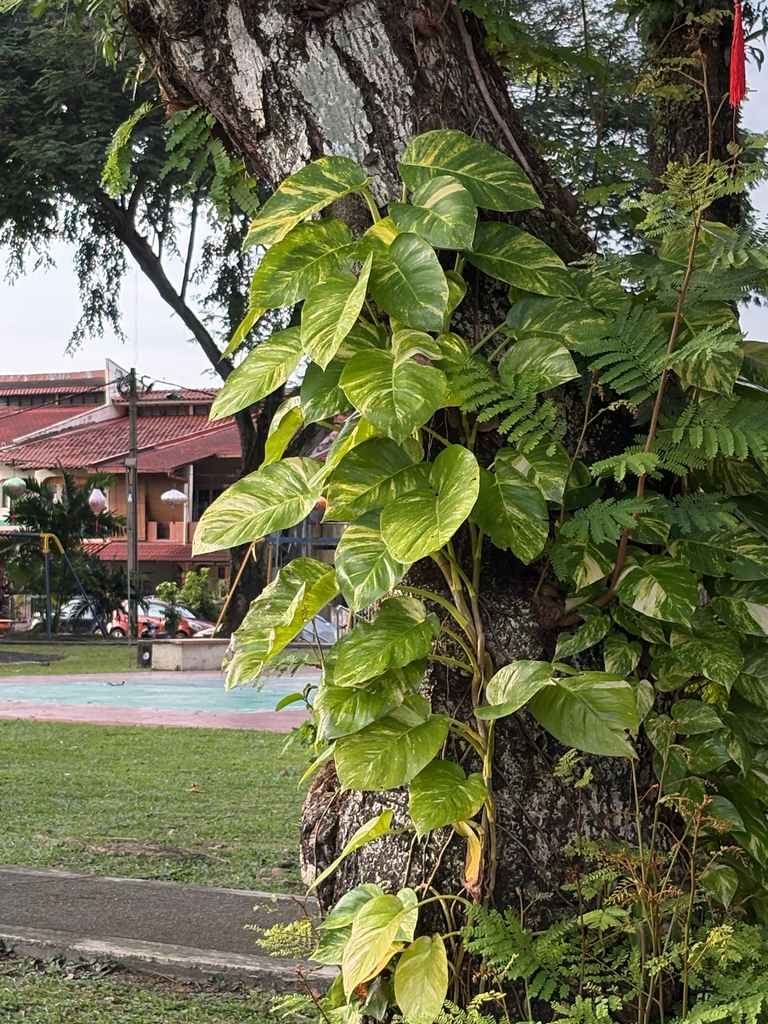
Le Pothos doré est une plante grimpante classique, connue pour ses feuilles en forme de cœur tachetées de marbrures jaunes. Elle est incroyablement résistante et s'adapte bien à de nombreuses conditions intérieures. Vous adorerez la rapidité avec laquelle elle pousse pour remplir un espace.
En un coup d'œil
- Niveau d'entretien
- Facile
- Type de plante
- Liane sempervirente
- Lumière
- Une lumière vive et indirecte est préférable, bien qu'elle tolère une lumière plus faible.
- Lumière en intérieur
- Lumière moyenne
- Arrosage
- Tous les 7 à 10 jours
- Taille adulte
- Jusqu'à 2 mètres à l'intérieur
- Croissance
- Rapide
- Rusticité
- USDA 10 à 12
- Floraison
- Fleurit rarement en culture
Entretien
Gardez le sol légèrement humide, mais laissez le centimètre supérieur sécher entre les arrosages. Surveillez les feuilles flétrissantes, signe que la plante a besoin d'eau. Essuyez les feuilles de temps en temps pour les garder sans poussière et en bonne santé.
- Arrosage
- Arrosez lorsque les quelques centimètres supérieurs du sol semblent secs au toucher.
- Engrais
- Appliquez un engrais liquide équilibré une fois par mois pendant la saison de croissance.
- Taille
- Taillez les tiges longues pour encourager une apparence plus pleine et plus touffue.
- Rempotage
- Déplacez dans un pot légèrement plus grand lorsque les racines commencent à former une spirale au fond.
- Sol
- Mélange de terreau bien drainant
- pH du sol
- 6,1 à 6,5
- Température
- 15 à 29°C
- Humidité
- 40 à 70%
- Résistance à la sécheresse
- Moyenne
- Durée de vie
- Annuelle, généralement 5 à 10 ans ou plus.
- Résistance aux chevreuils et lapins
- Faible
Signes qu'il faut rempoter
- Les racines dépassent des trous de drainage
- L'eau s'écoule directement à travers le pot
- Croissance ralentie
Sécurité
- Humains
- La plante contient des cristaux d'oxalate de calcium insolubles qui provoquent une irritation et un gonflement de la bouche et de la gorge en cas de mastication.
- Animaux
- Cette plante est toxique pour les chats et les chiens en cas d'ingestion.
- Enfants
- Tenez cette plante hors de portée des enfants, car les feuilles sont toxiques si avalées et peuvent provoquer de graves douleurs buccales.
- Allergènes de contact
- La sève peut provoquer une irritation cutanée ou des éruptions cutanées chez les personnes sensibles.
- Allergènes aéroportés
- Il n'y a pas de risque significatif d'allergie respiratoire due à cette plante.
- Comestibilité
- Cette plante est toxique si ingérée et ne doit jamais être consommée par les humains ou les animaux domestiques.
Comment l'identifier
- Feuilles vertes en forme de cœur
- Marbrures jaunes ou crème
- Port grimpant
- Texture de feuille cireuse
- Hauteur
- 1,8 à 24m
- Envergure
- 0,3 à 0,9m
- Feuilles
- vert, jaune, blanc, evergreen
- Fleurs
- blanc, vert, 5 à 10cm
- Fruits
- vert, rare
Problèmes à surveiller
- Brunissement du bord des feuillesCourant
- CochenillesCourant
- Pourriture des racinesCourant
- Cochenilles farineusesPeu courant
- Mouches du terreauPeu courant
- TétranyquesPeu courant
Vérifie la santé de ta plante en photo
Pocket Botanist analyse une photo de ta plante et te dit ce qui ne va pas et quoi essayer en premier.
La cultiver
- Multiplication
- boutures
- Quand planter
- printemps, été
- Hivernage
- Gardez la plante à l'abri des courants d'air froids et des radiateurs pendant l'hiver. Réduisez l'arrosage à mesure que la croissance ralentit pendant les mois plus froids.
- En pot
- Elle est excellente pour les conteneurs et les paniers suspendus, ne nécessitant qu'un pot avec de bons trous de drainage.
Boutures de tige
- 1. Coupez une tige saine juste en dessous d'un nœud.
- 2. Placez la bouture dans un bocal d'eau.
- 3. Changez l'eau chaque semaine jusqu'à l'apparition de racines.
- 4. Rempotez la bouture enracinée dans de la terre fraîche.
Regroupez les plantes ayant des besoins en eau similaires pour faciliter l'entretien.
Bonnes associations
- Spathiphyllum — Ils partagent des besoins similaires en lumière et en humidité.
- Philodendron Néon — Ils prospèrent dans les mêmes environnements intérieurs et sont magnifiques ensemble.
Espèces similaires
- Philodendron Néon — Il a un port grimpant similaire mais avec des feuilles en forme de cœur.
Science
- Famille
- Araceae
- Genre
- Epipremnum
- Ordre
- Alismatales
- Classe
- Liliopsida
- Région d'origine
- Polynésie française
- Préservation
- Elle est considérée comme envahissante dans de nombreuses régions tropicales où elle s'est échappée de la culture.
À l'état sauvage, elle grimpe aux arbres à l'aide de racines aériennes pour atteindre des niveaux de lumière plus élevés dans la canopée de la forêt tropicale.
- Intérêt pour la faune
- fournit un couvert dense
- Pollinisateurs
- abeilles
- Utilisations
- plante d'intérieur, panier suspendu, mur végétal vertical
Au fil des saisons
Repères écologiques
- Réaction du sol
- 6/9
- Lumière
- 3/9
- Salinité
- 2/9
- Nutriments
- 4/9
- Température
- 8/9
- Humidité
- 4/9
Taxonomie vérifiée avec le GBIF.
Ce qu'on demande souvent
- À quelle fréquence dois-je l'arroser ?
- Arrosez lorsque le premier centimètre de terre est sec au toucher.
- A-t-elle besoin de soleil direct ?
- Elle préfère une lumière vive et indirecte, mais tolère bien les conditions de faible luminosité.
D'où vient le nom
Le nom Epipremnum vient des mots grecs signifiant sur et tronc, faisant référence à son habitude grimpante. Aureum signifie doré, décrivant la variegation jaune sur les feuilles.
Bon à savoir
- C'est l'une des plantes d'intérieur les plus populaires au monde.
- Les feuilles peuvent atteindre plus de 30 pouces de long à l'état sauvage.
- Elle aide à éliminer les polluants de l'air intérieur comme le formaldéhyde.
- Elle appartient à la famille des Aracées.
Aussi dans
Garde ta plante en pleine forme
Cette page est un guide général. Enregistre ta plante dans Pocket Botanist et tu reçois des rappels d'entretien adaptés à cette plante, ainsi qu'un historique d'entretien qui montre ce qui a marché.
Ce guide a été généré par IA et vérifié avec la taxonomie du GBIF. Il s'agit d'informations générales, et non de conseils horticoles ou vétérinaires. Découvre comment nous concevons ces guides.