 Pocket Botanist
Guide botanique
Sansevieria.
Dracaena trifasciata
Prononciation drah-KEE-nah try-fas-ee-AH-tah
Aussi appelée Sansevieria, Langue de belle-mère, Chanvre de Saint-George, Sansevieria serpent, Chanvre de corde, Plante porte-bonheur, Nez de belle-mère


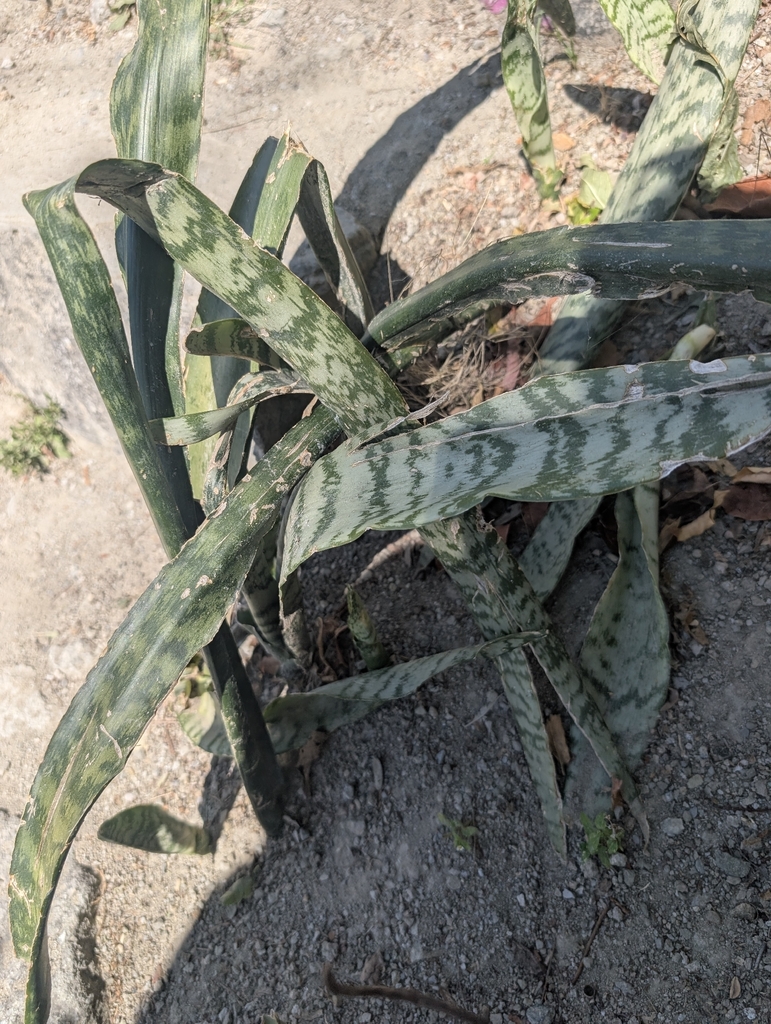
C'est une plante résistante et architecturale qui prospère dans la négligence. Elle présente des feuilles rigides en forme d'épée qui poussent verticalement. C'est un choix fantastique pour les débutants ou les endroits peu éclairés.
En un coup d'œil
- Niveau d'entretien
- Facile
- Type de plante
- Plante vivace succulente.
- Lumière
- Lumière faible à indirecte et vive.
- Lumière en intérieur
- Lumière faible
- Arrosage
- Tous les 14 à 30 jours
- Taille adulte
- Jusqu'à 120 cm de haut.
- Croissance
- Lente
- Rusticité
- USDA 10 à 12
- Floraison
- Rarement en culture, généralement à la fin de l'hiver ou au début du printemps.
Entretien
Laissez le sol sécher complètement entre les arrosages pour éviter la pourriture des racines. Surveillez les feuilles molles, qui signalent un arrosage excessif. Essuyez les feuilles de temps en temps pour les dépoussiérer.
- Arrosage
- Assurez-vous toujours que le sol est complètement sec avant d'ajouter de l'eau.
- Engrais
- Nourrissez légèrement avec un engrais liquide équilibré pendant la saison de croissance.
- Taille
- Retirez les feuilles endommagées ou mortes à la base au besoin.
- Rempotage
- Rempotez uniquement lorsque la plante devient à l'étroit dans son pot ou qu'elle brise son contenant.
- Sol
- Mélange bien drainant pour succulentes ou cactus.
- pH du sol
- Légèrement acide à neutre.
- Température
- 15 à 29°C
- Humidité
- 30 à 50%
- Résistance à la sécheresse
- Élevée
- Durée de vie
- Pérenne, généralement 5 à 10 ans ou plus.
- Résistance aux chevreuils et lapins
- Élevée
Signes qu'il faut rempoter
- Les racines sortent des trous de drainage.
- Le pot commence à se bomber ou à se fissurer sous la pression des racines.
- L'eau traverse le pot sans l'imbiber.
Sécurité
- Humains
- Les feuilles contiennent des saponines qui provoquent une irritation de la bouche, de la bave et des nausées si elles sont ingérées.
- Animaux
- Cette plante est toxique pour les chats et les chiens si ingérée.
- Enfants
- Gardez cette plante hors de portée des enfants car les feuilles présentent un risque d'étouffement et sont toxiques si elles sont mâchées.
- Allergènes de contact
- La sève peut provoquer une légère irritation cutanée chez les personnes sensibles.
- Allergènes aéroportés
- Il n'y a pas de risques notables d'allergies respiratoires associés à cette plante.
- Comestibilité
- Cette plante est toxique si ingérée et ne doit jamais être consommée par les humains ou les animaux de compagnie.
Comment l'identifier
- Feuilles rigides, dressées, en forme d'épée
- Bandes horizontales sur le feuillage
- Du vert profond au panaché argenté
- Texture de feuille épaisse et succulente
- Hauteur
- 0,6 à 1,2m
- Envergure
- 0,15 à 0,3m
- Feuilles
- vert foncé, vert clair, jaune, evergreen
- Fleurs
- blanc, blanc verdâtre, 1 à 2cm
- Fruits
- orange, Rarement produite
Problèmes à surveiller
- Cochenilles farineusesCourant
- Pourriture des racinesCourant
- Brunissement du bord des feuillesPeu courant
- Pourriture mollePeu courant
- Cochenilles — Petits insectes blancs cotonneux qui sucent la sève des feuilles.
Par symptôme
Vérifie la santé de ta plante en photo
Pocket Botanist analyse une photo de ta plante et te dit ce qui ne va pas et quoi essayer en premier.
La cultiver
- Multiplication
- division, boutures
- Quand planter
- printemps, été
- Hivernage
- Conservez la plante dans un endroit chaud à l'intérieur et réduisez considérablement l'arrosage pendant les mois d'hiver.
- En pot
- Elle pousse très bien en conteneur et préfère un ajustement serré, n'utilisez donc pas un pot trop grand.
Boutures de feuilles
- Coupez une feuille saine en sections de 7,5 cm.
- Laissez les extrémités coupées cicatriser pendant deux jours.
- Insérez l'extrémité cicatrisée dans un mélange de terreau humide.
- Conservez dans un endroit lumineux et indirect jusqu'à ce que les racines se forment.
Regroupez les plantes ayant des besoins en eau similaires pour éviter un arrosage accidentel de cette espèce tolérante à la sécheresse.
Bonnes associations
- Plante ZZ — Ils partagent des besoins similaires en faible luminosité et en faible arrosage.
- Pothos doré — Ils offrent un joli contraste dans la forme des feuilles et le mode de croissance.
Espèces similaires
- Langue de belle-mère cylindrique — Elle a des besoins d'entretien similaires mais présente des feuilles rondes semblables à des lances.
Science
- Famille
- Asparagaceae
- Genre
- Dracaena
- Ordre
- Asparagales
- Classe
- Liliopsida
- Région d'origine
- Afrique de l'Ouest tropicale.
- Préservation
- Cette espèce n'est actuellement pas menacée et est largement cultivée dans le monde.
Elle pousse dans des sols secs et rocheux dans son habitat d'origine, comptant sur ses feuilles épaisses pour stocker l'eau pendant les longues sécheresses.
- Intérêt pour la faune
- source de nectar à floraison nocturne
- Pollinisateurs
- papillons de nuit
- Utilisations
- purification de l'air intérieur, décoration en faible luminosité, aménagement paysager minimaliste
Au fil des saisons
Repères écologiques
- Salinité
- 2/9
- Lumière
- 3/9
- Température
- 7/9
- Humidité
- 2/9
- Réaction du sol
- 5/9
- Nutriments
- 2/9
Taxonomie vérifiée avec le GBIF.
Ce qu'on demande souvent
- À quelle fréquence dois-je l'arroser ?
- Arrosez uniquement lorsque le sol est complètement sec, généralement toutes les 2 à 4 semaines.
- Peut-elle pousser dans une lumière faible ?
- Oui, c'est l'une des plantes d'intérieur les plus tolérantes à l'ombre disponibles.
D'où vient le nom
Le nom Dracaena vient du mot grec drakaina signifiant dragon femelle, faisant référence à la résine rouge de certaines espèces. L'épithète trifasciata fait référence aux trois bandes de couleur distinctes sur les feuilles.
Bon à savoir
- Elle était anciennement classée sous le nom de Sansevieria trifasciata.
- Elle est souvent appelée plante serpent en raison du motif de ses feuilles.
- Elle est incroyablement tolérante à la sécheresse et prospère dans la négligence.
- La plante est considérée comme porte-bonheur dans certaines cultures.
Aussi dans
Garde ta plante en pleine forme
Cette page est un guide général. Enregistre ta plante dans Pocket Botanist et tu reçois des rappels d'entretien adaptés à cette plante, ainsi qu'un historique d'entretien qui montre ce qui a marché.
Ce guide a été généré par IA et vérifié avec la taxonomie du GBIF. Il s'agit d'informations générales, et non de conseils horticoles ou vétérinaires. Découvre comment nous concevons ces guides.