 Pocket Botanist
Plant guide
Peace Lily.
Spathiphyllum wallisii
Pronounced spath-ih-FILL-um wal-LISS-ee-eye
Also known as Peace Lily



The peace lily is a classic houseplant known for its elegant white blooms and lush foliage. It is a fantastic choice if you want a plant that tells you exactly when it is thirsty. These beauties thrive in indoor environments and help keep your air feeling fresh.
At a glance
- Care level
- Easy
- Plant type
- Tropical perennial
- Light
- Partial shade to indirect light
- Indoor light
- Medium light
- Water
- Every 5 to 10 days
- Mature size
- 3 feet tall
- Growth rate
- Medium
- Hardiness
- USDA 11 to 12
- Bloom time
- Spring to early summer
Care
Keep the soil consistently moist but never soggy to prevent root rot. Watch for drooping leaves as a clear signal that your plant needs a drink. Wipe the leaves occasionally to keep them free of dust and looking their best.
- Watering
- Water when the top inch of soil feels dry to the touch.
- Feeding
- Use a balanced liquid fertilizer during the active growing season.
- Pruning
- Snip off yellowing leaves or spent flower stalks at the base.
- Repotting
- Move to a larger pot once the roots become crowded and start circling.
- Soil
- Well draining peat based potting mix
- Soil pH
- 5.8 to 6.5
- Temperature
- 15 to 27°C
- Humidity
- 50 to 80%
- Drought tolerance
- Low
- Lifespan
- Perennial, typically 5 to 10 years
- Fragrance
- Light
- Deer and rabbits
- Low
Signs it needs repotting
- Roots growing out of the drainage holes.
- Water running straight through the soil without soaking in.
- The plant wilts very quickly after watering.
Safety
- People
- The plant contains calcium oxalate crystals which cause intense burning and swelling of the mouth and throat if ingested.
- Pets
- This plant is toxic to cats and dogs if ingested due to insoluble calcium oxalates.
- Children
- Keep this plant out of reach of children as the leaves and stems are toxic if chewed or swallowed.
- Contact allergens
- Handling the plant can cause skin irritation in sensitive individuals due to the sap.
- Airborne allergens
- The pollen from the spadix can trigger allergic reactions in some people.
- Edibility
- This plant is not edible and should be kept away from food preparation areas.
How to identify it
- Glossy dark green lance shaped leaves
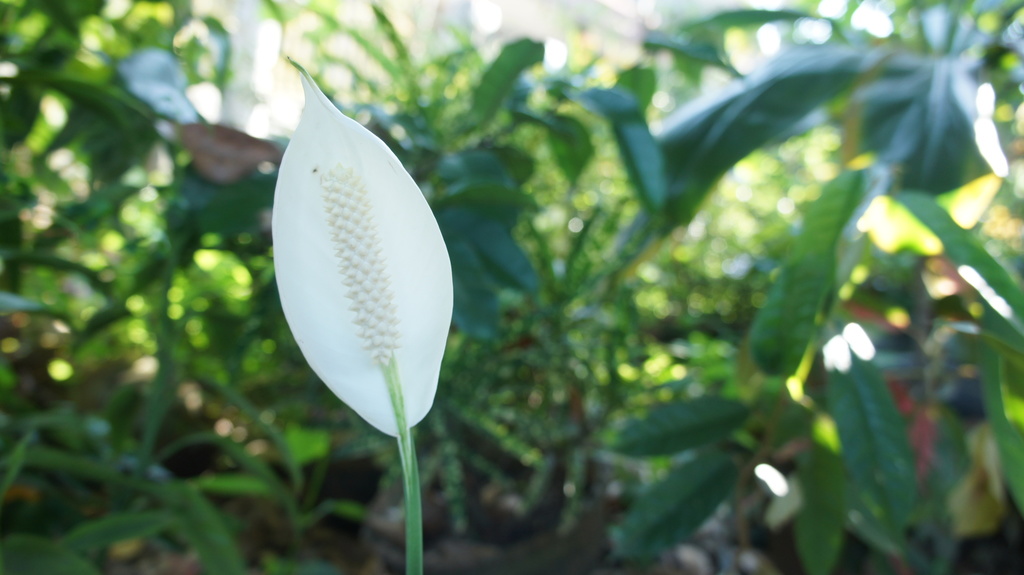
- White hooded spathe surrounding a spadix
- Upright growth habit
- Veins deeply impressed into leaf surface
- Height
- 0.3 to 0.6m
- Spread
- 0.3 to 0.6m
- Leaves
- dark green, evergreen
- Flowers
- white, 10 to 20cm
Problems to watch for
- Root RotCommon
- Spider MitesCommon
- Tip BurnCommon
- Fungus GnatsUncommon
By symptom
Check your peace lily from a photo
Pocket Botanist looks at a photo of your plant and tells you what's wrong and what to try first.
Growing it
- Propagation
- division
- When to plant
- year round
- Overwintering
- Keep the plant away from cold drafts and heating vents. Reduce watering slightly during the winter months when growth slows down.
- In containers
- It thrives in containers and prefers a pot that is only slightly larger than its root ball.
Division
- 1. Carefully remove the plant from its pot.
- 2. Gently pull apart the root clumps into smaller sections.
- 3. Ensure each section has healthy roots and leaves.
- 4. Repot the divisions into fresh, well draining potting mix.
- 5. Water thoroughly and keep in indirect light.
Group plants with similar moisture needs together to create a localized humid microclimate.
Grows well with
Similar species
- Anthurium — They are related members of the Araceae family with similar care needs.
Science
- Family
- Araceae
- Genus
- Spathiphyllum
- Order
- Alismatales
- Class
- Liliopsida
- Native range
- Tropical regions of Colombia and Venezuela.
- Conservation
- This species is not currently threatened in its native habitat.
It grows naturally on the forest floor where it receives filtered light and high moisture.
- Value to wildlife
- indoor air purification
- Pollinators
- bees
- Uses
- houseplant, office plant, air purifier
Through the year
Ecological indicators
- Salinity
- 2/9
- Light
- 3/9
- Moisture
- 7/9
- Soil reaction
- 5/9
- Temperature
- 8/9
- Nutrients
- 5/9
Taxonomy resolved against GBIF.
Questions people ask
- Why are my leaves turning brown?
- This is often due to low humidity or using tap water with high mineral content.
- How often should I water it?
- Water when the top inch of soil feels dry to the touch.
Where the name comes from
The name Spathiphyllum comes from the Greek words for spathe and leaf, referring to the leaf like bract. It is commonly called Peace Lily because the white spathe resembles a white flag of truce.
Good to know
- It is one of the few houseplants that can bloom reliably in low light.
- The plant will droop dramatically to tell you it needs water.
- It was discovered in the late 19th century in Colombia.
Also in
Keep your peace lily growing
This page is a general guide. Save your plant in Pocket Botanist and you get care reminders timed for this plant, plus a care history that shows what worked.
This guide was generated with AI and checked against GBIF taxonomy. It is general information, not horticultural or veterinary advice. Read about how we build these guides.