 Pocket Botanist
Plant guide
Orange Jessamine.
Murraya paniculata
Pronounced mur-RAY-uh pan-ik-yoo-LAY-tuh


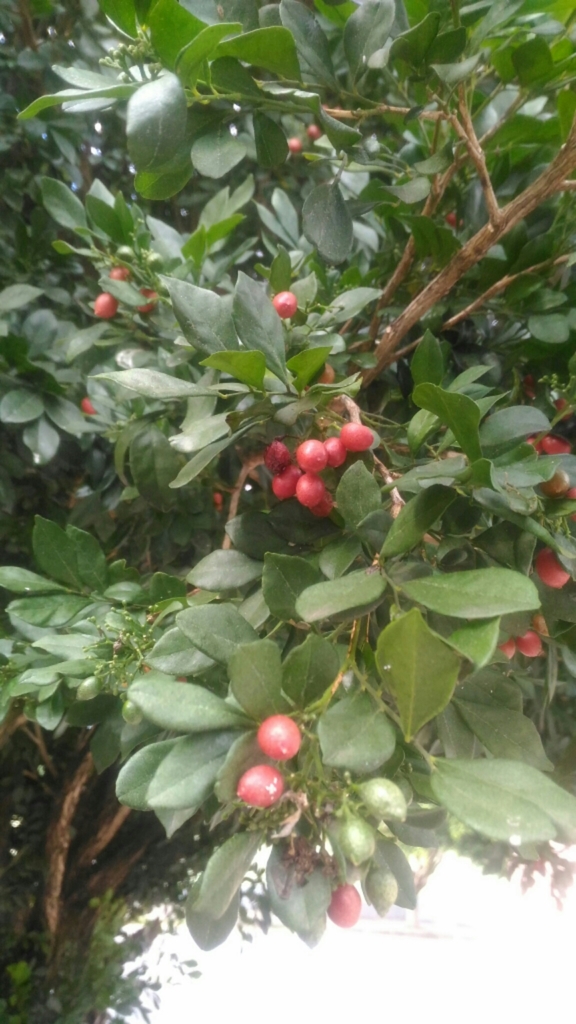
Orange Jessamine is a lovely evergreen shrub known for its glossy, dark green leaves and highly fragrant white flowers. It thrives in warm climates and often produces small, bright red berries after blooming. You will love how its sweet scent fills the air during the warmer months.

At a glance
- Care level
- Moderate
- Plant type
- Evergreen shrub
- Light
- Full sun to partial shade
- Indoor light
- Bright indirect
- Water
- Every 3 to 7 days
- Mature size
- 3 to 4 meters
- Growth rate
- Medium
- Hardiness
- USDA 9 to 11
- Bloom time
- Intermittent throughout the year
Care
Keep the soil consistently moist but never soggy to prevent root issues. Watch for yellowing leaves which often signal overwatering or poor drainage. Regular pruning helps maintain a bushy shape and encourages more blooms.
- Watering
- Water when the top few centimeters of soil feel dry to the touch.
- Feeding
- Use a balanced liquid fertilizer during the active growing season.
- Pruning
- Lightly trim after flowering to encourage a dense and compact habit.
- Repotting
- Repot in the spring if the roots have filled the current container.
- Soil
- Well draining, slightly acidic
- Soil pH
- 5.5 to 7.0
- Temperature
- 5 to 35°C
- Humidity
- 50 to 80%
- Drought tolerance
- Moderate
- Lifespan
- Long lived perennial, often exceeding 20 years with proper care.
- Fragrance
- Strong
- Deer and rabbits
- Moderate
Signs it needs repotting
- Roots growing out of the drainage holes.
- Water sitting on the surface for too long.
- Stunted growth during the active season.
Safety
- People
- The plant is not considered toxic to humans, but ingestion of plant parts is not recommended.
- Pets
- This plant is generally considered non-toxic to cats and dogs.
- Children
- The small red berries may pose a choking hazard to small children if ingested.
- Contact allergens
- Contact with the sap may cause mild skin irritation in sensitive individuals.
- Airborne allergens
- The heavy fragrance of the flowers can trigger respiratory discomfort for those sensitive to strong scents.
- Edibility
- The fruit is generally considered inedible and should not be consumed.
How to identify it
- Glossy pinnate dark green leaves
- Clusters of fragrant white flowers
- Small bright red ornamental berries
- Dense shrubby growth habit
- Height
- 2 to 4m
- Spread
- 1.5 to 3m
- Leaves
- dark green, glossy, evergreen
- Flowers
- white, 1 to 2cm
- Fruit
- red, Late summer to autumn
Problems to watch for
- AphidsCommon
- Scale InsectsCommon
- Sooty MoldCommon
- ChlorosisUncommon
- Citrus ScaleUncommon
- Root RotUncommon
- Spider MitesUncommon
- Leaf SpotRare
By symptom
Check your orange jessamine from a photo
Pocket Botanist looks at a photo of your plant and tells you what's wrong and what to try first.
Growing it
- Propagation
- cuttings, seed
- When to plant
- spring, early autumn
- Overwintering
- In cooler regions, bring containers indoors to a bright, frost free location. Reduce watering during the winter months to prevent root rot.
- In containers
- It grows well in large containers, provided they have excellent drainage and the plant is kept well fed.
Semi-hardwood cuttings
- 1. Take a 10 cm cutting from healthy, non flowering growth.
- 2. Remove the lower leaves and dip the base in rooting hormone.
- 3. Plant in a well draining potting mix.
- 4. Keep in a warm, humid spot until roots develop.
Plant in groups to create a fragrant hedge that attracts beneficial pollinators to your garden.
Grows well with
Similar species
- Citrus — Both belong to the same family and share similar foliage and fragrant flower characteristics.
Science
- Family
- Rutaceae
- Genus
- Murraya
- Order
- Sapindales
- Class
- Magnoliopsida
- Native range
- Southern Asia and parts of Australia.
- Conservation
- This species is not currently listed as endangered or threatened.
It thrives in warm, humid environments and often colonizes forest edges where it can access filtered sunlight.
- Value to wildlife
- nectar source, provides nesting cover
- Pollinators
- bees, butterflies
- Uses
- hedging, ornamental shrub, container plant, fragrance garden
Through the year
Ecological indicators
- Salinity
- 2/9
- Soil reaction
- 6/9
- Light
- 7/9
- Temperature
- 8/9
- Nutrients
- 6/9
- Moisture
- 6/9
Taxonomy resolved against GBIF.
Questions people ask
- How often should I prune it?
- Prune lightly after flowering to maintain shape and encourage dense growth.
- Can it grow in full shade?
- It prefers full sun to partial shade, but flowering will be significantly reduced in deep shade.
Where the name comes from
The name Murraya honors the Swedish botanist Johan Andreas Murray, while paniculata refers to the paniculate arrangement of its flowers.
Good to know
- It is commonly known as orange jessamine due to its citrus like scent.
- The wood is very hard and has been used for tool handles in some regions.
- It is a popular choice for topiary because it responds well to pruning.
- The flowers are highly attractive to local pollinators.
Keep your orange jessamine growing
This page is a general guide. Save your plant in Pocket Botanist and you get care reminders timed for this plant, plus a care history that shows what worked.
This guide was generated with AI and checked against GBIF taxonomy. It is general information, not horticultural or veterinary advice. Read about how we build these guides.