 Pocket Botanist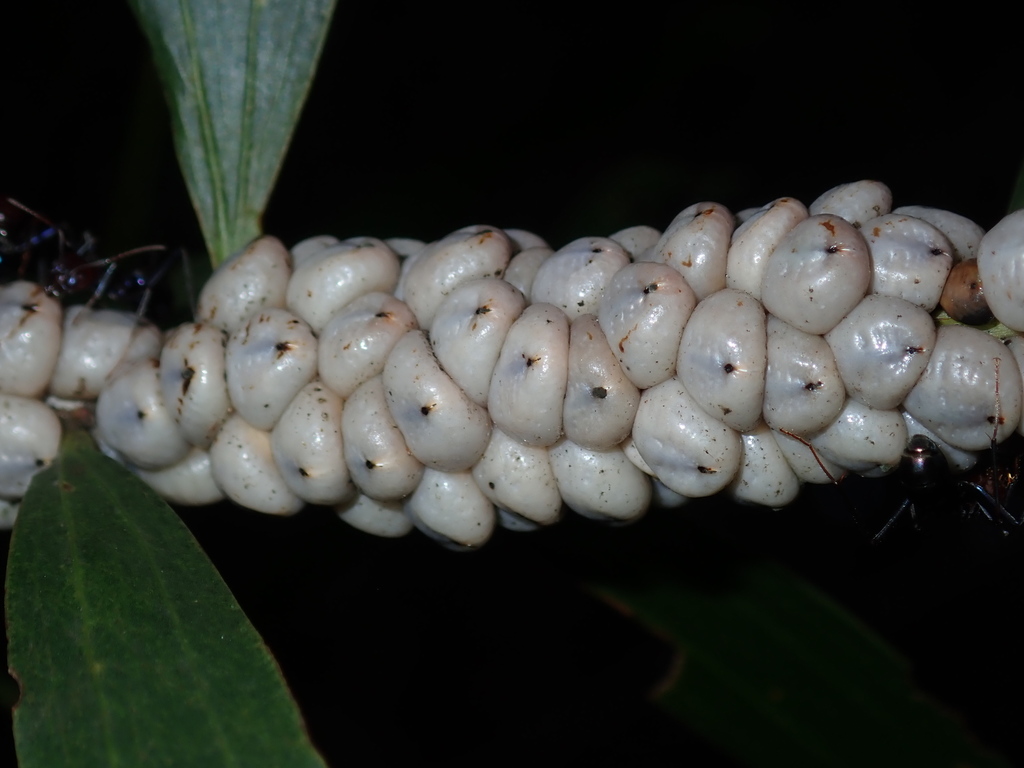
Symptoms by part
Leaves
You will see small, raised, brown or tan bumps on the undersides or along the veins, often accompanied by a sticky residue or a black, powdery coating called sooty mold.
Stems
Clusters of hard, shell like bumps appear on the bark, which may cause the stems to look bumpy or distorted and can lead to yellowing or leaf drop.
Causes
- High humidity and poor air circulation around the plant canopy.
- Overcrowded branches that prevent sunlight from reaching the inner stems.
- Stressed plants due to improper watering or nutrient deficiencies.
- Introduction of infested nursery stock into your garden.
Could be confused with
- Mealybugs · Mealybugs look like soft, white, cottony masses rather than hard, smooth, brown shells.
- Natural lenticels · Lenticels are small, corky pores on the bark that do not scrape off, whereas scale insects can be gently pried off with a fingernail.
Treatment
- Gently scrape off visible scale insects from the stems and leaves using a soft toothbrush or a damp cloth.
- Prune away heavily infested branches to improve airflow and reduce the population density.
- Apply fatty acids as a contact spray directly onto the insects, ensuring thorough coverage of both sides of the leaves and the stems, follow the label.
Without chemicals
- Prune out the most severely infested branches to remove the bulk of the population.
- Use a strong stream of water to dislodge insects from the foliage.
- Increase spacing between plants to improve air circulation.
Chemical options
- Fatty acids, spray directly on the pests when they are active, follow the label.
Preventing it
- Inspect new plants thoroughly before bringing them near your existing collection.
- Keep the plant canopy thinned to allow plenty of light and air to penetrate the center.
- Maintain consistent watering to keep the plant vigorous and better able to resist infestations.
Season
The warm growing season.
Spread risk
Moderate
Severity
Moderate
When to act
Act as soon as you spot the first few bumps to prevent a full scale outbreak. If the infestation covers the entire tree and the plant shows significant dieback, it is often best to remove the plant entirely.
Think it's Citrus Scale?
This guide covers the general picture. Pocket Botanist looks at your actual plant from a photo and tells you what's really going on, how serious it is, and what to try first. Identification and a health check are free.


Questions people ask
- Will the sticky stuff on my leaves go away on its own?
- The sticky residue, known as honeydew, will stop once the scale insects are removed, and the black sooty mold will eventually flake off as the plant grows.
- Can I just wash the scale off with water?
- Water is effective for light infestations, but you must be persistent and thorough to remove the insects before they reproduce and spread.
Plants it affects
This guide was generated with AI and is general information, not horticultural advice. Read about how we build these guides.