 Pocket Botanist
Plant guide
Buddha's hand.
Citrus medica
Pronounced SIT-rus MED-ih-kuh
Also known as Citron



Scan with your phone's camera to get the app
Or go to pocketbotanist.app/get on your phone
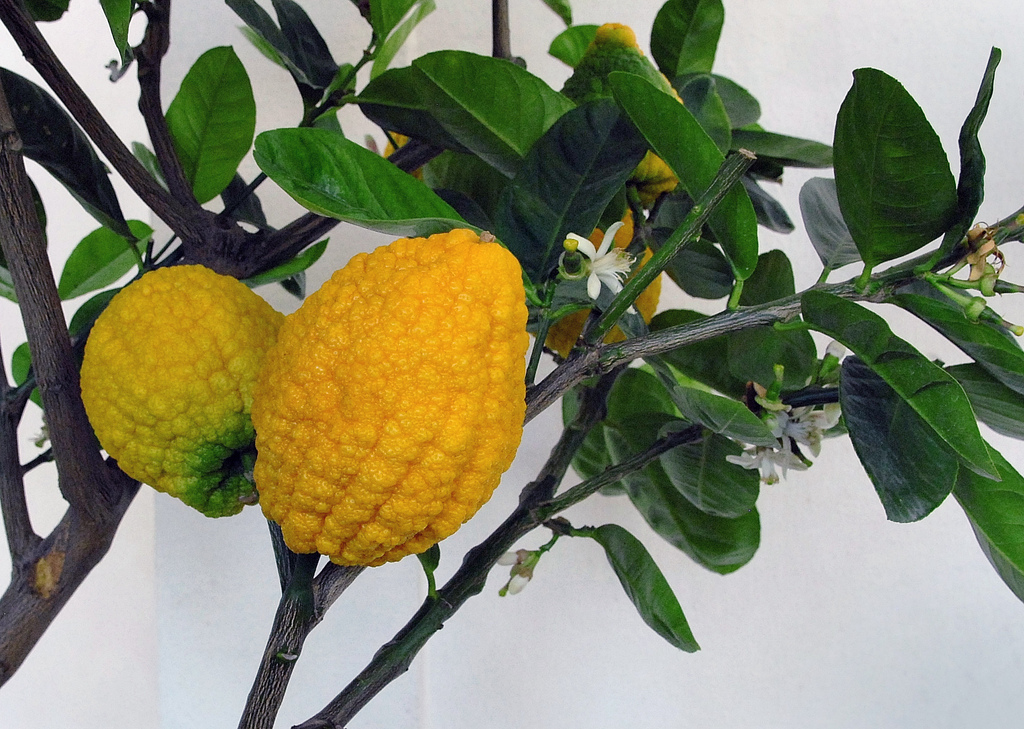
This unique citrus variety is famous for its finger like fruit segments that lack pulp and juice. It is a slow growing shrub that makes a striking conversation piece in a sunny garden or greenhouse. You will love the intense, floral fragrance of its blossoms and fruit.

At a glance
- Care level
- Moderate
- Plant type
- Citrus shrub
- Light
- Full sun
- Indoor light
- Direct sun
- Water
- Every 5 to 10 days
- Mature size
- 6 to 15 feet
- Growth rate
- Slow
- Hardiness
- USDA 9 to 11
- Bloom time
- Spring to early summer
Care
Provide plenty of direct sunlight and ensure the soil drains well to prevent root rot. Watch for yellowing leaves which often signal overwatering or a need for citrus specific nutrients. Keep the plant protected from frost as it is quite sensitive to cold temperatures.
- Watering
- Water deeply when the top few inches of soil feel dry to the touch.
- Feeding
- Use a balanced citrus fertilizer during the active growing season.
- Pruning
- Prune lightly in late winter to maintain shape and remove dead wood.
- Repotting
- Repot when the roots begin to circle the bottom of the container.
- Soil
- Well draining sandy loam
- Soil pH
- 6.0 to 7.0
- Temperature
- 10 to 35°C
- Humidity
- 50 to 70%
Safety
- People
- The plant is generally non-toxic, but essential oils in the rind can cause photosensitivity in some individuals.
- Pets
- Like other citrus plants, this plant is considered toxic to cats and dogs. The essential oils and psoralens, found mainly in the rind but also in the leaves and stems, can cause vomiting, diarrhea, depression and sensitivity to sunlight if ingested, though symptoms are usually mild.
- Children
- The branches often feature sharp thorns that require caution around small children.
- Contact allergens
- Contact with the essential oils in the leaves or rind may cause mild skin irritation.
- Airborne allergens
- The fragrant flowers may trigger mild respiratory sensitivity in those prone to floral allergies.
- Edibility
- The thick rind is commonly candied, but the fruit is rarely eaten raw due to extreme acidity and lack of pulp.
How to identify it
- Finger like yellow fruit segments
- Glossy evergreen ovate leaves
- Fragrant white and purple flowers
- Thorny branches on mature plants
- Height
- 2 to 4.5m
- Spread
- 2 to 4m
- Leaves
- dark green, evergreen
- Flowers
- white, purple-tinged, 3 to 5cm
- Fruit
- yellow, Late autumn to winter
Problems to watch for
- Citrus ScaleCommon
- Sooty MoldCommon
- AphidsUncommon
- ChlorosisUncommon
- Citrus CankerUncommon
- Root RotUncommon
- Spider MitesUncommon
Check your buddha's hand from a photo
Pocket Botanist looks at a photo of your plant and tells you what's wrong and what to try first.
Scan with your phone's camera to get the app
Or go to pocketbotanist.app/get on your phone
Growing it
- Propagation
- cuttings, grafting, seed
- When to plant
- spring
Planting aromatic herbs nearby can help mask the scent of the tree to confuse common citrus pests.
Grows well with
- Lavender · Lavender attracts beneficial pollinators that assist in fruit set.
- Nasturtium · Nasturtiums act as a ground cover that helps retain soil moisture.
Similar species
- Lemon · A close relative with similar growth habits but more acidic juice.
- Pomelo · Another ancestral citrus species that shares similar climate requirements.
Science
- Family
- Rutaceae
- Genus
- Citrus
- Order
- Sapindales
- Class
- Magnoliopsida
- Native range
- Southeast Asia
- Conservation
- Not currently of conservation concern.
It thrives in warm, frost-free climates with well-draining soil and consistent moisture.
- Value to wildlife
- nectar source
- Pollinators
- bees, butterflies
- Uses
- culinary, ornamental, fragrance
Through the year
Ecological indicators
- Salinity
- 2/9
- Soil reaction
- 6/9
- Light
- 8/9
- Temperature
- 8/9
- Moisture
- 5/9
- Nutrients
- 6/9
Taxonomy resolved against GBIF.
Questions people ask
- Can I grow this in a pot?
- Yes, it grows well in containers if provided with ample sunlight and regular feeding.
- Does it need full sun?
- It performs best with at least six to eight hours of direct sunlight daily.
Where the name comes from
The name medica refers to the ancient region of Media, where the Greeks first encountered the fruit. The common name citron comes from the French word for the fruit.
Good to know
- The Etrog variety is used ritually during the Jewish holiday of Sukkot.
- Citron fruits can grow to be quite large, sometimes weighing several pounds.
- The rind is significantly thicker than the flesh in this species.
- It was one of the first citrus fruits to reach the Mediterranean region.
Also in
Keep your buddha's hand growing
This page is a general guide. Save your plant in Pocket Botanist and you get care reminders timed for this plant, plus a care history that shows what worked.
Scan with your phone's camera to get the app
Or go to pocketbotanist.app/get on your phone
This guide was generated with AI on and checked against GBIF taxonomy. It is general information, not horticultural or veterinary advice. Read about how we build these guides.