 Pocket Botanist
Guide botanique
Pea.
Pisum sativum
Prononciation PEE-zum sa-TEE-vum
Aussi appelée Pisum sativum, Garden Pea, common-pea, garden-pea, pea


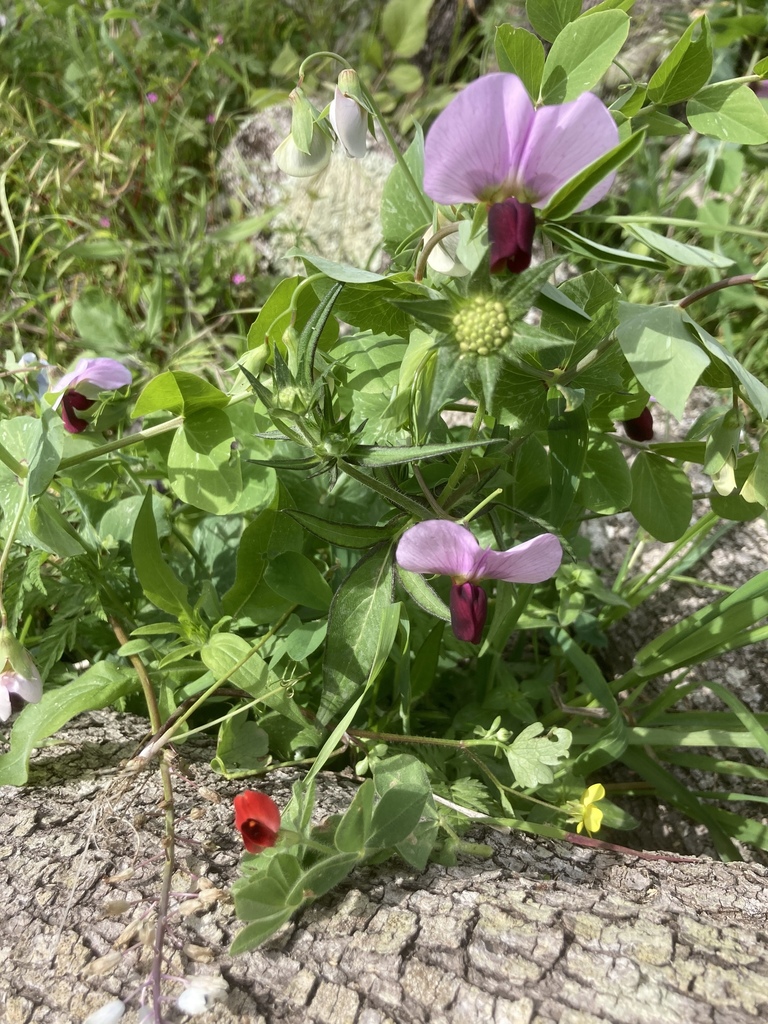
Garden peas are cool season annuals that thrive in spring weather. They produce delicious edible seeds inside pods and love to climb using their tendrils. You will enjoy watching them grow quickly once the soil warms up just a bit.
En un coup d'œil
- Care level
- Easy
- Plant type
- Annual vegetable
- Light
- Full sun
- Indoor light
- direct
- Water
- Every 2 to 4 days
- Mature size
- 1 to 2 meters
- Growth rate
- fast
- Hardiness
- USDA 2 to 11
- Bloom time
- Late spring to early summer
Entretien
Provide a sturdy trellis for the vines to climb as they grow. Keep the soil consistently moist but not soggy, and watch for powdery mildew on the leaves if airflow is poor. Harvest pods regularly to encourage the plant to keep producing more.
- Watering
- Keep the soil evenly moist throughout the growing season.
- Feeding
- Use a balanced fertilizer low in nitrogen to support pod production.
- Pruning
- Remove spent vines or yellowing foliage to maintain plant health.
- Repotting
- These are annuals and are not typically repotted.
- Soil
- Well draining loamy soil
- Soil pH
- 6.0 to 7.5
- Temperature
- 5 to 25°C
- Humidity
- 40 to 60%
- Drought tolerance
- low
- Lifespan
- Annual, typically 1 season.
- Fragrance
- strong
- Deer and rabbits
- low
Signes qu'il faut rempoter
- Roots growing out of the bottom drainage holes.
- Stunted growth despite regular feeding.
Sécurité
- People
- All parts of the plant are considered toxic if ingested, especially the seeds.
- Children
- Keep seeds away from small children as they look like edible peas but are toxic.
- Contact allergens
- Handling the stems or foliage may cause mild skin irritation in sensitive individuals.
- Airborne allergens
- The pollen is not typically considered a major allergen for most people.
- Edibility
- The seeds of this plant contain toxins that can cause lathyrism if consumed in large quantities over time.
Comment l'identifier
- Compound leaves with terminal tendrils
- Small white or purple flowers
- Green pods containing edible seeds
- Climbing habit on thin stems
- Height
- 0.3 to 2m
- Spread
- 0.15 to 0.3m
- Leaves
- green, deciduous
- Flowers
- white, purple, pink, 1 to 3cm
- Fruit
- green, Late spring to early summer
Problèmes courants
- Powdery Mildew — A white fungal growth appears on leaves when air circulation is poor.
- Aphids — Small insects that cluster on new growth and suck plant juices.
La cultiver
- Propagation
- seed
- When to plant
- early spring, late summer
- Overwintering
- In most climates, these are grown as annuals and will die back after the first hard frost.
- In containers
- They grow well in containers at least 12 inches deep provided they have a trellis.
Seed Sowing
- Soak seeds in water for 24 hours before planting.
- Sow seeds in small pots or directly into the garden in early spring.
- Provide a trellis once the seedlings reach 3 inches tall.
Plant your sweet peas near low growing annuals to shade their roots and keep them cool.
Bonnes associations
- Cornflower — They share similar light and moisture needs while providing a nice color contrast.
- Lavender — Lavender provides a sturdy base for the sweet pea vines to climb.
Espèces similaires
- Everlasting Pea — It is a perennial relative that is much hardier but lacks the strong fragrance.
Science
- Family
- Fabaceae
- Genus
- Lathyrus
- Order
- Fabales
- Class
- Magnoliopsida
- Native range
- Southern Italy and Sicily.
- Conservation
- This species is not of conservation concern and is widely cultivated.
It grows as a climbing vine that uses tendrils to reach sunlight in open, scrubby habitats.
- Value to wildlife
- nectar source
- Pollinators
- bees, butterflies
- Uses
- cut flowers, vertical garden interest, fragrant borders
Au fil des saisons
Repères écologiques
- Salinity
- 2/9
- Soil reaction
- 6/9
- Light
- 7/9
- Temperature
- 5/9
- Moisture
- 5/9
- Nutrients
- 6/9
Taxonomie vérifiée avec le GBIF.
Ce qu'on demande souvent
- Can I eat these peas?
- No, these are ornamental sweet peas and are toxic if eaten.
- Do they need support?
- Yes, they are climbing vines that require a trellis or netting to grow well.
D'où vient le nom
Lathyrus comes from the Greek word for a pea or pulse, while odoratus refers to the sweet scent of the flowers.
Bon à savoir
- Sweet peas were a favorite of Victorian gardeners.
- The flowers are known for a scent that is often described as honey and orange blossom.
- They are not actually peas you should eat.
Ton pea a mauvaise mine ?
Cette page est un guide général. Pocket Botanist diagnostique les problèmes directement à partir d'une photo de ta plante, adapte l'arrosage à sa luminosité et te prévient quand il faut t'en occuper.
Ce guide a été généré par IA et vérifié avec la taxonomie du GBIF. Il s'agit d'informations générales, et non de conseils horticoles ou vétérinaires. Découvre comment nous concevons ces guides.