 Pocket Botanist
Plant guide
Cornflower.
Centaurea cyanus
Pronounced sen-TAW-ree-uh SY-uh-nus
Also known as Batchelor's-Button, Bluebottle, Garden cornflower, Cornflower, Garden cornflower



Scan with your phone's camera to get the app
Or go to pocketbotanist.app/get on your phone
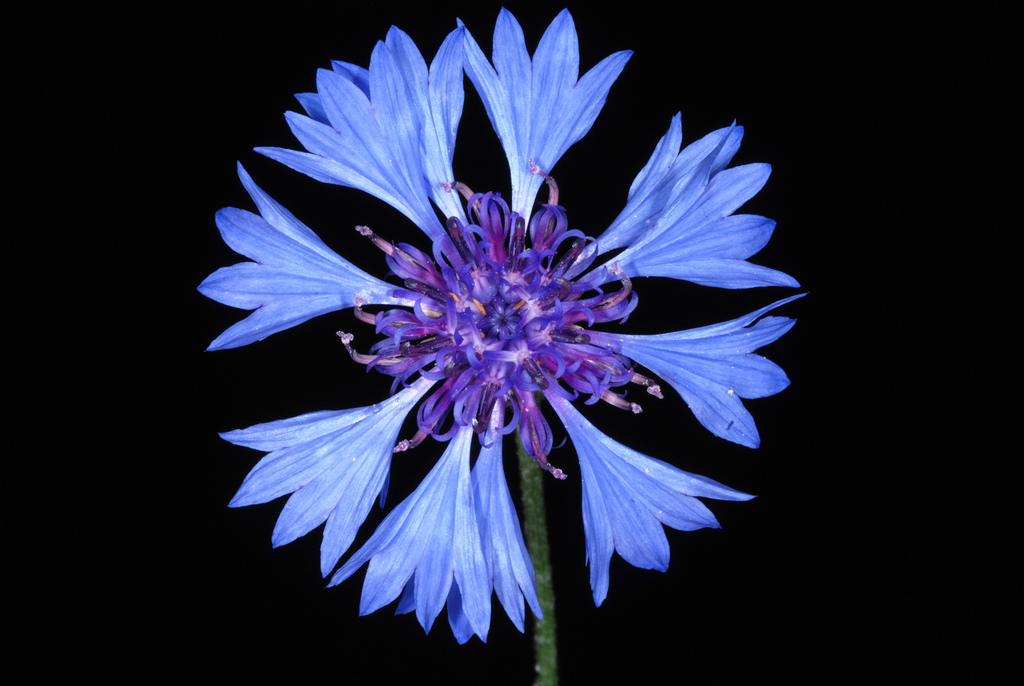
Cornflowers are charming annuals that bring a splash of vibrant blue to any garden. They are quite easy to grow and look wonderful in wildflower meadows or cottage gardens. You will love how they attract pollinators like bees and butterflies.
At a glance
- Care level
- Easy
- Plant type
- Annual
- Light
- Full sun
- Indoor light
- Direct sun
- Water
- Every 3 to 7 days
- Mature size
- 3 feet
- Growth rate
- Fast
- Hardiness
- USDA 2 to 11
- Bloom time
- Late spring to mid summer
Care
Sow seeds directly in the garden where they will get plenty of sun. Keep the soil moist until they sprout and watch for aphids during the growing season. Deadheading spent blooms will encourage the plant to keep producing flowers.
- Watering
- Keep the soil moist until seedlings are established, then water only during dry spells and let the soil dry out a little between waterings.
- Feeding
- Feeding is usually unnecessary, as cornflowers flower best in poor to average soil. Rich feeding tends to make them leggy and floppy, with fewer blooms.
- Pruning
- Remove faded flowers frequently to promote continuous blooming.
- Repotting
- As annuals, these plants complete their life cycle in one season and do not require repotting.
- Soil
- Well draining loamy soil
- Soil pH
- 6.0 to 7.5
- Temperature
- -15 to 30°C
- Humidity
- 40 to 70%
- Drought tolerance
- Moderate
- Lifespan
- Annual, typically 1 year
- Deer and rabbits
- Moderate
Signs it needs repotting
- Roots growing out of the drainage holes.
- Plant growth slows significantly.
Safety
- People
- This plant is generally considered non-toxic to humans.
- Children
- The seeds are small and could pose a choking hazard if ingested by young children.
- Contact allergens
- Some individuals may experience mild skin irritation from handling the stems.
- Airborne allergens
- Pollen can trigger seasonal allergies in sensitive individuals.
- Edibility
- While the petals are edible, ensure they are grown without pesticides before consuming.
How to identify it
- Vibrant blue ray florets
- Lance shaped gray green leaves
- Slender branching stems
- Papery bracts around flower base
- Height
- 0.3 to 0.9m
- Spread
- 0.2 to 0.4m
- Leaves
- gray-green, deciduous
- Flowers
- blue, pink, white, purple, 3 to 5cm
Problems to watch for
- AphidsCommon
- Powdery MildewCommon
- RustCommon
- Botrytis BlightUncommon
- Leaf SpotUncommon
- Slugs and SnailsUncommon
Check your cornflower from a photo
Pocket Botanist looks at a photo of your plant and tells you what's wrong and what to try first.
Scan with your phone's camera to get the app
Or go to pocketbotanist.app/get on your phone
Growing it
- Propagation
- seed
- When to plant
- spring, autumn
- Overwintering
- In mild climates, autumn sown seeds will overwinter as small rosettes. In colder areas, the plant will die back completely after the first hard frost.
- In containers
- They grow well in pots at least 20 centimeters deep with well draining soil.
Direct Sowing
- 1. Prepare a sunny spot with loose soil.
- 2. Scatter seeds thinly over the surface.
- 3. Lightly cover with soil and water gently.
Plant these in blocks to provide a strong visual impact and better support for visiting pollinators.
Grows well with
Similar species
- Mountain Bluet · It is a perennial relative with similar flower shapes.
Science
- Family
- Asteraceae
- Genus
- Centaurea
- Order
- Asterales
- Class
- Magnoliopsida
- Native range
- Europe
- Conservation
- It is not of conservation concern and is widely naturalized.
It is an opportunistic annual that thrives in disturbed soils and sunny meadows.
- Value to wildlife
- nectar source
- Pollinators
- bees, butterflies
- Uses
- cut flowers, pollinator gardens, edible garnishes
Through the year
Ecological indicators
- Salinity
- 2/9
- Soil reaction
- 6/9
- Light
- 8/9
- Temperature
- 5/9
- Moisture
- 4/9
- Nutrients
- 4/9
Taxonomy resolved against GBIF.
Questions people ask
- Do I need to deadhead them?
- Yes, removing spent blooms encourages the plant to produce more flowers throughout the season.
- Can I grow them in pots?
- They thrive in containers as long as they have good drainage and plenty of sunlight.
Where the name comes from
The name Centaurea comes from the Greek myth of the centaur Chiron, who used the plant to heal a wound. Cyanus refers to the deep blue color of the petals.
Good to know
- The intense blue pigment is highly prized in the cosmetic industry.
- It was the favorite flower of John F. Kennedy.
- These flowers are a traditional symbol of the Estonian national identity.
- They are very easy to grow from seed directly in the garden.
Keep your cornflower growing
This page is a general guide. Save your plant in Pocket Botanist and you get care reminders timed for this plant, plus a care history that shows what worked.
Scan with your phone's camera to get the app
Or go to pocketbotanist.app/get on your phone
This guide was generated with AI on and checked against GBIF taxonomy. It is general information, not horticultural or veterinary advice. Read about how we build these guides.