 Pocket Botanist
Pflanzenratgeber
Sea Buckthorn.
Hippophae rhamnoides
Aussprache hip-POH-fee ram-NOY-deez
Auch bekannt als Himalayan berry


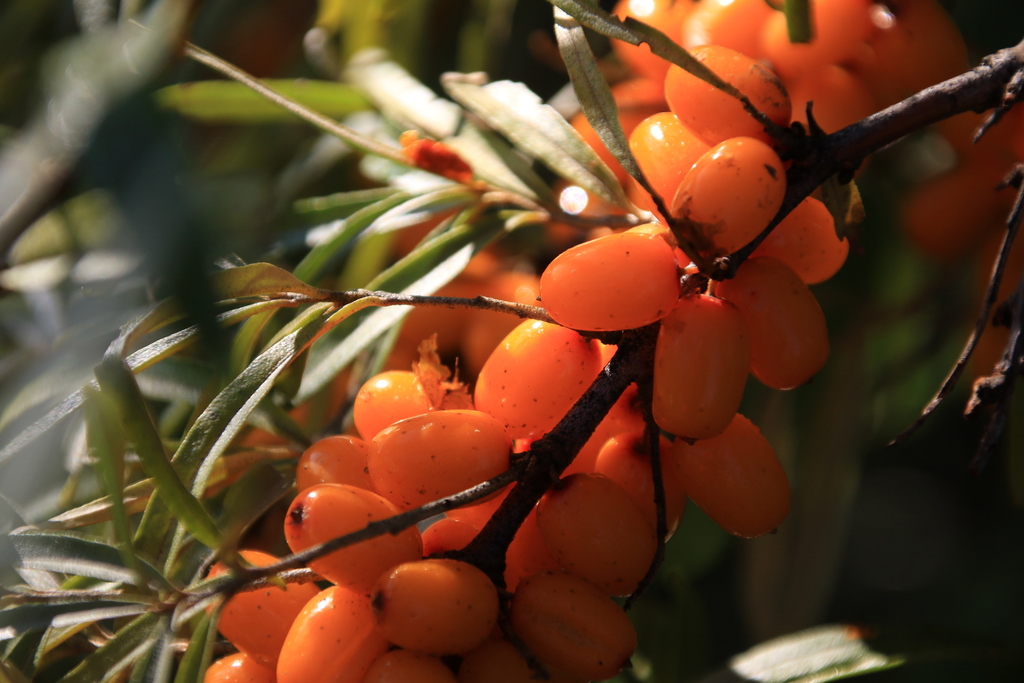
Sea buckthorn is a hardy, deciduous shrub known for its bright orange, nutrient dense berries. It thrives in coastal areas and tolerates poor, sandy soils exceptionally well. You will need both male and female plants to produce fruit.

Auf einen Blick
- Pflegestufe
- Einfach
- Pflanzenart
- Deciduous shrub
- Licht
- Full sun
- Licht im Innenraum
- Direkte Sonne
- Gießen
- Alle 7 bis 14 Tage
- Endgröße
- 10 to 20 feet
- Wachstum
- Mittel
- Winterhärte
- USDA 3 bis 7
- Blütezeit
- Early to mid spring
Pflege
Plant in a spot with full sun and well draining soil to keep it happy. Watch for yellowing leaves which can indicate poor drainage or overwatering. Prune in late winter to maintain shape and encourage better berry production.
- Gießen
- Water deeply during the first year to establish roots, then it becomes quite drought tolerant.
- Düngen
- Apply a balanced fertilizer once in early spring before new growth appears.
- Schneiden
- Prune in late winter while the plant is dormant to remove dead wood and manage size.
- Umtopfen
- If grown in a container, move to a larger pot every few years as it outgrows its space.
- Boden
- Sandy, rocky, or poor soil
- Boden-pH
- 6.0 to 7.5
- Temperatur
- -40 bis 35°C
- Luftfeuchtigkeit
- 40 bis 70%
- Trockenheitstoleranz
- Hoch
- Lebensdauer
- Perennial, typically 30 to 50 years.
- Wildverbiss-Resistenz
- Hoch
Anzeichen fürs Umtopfen
- Roots growing out of the drainage holes.
- Water running straight through the pot without soaking in.
Sicherheit
- Menschen
- The plant is not considered toxic to humans.
- Kinder
- Keep children away from the sharp, thorny branches to prevent injury.
- Kontaktallergene
- The branches are covered in sharp, woody thorns that can cause painful skin scratches.
- Allergene in der Luft
- The pollen can be a mild allergen for sensitive individuals during the spring bloom.
- Essbarkeit
- The berries are tart and best processed into jams or juices rather than eaten raw in large quantities.
So erkennst du die Pflanze
- Narrow, silvery green leaves
- Sharp thorns along branches
- Bright orange clustered berries
- Dense, shrubby growth habit
- Höhe
- 2 bis 6m
- Breite
- 2 bis 5m
- Blätter
- silver, green, deciduous
- Blüten
- yellow, brown, 0,3 bis 0,5cm
- Früchte
- orange, yellow, Late summer to autumn
Häufige Probleme
- Verticillium wilt — A soilborne fungus that causes wilting and branch dieback.
- Sea buckthorn fly — Larvae feed on the developing fruit, causing them to shrivel.
Standort und Pflege
- Vermehrung
- seed, cuttings, suckers
- Pflanzzeit
- spring, autumn
- Überwinterung
- It is extremely cold hardy and requires no special winter protection. Simply clear away any dead debris around the base in late winter.
- Im Kübel
- It is not well-suited for containers due to its extensive root system and large mature size.
Softwood Cuttings
- 1. Take 15 cm cuttings in early summer.
- 2. Remove lower leaves.
- 3. Dip in rooting hormone.
- 4. Place in moist, sandy soil.
- 5. Keep in a bright, humid spot until rooted.
Plant in a sunny, open location to ensure the wind can carry pollen from the male to the female plants.
Gute Pflanzpartner
- Lavendel — Both plants enjoy similar sandy, well-draining soil conditions.
- Perovskia atriplicifolia — They share a love for full sun and low-fertility environments.
Ähnliche Arten
- Elaeagnus multiflora — It is another nitrogen-fixing shrub with edible berries.
Botanisches
- Familie
- Elaeagnaceae
- Gattung
- Hippophae
- Ordnung
- Rosales
- Klasse
- Magnoliopsida
- Ursprüngliche Heimat
- Temperate regions of Europe and Asia.
- Artenschutz
- It is not currently of conservation concern and is often used for soil stabilization.
It is a pioneer species that colonizes sandy dunes and riverbanks by fixing nitrogen in the soil.
- Nutzen für Wildtiere
- nectar source, winter food for birds
- Bestäuber
- Bienen, Schmetterlinge
- Verwendung
- erosion control, culinary juices, ornamental shrub, windbreak
Im Jahresverlauf
Ökologische Zeigerwerte
- Salzgehalt
- 7/9
- Bodenreaktion
- 7/9
- Licht
- 8/9
- Temperatur
- 5/9
- Feuchtigkeit
- 4/9
- Nährstoffe
- 2/9
Taxonomie abgeglichen mit GBIF.
Häufige Fragen
- Do I need two plants?
- Yes, you need at least one male plant to pollinate your female plants for fruit production.
- Is it invasive?
- It can spread via suckers, so give it plenty of space to roam.
Woher der Name kommt
The genus name Hippophae comes from Greek words meaning shiny horse, as it was once believed to improve the coats of horses. The species name rhamnoides refers to its resemblance to Rhamnus, or buckthorn.
Gut zu wissen
- The berries are exceptionally high in vitamin C.
- It is often called the holy fruit of the Himalayas.
- The plant is dioecious, meaning you need both male and female plants to get fruit.
Auch in
Probleme mit Sea Buckthorn?
Diese Seite bietet allgemeine Infos. Pocket Botanist erkennt Probleme anhand eines Fotos deiner echten Pflanze, passt das Gießen an dein Licht und deinen Standort an und erinnert dich an die Pflege.
Dieser Ratgeber wurde mit KI erstellt und mit der GBIF-Taxonomie abgeglichen. Er dient zur allgemeinen Information und ersetzt keine gärtnerische oder tierärztliche Beratung. Hier erfährst du, wie wir diese Ratgeber erstellen.