 Pocket Botanist
Symptoms by part
Fruit
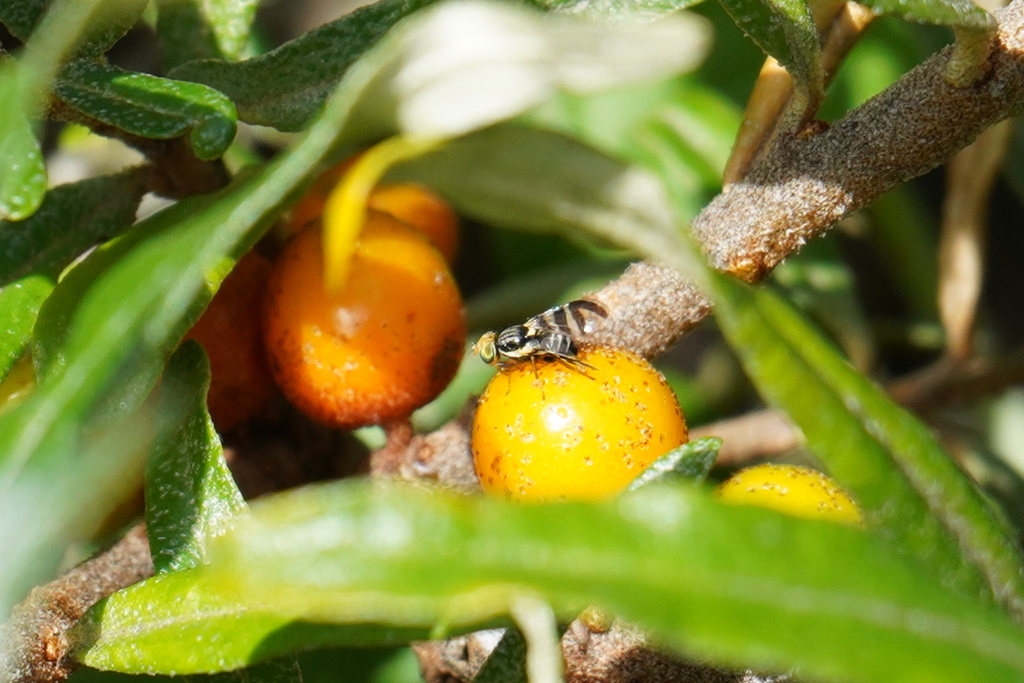
Small puncture marks appear on the skin of the berries where the female fly has deposited her eggs. As the larvae feed inside, the fruit becomes soft, discolored, and eventually shrivels or drops prematurely.
Causes
- The presence of adult flies in the garden during the fruit development stage.
- Warm and sheltered conditions that favor fly activity and egg laying.
- Lack of physical barriers to prevent adult flies from reaching the ripening berries.
Could be confused with
- Fungal fruit rot · Fungal rot usually starts with fuzzy growth or distinct spots on the surface, whereas fly damage is characterized by internal larval feeding and small entry holes.
- Bird damage · Birds typically leave larger, jagged tears or missing chunks of fruit, while fly damage leaves tiny, precise pinprick holes.
Find out what's really wrong with your plant
Problems that look alike are easy to mix up. Pocket Botanist looks at a photo of your actual plant and tells you what's going on, how serious it is, and what to try first. Identification and a health check are free.



Scan with your phone's camera to get the app
Or go to pocketbotanist.app/get on your phone
Treatment
- 1. Place fine mesh netting over the entire bush while the berries are still small and green, before the flies start laying eggs, to block adult flies from landing.
- 2. Pick and destroy all fallen or damaged berries immediately to remove larvae before they can pupate in the soil.
- 3. Apply spinosad as a spray to the foliage and fruit clusters when adults are active, follow the label.
Without chemicals
- Use fine insect netting to cover bushes during the fruiting period.
- Clear away all fallen fruit from beneath the plants to break the life cycle.
- Prune bushes to improve airflow and reduce the sheltered spots where flies prefer to congregate.
Chemical options
- spinosad, apply as a spray to the fruit and leaves during the egg laying period, follow the label.
Preventing it
- Cover bushes with fine mesh netting early in the season before the flies arrive.
- Keep the area under the bushes clean by removing all dropped fruit throughout the summer.
- Encourage natural predators like birds and beneficial insects that feed on fly larvae.
Season
The warm growing season, specifically when the berries begin to develop and ripen.
Spread risk
Moderate
Severity
Moderate
When to act
Act as soon as you see the first signs of puncture marks on the berries. If the infestation is severe and covers the entire crop year after year, consider replacing the plants with less susceptible varieties.
Keep your plants healthy from here
Save your plants in Pocket Botanist and you get care reminders timed for each one, plus a care history that shows what worked. Identification and a health check are free.
Questions people ask
- Can I eat the berries if they have been infested?
- It is best to discard any berries showing signs of damage, as the larvae inside make them unpalatable and prone to rapid decay.
- Does the fly kill the whole bush?
- No, the fly only targets the fruit. The bush itself will remain healthy, though you will lose your harvest.
- How do I know if the flies are active?
- You can hang yellow sticky traps near the bushes to detect the presence of adult flies before they start laying eggs.
Plants it affects
Answers plant by plant
This guide was generated with AI on and is general information, not horticultural advice. Read about how we build these guides.